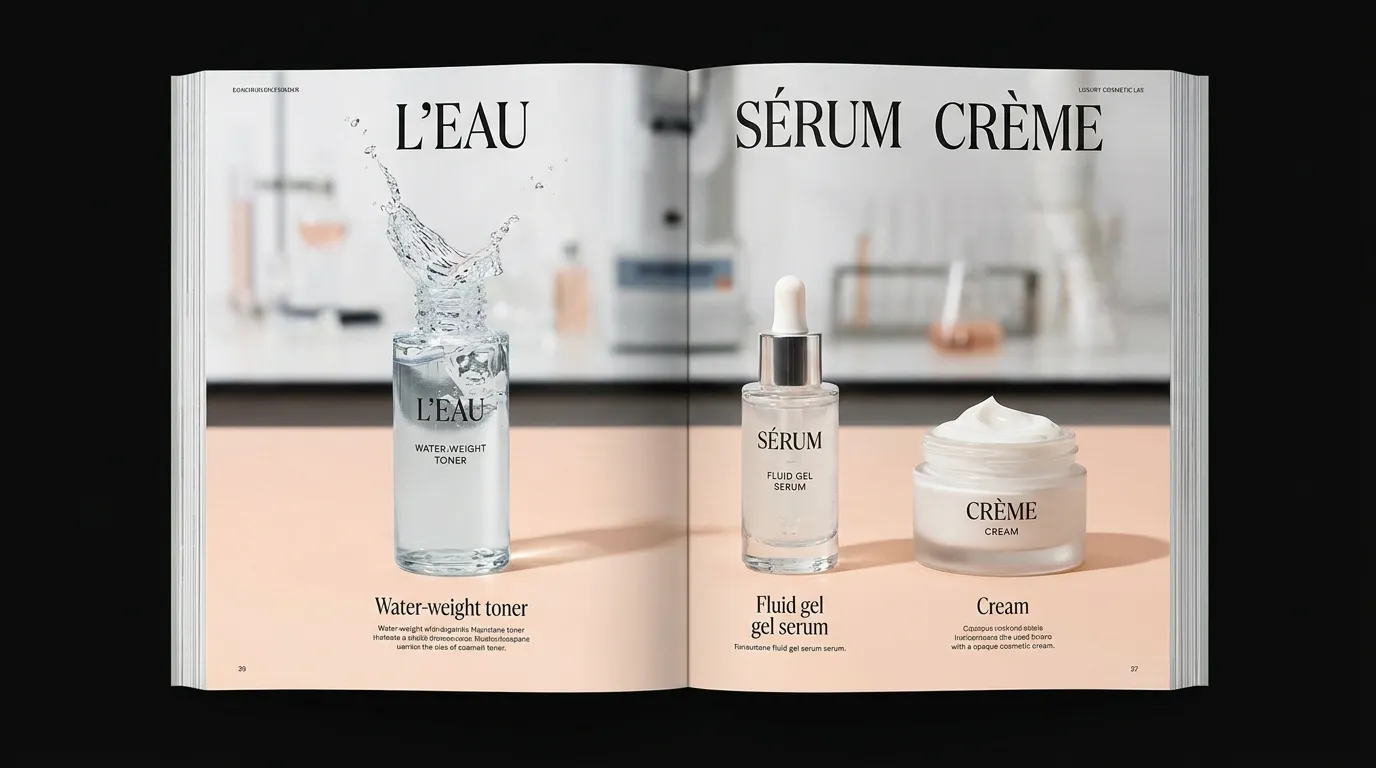
Mislayering topical formulations can render active ingredients completely inert. In cosmetic science, the physiological mechanics of skin penetration dictate a strict application sequence based on molecular weight, solvent type, and pH compatibility. When you apply products haphazardly, you introduce barrier interference that restricts structural absorption and wastes active ingredient potentials.
Understanding the proper sequence transforms isolated steps into a systematic routine. By aligning your application with fundamental chemical rules, you prevent formulation pilling and preserve the integrity of your epidermal barrier.
The Hydrophilic-to-Lipophilic Sequence Rule
Topical formulas must always step from highest water content (aqueous) to highest lipid concentration (occlusive). Applying a low-molecular-weight water-based serum over an anhydrous oil or rich cream limits dermal absorption by up to 85%, trapping the active on top of the skin where it undergoes oxidative breakdown.
The Core Science of Skincare Product Application Order
To determine what order to apply skincare products, we evaluate two fundamental parameters: viscosity and chemical environment compatibility. The rule of thumb—applying the thinnest product first and the heaviest last—is rooted in molecular transit kinetics. Lightweight aqueous solutions move rapidly into the stratum corneum, whereas heavy emollients and occlusives create a seal that blocks subsequent penetration.
The Role of Viscosity and Molecular Weight
Viscosity serves as an immediate visual indicator of a formulation's base structure. Water-based liquids have smaller apparent sizes in solution compared to cross-linked polymer networks found in heavy creams. If you introduce a dense cream or an oil before a fluid serum, the larger lipid structures block the pathways, leaving water-soluble actives to evaporate on the surface. For deep guidance on building this structural foundation from scratch, read our guide on a foundational skincare routine for beginners.
The Critical pH Dependency of Active Ingredients
Beyond physical thickness, chemical environment compatibility rules the skincare layering order. Highly acidic actives like L-ascorbic acid (Vitamin C) or exfoliating acids require a low pH environment (**2.5** to **3.5**) to remain un-ionized and penetrate the lipophilic barrier. If you apply a neutral or slightly alkaline product right before an acid, you shift the local pH level, neutralizing its clinical efficacy. Master the direct chemistry of these structural layers by exploring our analysis of principles of how to layer skincare products.
Strategic Layering Advantages
- Optimized Bioavailability: Allows small-molecule actives to reach targeted epidermal layers directly.
- pH Stability Retention: Prevents premature neutralization of acid-dependent molecules.
- Zero Product Pilling: Minimizes cross-polymer friction and cross-solvent precipitation.
Random Application Disadvantages
- Ingredient Inactivation: High-pH bases alter the optimal pKa performance window of acids.
- Barrier Occlusion: Heavy dimethicone or lipid layers form an impermeable seal against aqueous serums.
- Increased Sensitivity Risks: Trapping volatile acids beneath heavy oils can cause deep chemical irritation.
What is the Correct Order to Apply Skincare Products in the Morning?
Your morning sequence concentrates on environmental shield dynamics, antioxidant defense, and UV radiation deflection. What is the correct order to apply skincare when prepping for daytime oxidative stress? Follow this exact structure:
- Cleanser: A gentle water-soluble wash clears surface debris without destroying natural lipids.
- Toner or Essence: Hydrating liquids that supply humectants to prime the skin surface.
- Antioxidant Serums: Low-pH options like Vitamin C come first to defend cells against free radicals.
- Hydrating Serums: Formulations featuring niacinamide or low-molecular hyaluronic acid to restore volume.
- Moisturizer: Emollient creams that smooth out structural gaps in the lipid barrier.
- Sunscreen (SPF): The non-negotiable shielding barrier that must sit on top of everything else.
Applying a structured morning skincare routine ensures your skin retains moisture while repelling external environmental aggregates all day long.
L-Ascorbic Acid & Ferulic Serum
Best for Morning Antioxidant DefenseAn ultra-low pH solution containing 15% pure Vitamin C stabilized with Ferulic Acid. Because it requires a pH range of 2.5 to 3.0 to cross the stratum corneum, it must be applied immediately after cleansing on dry skin to avoid dilution and maximize dermal cellular absorption.
The Precise Evening Sequence: What Order to Apply Nighttime Skincare
At night, cellular processes transition from defensive shielding into structural repair and deep barrier reconstruction. What order to apply skincare at night relies on giving high-impact treatments direct contact with the tissue surface. Review this step-by-step evening blueprint:
- Double Cleanse: An anhydrous lipid-cleanser or oil dissolves silicone primer and mineral sunscreen, followed by a secondary water-based gel wash to purify pores.
- Exfoliating Acids (2-3x weekly): AHAs or BHAs applied to dry skin to break down cellular cohesion in the stratum corneum.
- Treatment Serums & Retinoids: High-performance elements designed to stimulate cellular turnover.
- Moisturizer or Barrier Creams: Richer emulsions designed to suppress overnight trans-epidermal water loss.
Executing a targeted restorative night skincare routine maximizes cellular renewal periods while avoiding common signs of irritation.
How to Layer Retinol Without Deactivating Your Matrix
When executing a retinol routine order, moisture presence changes absorption speed. Applying retinol to damp skin causes rapid, irregular penetration that induces inflammation and scaling. Ensure your face is completely dry for **5** to **10** minutes after cleansing before laying down your retinoid. If your skin is sensitive, utilize the sandwich configuration: a thin layer of neutral lotion, followed by your retinol, and sealed with a secondary layer of moisturizer.
Pure Retinol 0.5% in Squalane
Best for Evening Cellular RegenerationAn anhydrous, lipid-stabilized retinoid solution designed for structural optimization of mature skin. This formulation should be applied strictly within your night sequence on fully dried skin to optimize conversion to retinoic acid while avoiding high hydration-induced rapid penetration vectors that cause localized erythema.
Advanced Layering Dynamics: Korean Skincare, The Ordinary, and Makeup
The 10-Step Korean Skincare Steps Order
The extensive Korean skincare routine order thrives on a systematic methodology called micro-layering. Instead of heavy individual applications, you deposit multiple ultra-lightweight aqueous layers to saturate the skin with moisture. The sequence remains faithful to chemical fundamentals: Oil Cleanser → Water Cleanser → Exfoliator → Hydrating Toner → Essence → Ampoule → Sheet Mask → Eye Cream → Emulsion → Sleeping Pack or SPF.
How to Layer The Ordinary Products Without Pilling
Single-molecule collections like The Ordinary feature basic suspension matrix systems that can easily pill if combined incorrectly. The primary conflict appears when mixing heavy cross-linked acrylic polymers with light water solutions. Limit your active serum layers to a maximum of three within any single period. Always allow your Hyaluronic Acid **2** or **3** minutes to form an even film before patting on a complex formula like Niacinamide or Azelaic Acid.
Skincare Before Makeup Order: The Primer and Sunscreen Rule
The transition zone between treatments and color application represents a common failure point. To master your skincare before makeup order, remember that sunscreen is always the last stage of your skincare, and primer is the first step of your cosmetic look. If you apply your primer before your sunscreen, you disrupt the polymer barrier film formed by your SPF, diluting your UV filtering efficiency and causing cosmetic separation.
Frequently Asked Questions
What is the correct order to apply skincare products?
The correct order to apply skincare products is determined by formula thickness and pH level. Start with cleansing, followed by low-pH chemical treatments (like Vitamin C or exfoliating acids), move to water-based hydrating serums, and complete the routine with an emollient moisturizer. During daylight hours, always conclude with a broad-spectrum sunscreen.
Do you apply retinol before or after moisturizer?
Apply retinol before moisturizer on clean, dry skin to maximize penetration. However, if your skin is prone to barrier irritation, you can apply retinol after a light layer of moisturizer to slow down its delivery speed and minimize redness without diminishing its long-term performance.
Should moisturizer go before sunscreen?
Yes, moisturizer must always go before sunscreen. Sunscreen functions as a structural barrier shield designed to bounce away or absorb UV rays on the outer surface of your skin. Placing moisturizer on top of sunscreen dilutes the SPF rating and creates gaps in your sun protection network.
What order should I apply acids to skincare?
Exfoliating acids (such as glycolic, lactic, or salicylic acids) should be applied immediately after cleansing on completely dry skin. Because these acids are highly dependent on an acidic environment, they require direct skin contact before any hydrating serums or moisturizers alter the ambient pH level.
How long should I wait between skincare layers?
For standard hydrating steps, wait **30** to **60** seconds for the layer to become tacky. For highly active, pH-dependent formulas like pure Vitamin C, exfoliating acids, or retinoids, allow **3** to **5** minutes for complete structural absorption before overlaying the next product.
What is the correct order to apply Korean skincare?
The Korean skincare layering sequence follows a micro-layering structure from thinnest consistency to thickest: Oil Cleanser, Foam Cleanser, Exfoliator, Toner, Essence, Ampoule/Serum, Sheet Mask, Eye Cream, Moisturizer/Emulsion, and Sunscreen or Night Mask.
Can I layer Niacinamide and Vitamin C together?
Yes, modern stabilized formulations allow them to be layered together safely. Apply pure Vitamin C (L-ascorbic acid) first due to its lower pH requirements, allow it to absorb fully, and then apply your Niacinamide serum to maintain chemical performance.
Why is my skincare pilling when I apply makeup?
Skincare pilling occurs when the polymers (like silicones or carbomers) in your skincare do not absorb fully before clashing with makeup formulas. This happens if you rush your steps, layer too many heavy products, or apply oil-based foundation over highly water-soluble skincare bases.