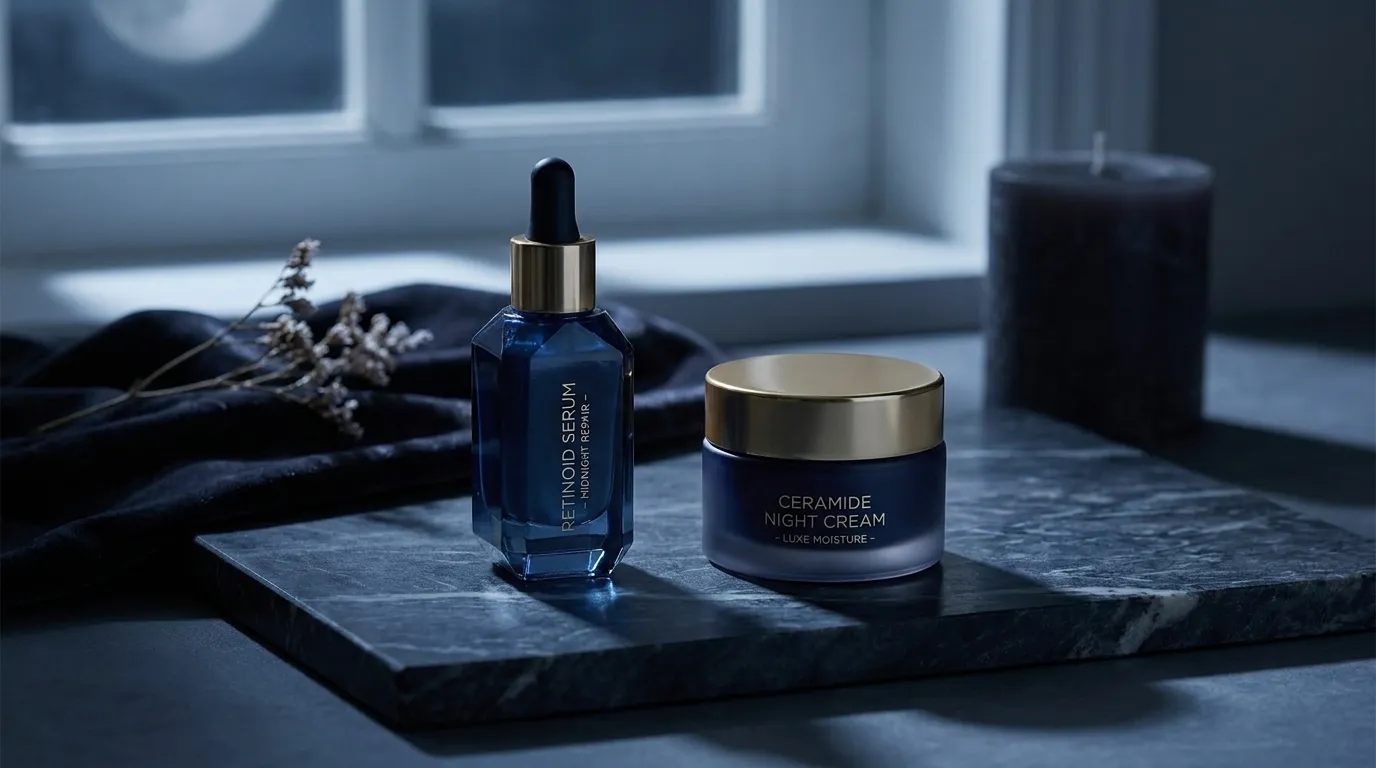
During the daylight hours, the human epidermis operates strictly in a defensive state, expending metabolic energy to repel ultraviolet radiation and oxidative pollutants. Once the sun sets, a biological shift occurs. Your skin transitions into a phase of active cellular proliferation and structural matrix repair. Executing a properly sequenced night skincare routine is the singular most effective method to support this natural circadian rhythm and accelerate dermal regeneration.
When establishing what your night skincare routine should be, cosmetic chemistry dictates that we prioritize active ingredient delivery and trans-epidermal moisture retention. Haphazardly throwing formulations onto the face neutralizes complex molecules and suffocates the pores. By adhering to a strict physiological sequence, you allow cell-communicating ingredients, like retinoids and chemical exfoliants, to penetrate the stratum corneum without inducing structural inflammation.
Morning vs. Night Skincare Routine Mechanics
The difference between morning and night skincare routine structures lies in chemical photosensitivity. A daytime regimen requires lightweight antioxidants (Vitamin C) and UV filters (SPF) for protection. An evening regimen utilizes potent, photosensitive compounds—like AHAs, BHAs, and Vitamin A derivatives—that rapidly degrade in sunlight but thrive during the nocturnal repair cycle.
The Exact Night Skincare Routine Order
To maximize topical bioavailability, your night time skincare routine order must progress from lipophilic solvents (to remove makeup) down to low-molecular-weight water formulations, and finish with heavy, occlusive macromolecules. Review these clinical night routine skincare steps.
Step 1: The Anhydrous Double Cleanse
You cannot wash away water-resistant SPF polymers and synthetic makeup pigments with a standard water-based foaming gel. The first stage of a proper night skincare routine demands an anhydrous (water-free) lipid solvent—such as a cleansing balm or oil. These lipids break the chemical bonds of sebum and cosmetics. Once rinsed, follow immediately with a secondary aqueous gel wash to clear the follicular pathways. Skipping this step is a primary cause of congestion.
Squalane & Oat Lipid Cleansing Balm
Best for Phase One of the Double CleanseA highly stable, non-comedogenic ester compound designed to dissolve stubborn silicones and mineral UV filters instantly. It melts into a fluid oil upon skin contact and emulsifies cleanly with water, preserving the critical acid mantle while removing all traces of daily environmental debris.
Step 2: Liquid Exfoliation and pH Balancing
After cleansing, the surface pH is often temporarily elevated. Understanding what is toner in skincare clarifies this step: modern toners and liquid exfoliants instantly lower the epidermal pH to an acidic state (around 3.5 to 4.5). Applying an Alpha Hydroxy Acid (AHA) or Polyhydroxy Acid (PHA) solution directly to dry skin at this stage dissolves the desmosome bonds holding dead cells together, ensuring deeper penetration for subsequent active serums.
Step 3: The Retinol Night Routine Order
Vitamin A derivatives (retinol, retinaldehyde, tretinoin) are the gold standard for collagen synthesis. However, determining the precise night skincare routine order for retinol dictates its efficacy and your tolerance. Retinoids must be applied to completely dry skin. If applied over a damp face, the water dramatically increases the chemical absorption rate, leading to severe barrier degradation—one of the most common skincare mistakes to avoid. Allow your liquid exfoliants to dry for three minutes before pressing your retinoid into the skin matrix.
0.5% Encapsulated Retinol Emulsion
Best for Nocturnal Cellular TurnoverUtilizing a liposomal delivery system, this formulation surrounds the pure retinol molecule in a lipid sphere, delaying its release until it bypasses the upper epidermis. This structural engineering allows for maximum cellular communication during the night while drastically reducing the risk of localized erythema and peeling.
Step 4: Hydration Recovery and Barrier Creams
The final stage in layering a night skincare routine requires sealing the underlying water content and active molecules. During sleep, trans-epidermal water loss (TEWL) reaches its peak. You must apply a rich, ceramide-dominant barrier cream to mimic the skin’s natural lipid bilayer. This occlusive layer acts as a physical lid, driving the active serums downward while preventing ambient evaporation.
The 4-Step Basic Night Routine
- High Barrier Retention: Fewer products reduce the risk of contact dermatitis.
- Optimized pH Stability: Prevents chemical conflicts between active acids and serums.
- Sustainable Compliance: Easy to execute consistently every single night.
The 10-Step Complex Night Routine
- Polymer Accumulation: High risk of product pilling and formula separation.
- Dilution of Actives: Too many fluid layers prevent retinoids from reaching the cellular matrix.
- Compromised Barrier Risk: Overloading the tissue with multiple emulsifiers can strip natural lipids.
Adapting the Routine by Skin Type and Intent
Best Night Skincare Routine for Oily Skin
Hyper-seborrhea (excess oil) requires careful management to prevent nocturnal congestion. A day and night skincare routine for oily skin should substitute heavy night creams for lightweight, dimethicone-based gel moisturizers. Furthermore, incorporating a 2% Salicylic Acid (BHA) liquid after your double cleanse will keep the follicular ducts clear of oxidized lipids. For a complete methodology, review our clinical protocols for an acne-prone skincare routine.
Night Skincare Routine for Dry Skin
Chronically dry skin suffers from microscopic cracks in the lipid shield. The ideal night skincare routine for dry skin eliminates harsh foaming cleansers entirely in favor of milky emulsions. Instead of frequent acid exfoliation, layer a high-viscosity hyaluronic acid serum beneath a dense occlusive ointment (like squalane or shea butter) to artificially reinforce the missing lipid structures while you sleep.
The Advanced Korean Night Skincare Routine
The Korean skincare routine night protocol relies on a concept called micro-layering—applying multiple ultra-thin humectant fluids rather than a single thick cream. A traditional Korean night time skincare routine sequence features: Oil Cleanser → Water Cleanser → Fermented Essence → Hydrating Ampoule → Sheet Mask → Eye Emulsion → Sleeping Pack. This method is highly effective for achieving deep hydration, provided you exclude conflicting active acids from the sequence.
Maintaining Symmetry with Your Daylight Protocol
Many patients ask: "Can I use the same skincare routine day and night?" From a chemical standpoint, using the exact same products is highly inefficient. While your cleanser and basic moisturizer can transfer over, your active treatments cannot. To understand how to properly balance your 24-hour cycle and shield your skin from daytime UV degradation, cross-reference this evening guide with our comprehensive morning skincare routine breakdown.
Frequently Asked Questions
What should your night skincare routine be?
A highly effective night skincare routine focuses strictly on cellular repair and moisture retention. The standard clinical protocol is: Anhydrous oil cleanse, water-based gel cleanse, liquid chemical exfoliant or toner, active treatment serum (like retinol), and a heavy barrier-repair cream to prevent overnight water loss.
What is the difference between a morning and night skincare routine?
The primary difference is the biological objective. A morning routine utilizes antioxidants and SPF to defend against UV radiation and free radicals. A night routine utilizes photosensitive actives—like retinoids and exfoliating acids—to stimulate cellular turnover and repair environmental damage while you sleep.
What is the correct night skincare routine order for retinol?
Retinol must be applied to completely dry skin to avoid rapid absorption and irritation. Cleanse your skin, apply any liquid toners, and wait 3 to 5 minutes for the moisture to evaporate. Apply your retinol directly to the dry tissue, wait an additional 2 minutes, and seal it immediately with a ceramide-rich moisturizer.
Can I use the same skincare routine day and night?
Using the exact same routine is not recommended. If you use the same routine, you are either wasting expensive SPF by wearing it to bed, or you are exposing your skin to dangerous UV damage by wearing photosensitive retinoids during the day. Your cleansers and base moisturizers can remain the same, but the active serums must change.
Do I really need to double cleanse at night?
Yes, if you wear broad-spectrum sunscreen or makeup. Sunscreen formulations are engineered with heavy polymers and silicones designed to resist water and sweat. A single water-based cleanser cannot break these chemical bonds. An oil or balm cleanser is required to dissolve the lipids before a water wash can clean the pores.
What is the best night skincare routine for glowing skin?
To achieve a high-reflectivity "glow," your night routine must focus on dissolving dead surface cells and deeply plumping the matrix. Alternate nights between using a Lactic Acid (AHA) exfoliant and a gentle Retinol. Follow both treatments with a multi-weight Hyaluronic Acid serum and seal the matrix with a peptide-infused sleeping mask.
Should I use a toner at night?
Yes, provided it serves a structural purpose. A properly formulated night toner should either contain gentle chemical exfoliants (like PHAs) to refine texture or supply a high concentration of humectants to lower the skin's pH back to its natural acidic state (4.5) immediately after washing.
What is a simple 4 step night skincare routine?
For a minimal yet highly effective regimen, follow these four steps: 1) Double Cleanse to remove SPF and debris, 2) Apply a targeted active serum (like a retinoid or peptide), 3) Apply an eye cream to the delicate orbital area, and 4) Seal the entire face with a lipid-rich moisturizer.
How do you layer a night skincare routine correctly?
You must layer formulations based on their viscosity and molecular weight. Always move from the thinnest, most water-soluble liquids (toners and essences) up to the thickest, lipid-dense creams (balms and sleeping masks). Applying heavy oils before water-based serums completely blocks the absorption of the serums.
What is the best night skincare routine for men?
Male skin is generally 25% thicker and produces higher levels of sebum due to androgen stimulation. An ideal men's night skincare routine includes a clarifying salicylic acid cleanser, a niacinamide serum to regulate oil production and soothe post-shave inflammation, followed by a lightweight, non-comedogenic gel moisturizer.