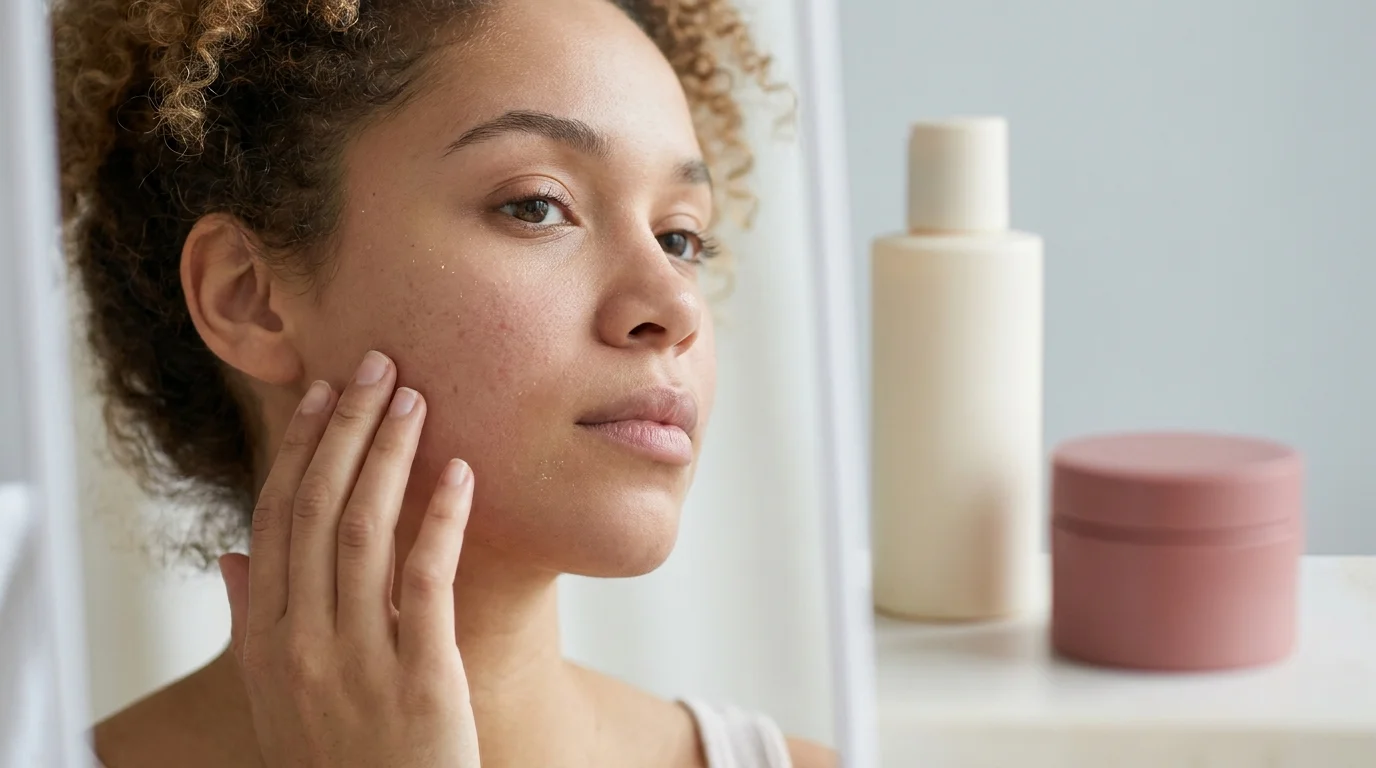
A damaged skin barrier can look dry, flaky, rough, red, or unusually shiny and tight. It can feel worse than it looks: water may sting, moisturizer may burn, and products you used for months may suddenly feel too strong. These signs suggest irritation, but they do not identify the cause by themselves.
What a damaged skin barrier means
Your outer skin layer slows water loss and helps keep irritants out. Its surface cells sit within a lipid matrix rich in ceramides, cholesterol, and fatty acids. Harsh products, inflammation, weather, and some skin conditions can disrupt this system. Water escapes more easily, and everyday products may penetrate or sting more than usual.
Common signs of barrier trouble
1. Tightness after washing
If your face feels stretched, squeaky, or uncomfortable after cleansing, the cleanser, water temperature, or washing frequency may be too harsh. Tightness is especially meaningful when it is new.
2. Stinging from water or plain moisturizer
A mild product can sting when the skin is irritated. Water stinging is a sign to stop active ingredients and simplify. Strong or lasting burning may point to dermatitis and should not be ignored.
3. Flaking and rough texture
Small flakes around the mouth, nose, or cheeks often follow retinol, acids, cold weather, or over-cleansing. Do not scrub them away. Scrubbing can remove more surface cells and extend the problem.
4. Redness or a darker inflamed tone
Redness may look pink or bright red on lighter skin. On deeper skin tones, irritation can appear purple, gray, deep brown, or simply darker than nearby skin. Heat and tenderness can be easier to notice than color.
5. A shiny but dry surface
Irritated skin can look smooth and shiny because the surface is tight, not because it is well hydrated. This often occurs after strong peels or repeated exfoliation.
6. Sudden sensitivity to familiar products
A serum that was comfortable last month may sting after sunburn, over-exfoliation, or a retinol increase. This does not always mean a new allergy. Stop the product and allow skin to settle before testing again.
7. Itching, cracking, or small rash-like bumps
These signs can occur with barrier disruption, but they also raise the chance of eczema or contact dermatitis. Itching is particularly important. A dermatologist may need to identify an allergy or inflammatory condition.
What a damaged barrier can look like by area
| Area | Common appearance | Possible trigger |
|---|---|---|
| Around mouth and nose | Flakes, cracks, redness | Retinoid migration, wiping, cold weather |
| Cheeks | Roughness, heat, stinging | Wind, acids, rosacea, fragrance |
| Forehead | Tight shine, small bumps | Over-exfoliation, hair products |
| Eyelids | Swelling, itch, scaling | Allergy or product transfer; needs caution |
Damaged skin barrier or purging?
Purging is a popular term for a temporary rise in acne-like lesions after an ingredient that changes cell turnover. It should occur where you usually break out. Barrier irritation is more likely to include burning, widespread redness, tightness, flakes, or rash in new areas.
Not every breakout after a new product is purging. A heavy base may clog, a fragrance may irritate, or acne may be changing for unrelated reasons. Stop and seek advice when breakouts are painful, scarring, or paired with significant inflammation.
Damaged skin barrier or dry skin?
Dry skin can be a stable skin type or a temporary condition. Barrier disruption is a change in function often linked with irritation. The two overlap. If a richer moisturizer fixes comfortable dryness, you may not have a major problem. If everything stings and the skin is inflamed, treat it as irritation.
Damaged barrier or allergic reaction?
Allergic contact dermatitis often itches and may swell, blister, or spread beyond where the product was used. Irritant dermatitis more often burns and stays near the application area. These patterns are not perfect. Stop the suspected product and seek medical help for significant symptoms. Formal patch testing can identify some contact allergies.
Can a damaged barrier cause acne?
Irritation can occur alongside breakouts, but barrier damage is not the only cause of acne. Over-stripping may lead someone to use heavy occlusive layers that do not suit their face. Inflammation can also make existing acne look worse. Keep the routine light and avoid changing several acne products at once.
What to do when you notice these signs
- Stop retinol, exfoliating acids, scrubs, peels, and products that sting.
- Use lukewarm water and a mild cleanser only when needed.
- Apply a fragrance-free moisturizer after washing.
- Use broad-spectrum sunscreen and reduce direct sun exposure.
- Do not pick flakes or cover a strong rash with many new soothing products.
Follow the full skin barrier reset routine for a step-by-step plan.
How to track improvement
Look for less stinging during washing, reduced tightness, fewer flakes, and a more comfortable moisturizer application. Take photos in the same light every few days. Constant close-up inspection can make normal texture look alarming.
If symptoms improve, keep the simple routine for at least one more week before restarting an active. Add one product at a time and use it less often than before.
When home care is not enough
- Rapid facial or eye swelling.
- Blisters, open sores, oozing, or yellow crust.
- Fever, spreading warmth, or increasing pain.
- Hives or breathing difficulty.
- A rash that spreads beyond the product area.
- Symptoms lasting more than one to two weeks despite a gentle routine.
Breathing problems or rapid swelling require emergency care. Do not apply strong steroid creams to the face without medical direction.
How to prevent the next flare
Introduce one active at a time. Start retinol once weekly. Keep exfoliation occasional rather than automatic. Avoid hot water and rough tools. Use moisturizer before skin feels cracked. Protect the face from sun and wind. Record the exact product and date when a reaction occurs.
If reactions repeat, a dermatologist can review ingredients and consider patch testing. The problem may be a preservative, fragrance component, adhesive, hair product, or nail product transferred to the face.
Hidden triggers outside your skincare shelf
Shampoo, conditioner, hair dye, nail polish, hand cream, laundry fragrance, pillow sprays, and cleaning products can reach the face. Eyelid reactions are especially likely to come from something transferred by the hands. Masks, helmet straps, and frequent tissue use can add friction.
When a rash repeats, record everything that touched the area during the previous two days. Do not assume the newest face serum is the only possible cause.
How different skin tones show irritation
Medical images and beauty articles often center light skin. On brown or black skin, irritation may look violet, gray, deep red-brown, or darker than surrounding skin. Swelling, warmth, scale, tenderness, and itch can be more reliable signs than bright redness. Inflammation can also leave longer-lasting dark marks.
This is another reason not to keep pushing an active through discomfort. Preventing irritation helps prevent post-inflammatory hyperpigmentation.
Make a product reaction log
Write the product name, date started, location used, frequency, and symptoms. Photograph the ingredient list because formulas change. Note whether the reaction itched, burned, swelled, or formed bumps. Bring this information to a dermatologist if symptoms repeat.
A log can also reveal patterns such as retinol plus cold weather or acid use immediately after shaving. It is more reliable than memory after several product changes.
What not to put on irritated skin
Avoid lemon, vinegar, baking soda, essential oils, toothpaste, undiluted plant extracts, and homemade peels. Do not apply antibiotic ointment automatically; some ingredients in these products can cause contact allergy. Use only a bland moisturizer unless a clinician directs a medication.
A 24-hour response plan
Rinse off the suspected product with lukewarm water. Do not scrub. Photograph the reaction and ingredient list. Apply only a moisturizer you already know is safe. Avoid makeup and direct sun. If symptoms worsen through the day, contact a clinician.
Do not test the same product again while the skin is inflamed. A second exposure can create a stronger reaction and makes it harder to identify the original problem.
Questions to ask at a dermatology visit
Ask whether the pattern suggests irritation, allergy, eczema, rosacea, or infection. Bring your product log and photos. Ask which products to stop, how long to use prescribed treatment, and how to restart skincare. Clear instructions reduce the chance of another flare.
Frequently asked questions
What does a damaged skin barrier look like?
It may appear dry, rough, flaky, red, darker, shiny-tight, or cracked. Appearance varies by skin tone and cause.
Can a damaged skin barrier cause acne?
Irritation can occur with breakouts, but acne has many causes. Breakouts alone do not prove barrier damage.
Why does water sting my face?
Stinging can occur with over-exfoliation, irritant dermatitis, eczema, or another inflamed condition. Persistent or strong stinging needs evaluation.
Is skin purging the same as barrier damage?
No. Burning, widespread redness, cracking, and rash suggest irritation rather than useful purging.
Sources
Medical note: Symptoms described here overlap with several conditions. Seek a qualified clinician for diagnosis.