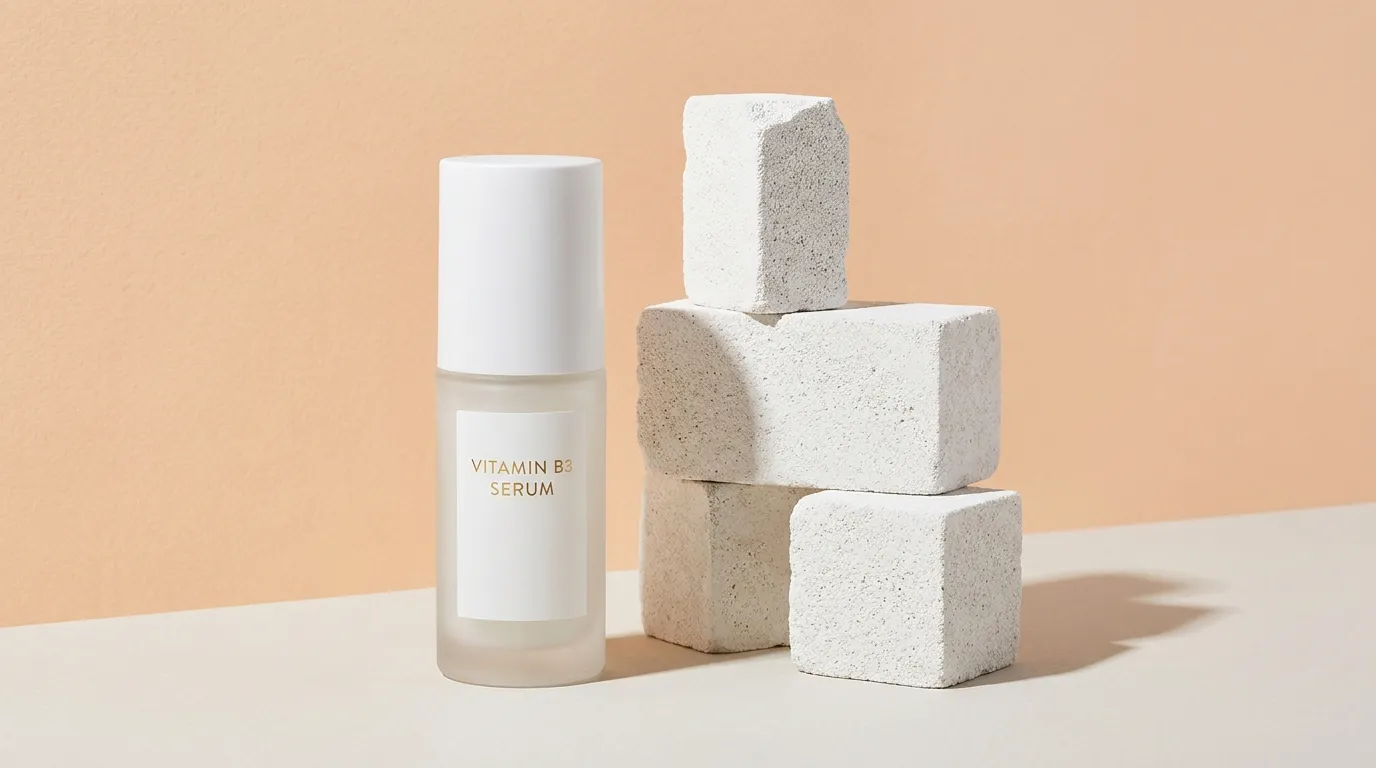
In the landscape of cosmetic chemistry, very few active ingredients possess the structural versatility and biochemical stability of nicotinamide. When consumers ask what is niacinamide in skincare, the most accurate clinical definition is that it is a highly stable, water-soluble amide form of Vitamin B3. Unlike volatile acids or easily oxidized antioxidants, niacinamide is a resilient cell-communicating molecule that actively intervenes in multiple physiological pathways within the stratum corneum without inducing chemical trauma.
The beauty industry frequently markets single-ingredient solutions as aggressive correctors. Niacinamide operates differently; it is an epidermal modulator. Whether your tissue is overproducing sebum, suffering from chronic water loss, or displaying post-inflammatory erythema (redness), introducing this specific vitamin forces the cellular matrix back into a state of biological homeostasis.
The Optimal Concentration Rule
Clinical data dictates that niacinamide reaches maximum trans-epidermal efficacy at concentrations between 2% and 5%. The modern marketing trend of formulating 10%, 15%, or 20% niacinamide serums provides zero additional biological benefit. Instead, these extreme concentrations frequently overwhelm the skin's enzymatic pathways, triggering the exact contact dermatitis and redness the ingredient is meant to prevent.
The Biochemistry: What Does Niacinamide Actually Do?
To understand why this molecule is universally recommended by dermatologists, we must examine its behavior upon entering the lipid barrier. It acts as a precursor to two vital coenzymes—NAD+ and NADP+—which are mandatory for cellular metabolism and tissue repair. Before you evaluate what is a serum in skincare to hold this active, you must understand the specific functions it executes.
1. Ceramide Synthesis and Barrier Fortification
The outermost layer of your skin relies on a lipid bilayer—primarily composed of ceramides, cholesterol, and free fatty acids—to trap moisture. Niacinamide actively upregulates the natural production of epidermal ceramides. By thickening this lipid shield, it drastically reduces trans-epidermal water loss (TEWL), leaving the skin deeply hydrated and structurally sound.
2. Sebaceous Gland Regulation
For patients managing hyper-seborrhea, niacinamide is a frontline treatment. Instead of absorbing oil like a physical clay mask, it chemically down-regulates the sebaceous glands, reducing the total volume of sebum excreted. This makes it an essential active ingredient when constructing a clinical skincare routine for oily skin, as it prevents the oxidized lipid blockages that lead directly to comedones (blackheads).
3. Melanosome Transfer Inhibition (Hyperpigmentation)
Most brightening agents (like hydroquinone) attempt to stop the tyrosinase enzyme from creating melanin. Niacinamide interrupts a different phase of the pigmentation cycle. It blocks the transfer of existing melanin packets (melanosomes) from the melanocytes deep in the skin up to the visible surface cells (keratinocytes). This effectively fades post-acne marks and UV-induced sun spots without bleaching the surrounding tissue.
The 5% Clinical Standard
- Optimal Barrier Repair: Clinically proven to maximize ceramide production without irritation.
- Broad Biocompatibility: Perfectly tolerated by highly sensitive and rosacea-prone skin types.
- Formulation Stability: Remains completely stable in water-based serums at a neutral pH.
The 10%+ Marketing Gimmick
- Histamine Release: High concentrations frequently trigger localized inflammation and allergic contact dermatitis.
- Polymer Pilling: Over-concentrated formulas require heavy thickeners that pill and peel off the skin.
- Diminishing Returns: Biological absorption caps at roughly 5%; anything higher is wasted chemistry.
Integrating Vitamin B3 into Specific Skin Profiles
Because it operates at a highly stable, near-neutral pH (typically 5.0 to 6.5), niacinamide does not induce the micro-tearing or cellular trauma associated with acidic exfoliants. This biochemical neutrality allows it to be integrated into nearly any regimen.
Reactive and Breakout-Prone Barriers
If you suffer from inflammatory lesions (pustules and papules), the localized tissue is highly compromised. Aggressive spot treatments like 10% benzoyl peroxide often destroy the surrounding healthy tissue. When optimizing an acne-prone skincare routine, utilizing a 5% niacinamide formulation suppresses the inflammatory cascade—taking the heat and redness out of active breakouts—while simultaneously regulating the pore-clogging sebum that caused the infection.
5% Niacinamide & Zinc PCA Fluid
Best Serum for Sebum RegulationAn ultra-low viscosity, water-based serum formulated precisely at the 5% clinical threshold. By pairing niacinamide with Zinc PCA, this formula aggressively limits sebaceous gland output while soothing active inflammatory responses. It absorbs instantly without leaving a tacky polymer residue, making it the ideal primer layer beneath daytime SPF.
Formulation Rules: How to Layer Niacinamide
Mastering how to layer skincare products is critical to preserving molecular integrity. Fortunately, niacinamide is notoriously cooperative. It is highly soluble in water, meaning it should be applied during the serum phase, immediately after cleansing and toning, but before your heavy lipid creams.
The Vitamin C and Niacinamide Myth
A prevalent cosmetic myth states that you cannot mix niacinamide with pure Vitamin C (L-Ascorbic Acid). This originated from outdated studies conducted in the 1960s where the two ingredients were heated to extreme temperatures for prolonged periods, causing the niacinamide to hydrolyze into nicotinic acid—a compound that causes severe skin flushing.
In modern, room-temperature cosmetic applications, this reaction does not occur rapidly enough to cause damage. However, because pure L-Ascorbic Acid requires a highly acidic pH (around 3.0) to penetrate the skin, and Niacinamide functions best at a neutral pH (around 6.0), applying them simultaneously can temporarily alter the pH environments they need to operate optimally. For the highest chemical efficacy, apply your Vitamin C in the morning for antioxidant defense, and reserve your Niacinamide for the evening to support overnight lipid repair.
Biomimetic Ceramide & Niacinamide Emulsion
Best for Stratum Corneum RepairA densely formulated recovery cream that utilizes niacinamide to actively stimulate the skin's endogenous ceramide production, while simultaneously supplying exogenous synthetic ceramides to physically patch micro-tears in the acid mantle. Ideal for patients recovering from retinoid burns or severe over-exfoliation.
Frequently Asked Questions
What is niacinamide in skincare?
Niacinamide is a highly stable, water-soluble form of Vitamin B3. In cosmetic formulation, it functions as a cell-communicating ingredient that repairs the skin's lipid barrier, regulates oil production, and interrupts the transfer of pigment to reduce dark spots.
What does niacinamide do for your face?
Clinically, it increases the natural production of ceramides to hydrate the skin, visibly reduces the appearance of enlarged pores by suppressing excess sebum, calms inflammatory redness associated with acne or rosacea, and fades post-inflammatory hyperpigmentation.
Can I use niacinamide every day?
Yes. Because it operates at a neutral pH and does not exfoliate the skin, niacinamide is incredibly gentle. It is biologically safe to use twice a day, every day, in both your morning and evening routines.
Does niacinamide cause purging or breakouts?
No. Niacinamide does not increase cellular turnover, meaning it cannot physically cause a "purge" like retinoids or AHA/BHA acids do. If you experience breakouts from a niacinamide product, you are either reacting to an excessively high concentration (10% or more) or to a heavy thickener used in the formula's base.
Can you mix niacinamide with Vitamin C?
Yes, modern formulations of these two ingredients are stable enough to be used in the same routine without converting into irritating nicotinic acid. However, to maximize their respective pH dependencies, it is most efficient to use Vitamin C in the morning and Niacinamide at night.
Is 10% niacinamide too strong?
From a formulation standpoint, yes. Clinical studies demonstrate that niacinamide achieves its maximum biological efficacy between 2% and 5%. Formulations exceeding 10% offer no additional benefits and dramatically increase the risk of contact dermatitis, redness, and severe skin irritation.
Should I apply niacinamide on damp or dry skin?
Because it is a water-soluble active, niacinamide absorbs most efficiently when applied to slightly damp skin immediately after cleansing or toning. This prevents trans-epidermal water loss and allows the serum to sink deeply into the stratum corneum without pilling.
Can I use niacinamide with retinol?
Yes, they are an exceptional clinical pairing. Retinol accelerates cellular turnover but frequently damages the lipid barrier in the process, causing dryness. Niacinamide actively stimulates ceramide production to fortify the barrier, perfectly neutralizing the irritating side effects of the retinoid.
How long does it take for niacinamide to work?
While you may notice an immediate reduction in surface redness and oiliness within a few days, structural changes take time. Expect visible improvements in pore size, barrier hydration, and hyperpigmentation after 8 to 12 weeks of consistent, daily application.
Does niacinamide lighten the skin?
It does not bleach or lighten your natural skin tone. Instead, it acts as an inhibitor, stopping the transfer of melanin (pigment) to the surface of the skin. This effectively fades localized dark spots, sun damage, and acne scars, restoring your natural, even complexion.