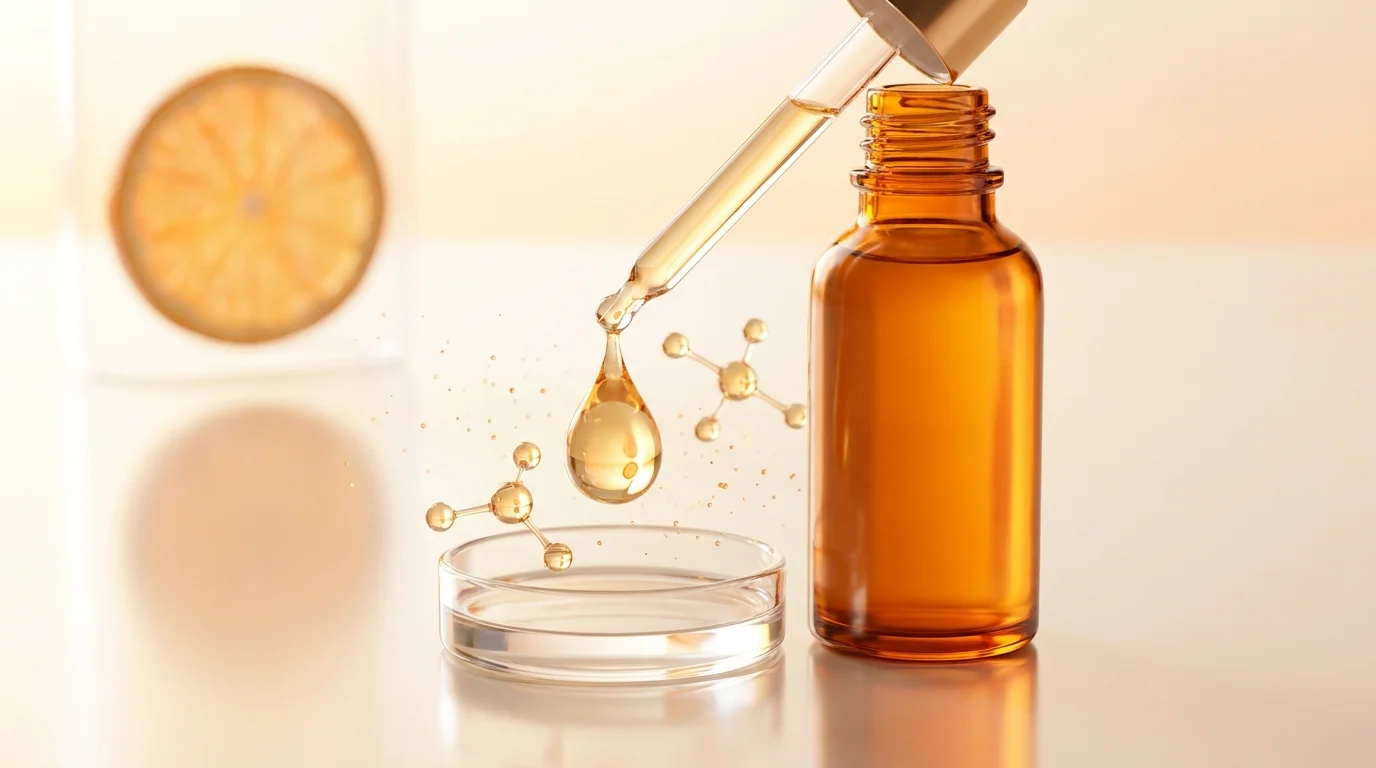
Vitamin C serum is a topical antioxidant product made to place a usable form of vitamin C on the skin. It may support protection from oxidative stress and improve the look of uneven tone or photoaging over time. The hard part is not the promise. It is making a stable formula that reaches the skin without causing too much irritation.
When you are ready to shop, use our vitamin C serum formula comparison guide rather than choosing by percentage alone.
What vitamin C does in skin
Vitamin C, also called ascorbic acid, takes part in antioxidant defense and collagen-related processes. Ultraviolet radiation, pollution, and normal metabolism can create reactive molecules that contribute to oxidative stress. Topical antioxidants are designed to support the skin against that stress.
Small clinical studies have reported changes in signs of photoaging, pigmentation, and skin appearance after consistent topical vitamin C use. One double-blind half-face study found improvement in photoaging measures after a vitamin C formulation was used for 12 weeks. More recent trials also report antioxidant and color-related changes, but results belong to the formulas studied. They do not prove that every serum with “vitamin C” on the front will perform the same way.
Vitamin C serum benefits
Antioxidant support
Vitamin C can donate electrons to help neutralize reactive species. In skincare, this is often described as protection from environmental stress. It works as an extra layer of support, not an invisible shield. Sunscreen, shade, and protective clothing remain the main sun-safety tools.
Uneven tone and dark spots
Vitamin C can affect pathways involved in melanin production and may help the look of uneven pigmentation. Results are gradual and depend on the type of dark spot. Post-acne marks, melasma, freckles, and raised lesions are not the same. New UV exposure can keep pigmentation active, which makes sunscreen essential.
Fine lines and photoaging
Because vitamin C is involved in collagen biology, topical formulas are often marketed for fine lines. Some clinical research supports modest visible improvement over several months. A serum cannot lift skin, replace a procedure, or erase deep wrinkles.
Brighter appearance
“Brightening” usually means a more even, less dull appearance. It does not mean bleaching natural skin color. Avoid products that promise dramatic whitening or fail to list their full ingredients.
L-ascorbic acid versus vitamin C derivatives
L-ascorbic acid is the active form of vitamin C most often discussed in research. It is water-soluble, sensitive to light and air, and usually needs an acidic formula. That low pH can sting sensitive skin.
Derivatives are modified forms designed for stability, solubility, or comfort. Examples include sodium ascorbyl phosphate, magnesium ascorbyl phosphate, ascorbyl glucoside, 3-O-ethyl ascorbic acid, and tetrahexyldecyl ascorbate. They are not interchangeable. Each must be delivered and converted differently, and the evidence base varies.
| Form | Common reason it is used | Practical note |
|---|---|---|
| L-ascorbic acid | Direct, well-studied active form | Can be unstable and sting at low pH |
| Sodium ascorbyl phosphate | Water-soluble derivative | Often used in gentler formulas |
| Magnesium ascorbyl phosphate | Stable water-soluble derivative | Evidence is not identical to ascorbic acid |
| Ascorbyl glucoside | Stability and easy formulation | Requires conversion in skin |
| Tetrahexyldecyl ascorbate | Oil-soluble format | Often found in richer serums and creams |
What concentration is effective?
There is no single best percentage for every form. L-ascorbic acid products often appear between 5% and 20%. Higher does not automatically mean better, and strong acidic formulas can irritate. Vitamin C derivatives use different percentages, so a 10% derivative cannot be judged as equal to 10% ascorbic acid.
Beginners or sensitive skin can start with a lower-strength product or a derivative. Use the brand's directions and do not chase a high number if a lower one is comfortable.
Why pH and packaging matter
Water-based L-ascorbic acid needs careful formulation. Light, heat, oxygen, and time can speed degradation. Dark or opaque packaging and a small opening help. Some brands use airless pumps, while others use tinted dropper bottles. Store the product exactly as directed and close it quickly.
A pale yellow color may be normal for some formulas. Major darkening to orange or brown, a changed smell, separation, or an expired label may signal degradation. Check the brand's normal color description before discarding a product.
Vitamin C, vitamin E, and ferulic acid
Some formulas combine ascorbic acid with vitamin E and ferulic acid to support antioxidant stability and performance. This combination has a strong marketing reputation, but it is not the only valid design. Water-free vitamin C, derivatives, and other antioxidant systems can use different approaches.
A study of commercial vitamin C formulas on ex vivo skin also found that formulas can behave differently. That is a reminder that one ingredient name does not predict the safety or performance of an entire serum.
How to use vitamin C serum
Many people use it in the morning after cleansing and before moisturizer and sunscreen. Apply the amount stated on the label to dry or slightly damp skin, depending on directions. Let it settle, then moisturize. Finish with broad-spectrum sunscreen.
Vitamin C can also be used at night. Morning use is popular because it pairs antioxidant support with daytime sun protection, not because the ingredient stops working after sunset.
Can vitamin C serum be used every day?
Many products are designed for daily use. Beginners can start every other morning or two to three times a week. Increase only when the formula does not cause meaningful stinging, redness, or dryness. Daily use is less important than comfortable consistency.
What can vitamin C be used with?
A simple routine can pair vitamin C with hyaluronic acid, ceramides, moisturizer, and sunscreen. Niacinamide and vitamin C can usually exist in the same modern routine; the old claim that they always cancel each other is too broad. The full formulas still need to layer without pilling or irritation.
Retinol can be used at night while vitamin C stays in the morning. Strong acids in the same routine may increase stinging. If you use several actives, separate them instead of proving that every possible combination fits at once.
Who should be cautious?
Very sensitive skin, active eczema, rosacea flares, or a damaged barrier may not tolerate acidic vitamin C. Patch test first and choose a gentler derivative if appropriate. Stop for persistent burning, swelling, rash, or blistering. Vitamin C is not a treatment for a suspicious changing spot or a medical pigmentation condition.
Realistic result timeline
Hydration from the serum base may be noticeable quickly. Changes in uneven tone or fine lines take weeks to months. Use photos in the same lighting and keep sunscreen consistent. If you change five products at once, you cannot tell which one helped.
How to evaluate a vitamin C claim
Ask whether the brand names the vitamin C form and concentration. Check whether the claim refers to an ingredient study or a clinical test of the finished serum. A laboratory antioxidant test does not automatically prove visible wrinkle or pigmentation results on people. Look for study length, number of participants, comparison group, and conflicts of interest.
Be careful with “clinically proven” when no study is linked. A small study can be useful but should not support a promise to erase deep wrinkles. Honest language uses words such as “improves the appearance” and gives a realistic timeline.
Freshness and storage checklist
- Write the opening date on the bottle.
- Keep it away from a sunny window and hot bathroom shelf.
- Close a dropper immediately after use.
- Do not touch the dropper to your face.
- Follow any refrigeration or after-opening period.
Do not add water or mix the serum inside another bottle. If the formula changes far beyond the brand's normal color range, contact the manufacturer with the batch number.
Vitamin C in food versus skincare
Dietary vitamin C supports normal body functions, but eating fruit does not place a controlled topical formula on the skin. A serum also does not replace a balanced diet. Oral megadoses are not a shortcut to brighter skin and can cause side effects or interact with health conditions. Keep cosmetic and nutrition claims separate.
Frequently asked questions
What does vitamin C serum do for the face?
It can provide antioxidant support and may improve some signs of uneven tone and photoaging, depending on the formula.
Is L-ascorbic acid the same as vitamin C?
It is the active form commonly used in research. Vitamin C derivatives are modified forms with different stability and conversion needs.
How long does vitamin C serum take to work?
Visible changes usually require consistent use over weeks or months. Results vary with formula, concern, and sun protection.
How can I tell if vitamin C has oxidized?
Large color changes toward dark orange or brown, a changed smell, or expired storage time can be warning signs. Check brand guidance.
Sources
Note: This is cosmetic skincare education. A dermatologist should assess persistent pigmentation, rash, or a changing lesion.