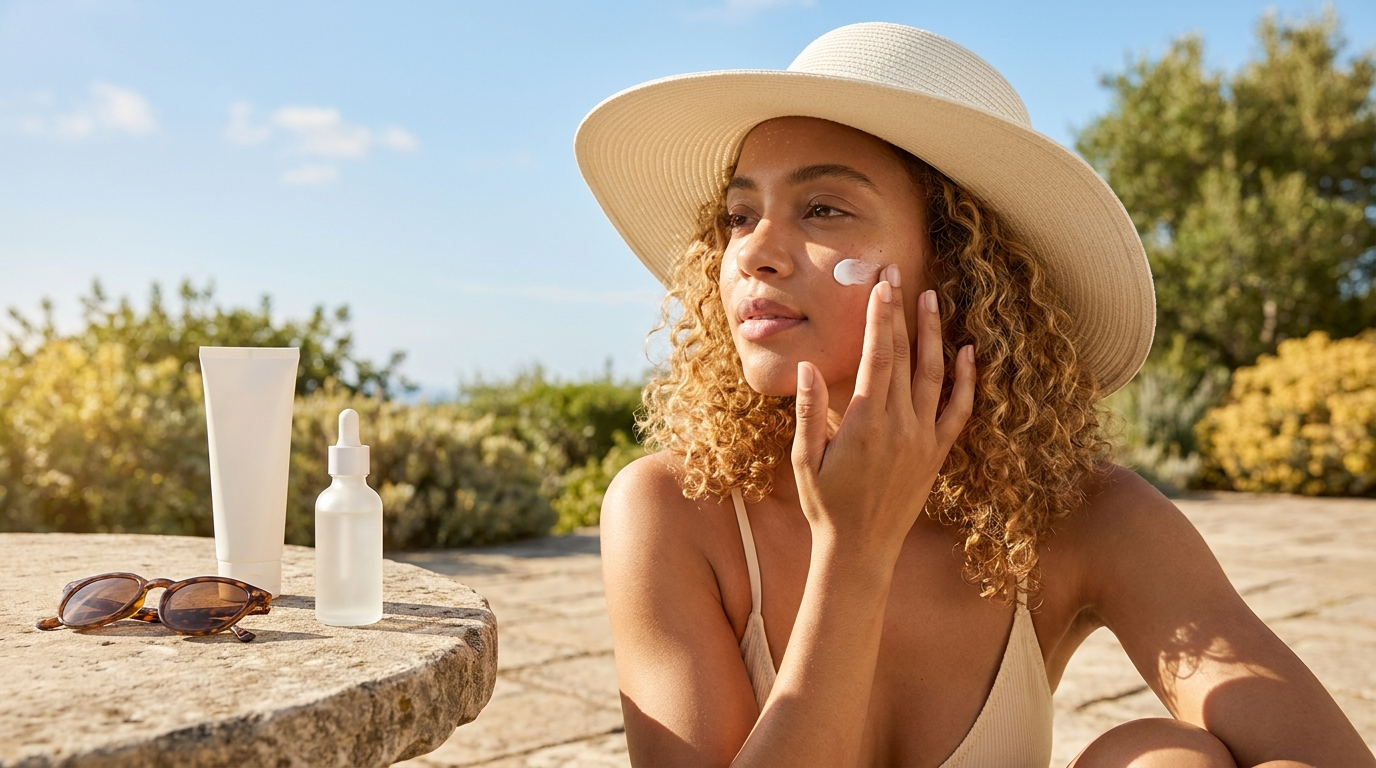
The best sunscreen for your face is broad spectrum, comfortable enough to apply generously, and practical enough to reapply. A technically impressive formula does little when you use half the needed amount because it feels greasy, stings your eyes, or leaves a cast you dislike. Skin type, climate, makeup, outdoor time, and U.S. labeling all affect the choice.
What broad spectrum and SPF mean
Ultraviolet B radiation is a major cause of sunburn. Ultraviolet A penetrates more deeply and contributes to photoaging and skin damage. Broad-spectrum labeling means the product has met a test for both UVA and UVB protection under its market's rules.
SPF mainly reflects protection against sunburn from UVB under test conditions. It does not tell you how many hours you can stay in the sun. The FDA explains that exposure also changes with time of day, location, weather, and activity. Higher SPF cannot compensate for a thin layer or missed areas.
Mineral versus chemical sunscreen
U.S. labels often call zinc oxide and titanium dioxide mineral active ingredients. Other approved filters are often called chemical or organic filters. Both types work by absorbing UV energy, and mineral filters also scatter some light. The simple internet claim that mineral sunscreen only reflects while chemical sunscreen only absorbs is inaccurate.
Neither category is always safer or better. Mineral sunscreens can leave a white cast or feel dry. Organic-filter sunscreens can be more transparent and elegant but may sting some eyes or skin. The final formula matters more than the category.
| Type | May suit | Possible drawback |
|---|---|---|
| Mineral | Sensitive skin, preference for zinc oxide | White cast, dryness, heavy texture |
| Organic-filter | Transparent finish, light textures | Eye sting or sensitivity in some users |
| Tinted mineral | Visible cast concerns, pigmentation routines | Limited shade range, transfer |
| Hybrid | Balanced finish where available | Label category varies by country |
Best sunscreen for oily skin
Look for fluids, gels, milks, or light lotions with a natural or matte finish. Silica and film-formers can reduce shine. Alcohol may create a fast-drying feel but can sting sensitive or recently treated skin. “Oil-free” is a starting filter, not a performance guarantee.
Do not skip moisturizer automatically. If sunscreen is moisturizing enough, it may serve as the final morning layer. If acne treatment has dried your skin, a light moisturizer underneath may improve comfort.
Best sunscreen for acne-prone skin
Choose a lightweight, non-greasy formula tested as non-comedogenic when possible. No sunscreen can guarantee zero breakouts. Introduce it while the rest of your acne routine stays stable, then watch for a pattern over several weeks.
Removing water-resistant sunscreen may require a cleansing balm or micellar first step, but harsh double cleansing can damage the barrier. Use the gentlest method that fully removes the film.
Best sunscreen for dry skin
Creams or lotions with glycerin, hyaluronic acid, ceramides, squalane, or dimethicone may reduce tightness. A dewy finish can look comfortable on dry skin. If your sunscreen already acts like a moisturizer, a separate cream may be unnecessary in humid weather.
Best sunscreen for sensitive skin
Fragrance-free mineral sunscreen is a common starting point, but sensitive skin can still react to preservatives, botanicals, or the base. Zinc oxide may feel soothing for some people. Patch test around the jaw rather than near the eye first.
If every sunscreen burns, your barrier may already be irritated. Follow our skin barrier reset and ask a dermatologist for help finding a tolerable option.
Best tinted sunscreen
Tint can reduce white cast and may add iron oxides. Iron oxides can help protect against visible light, which may matter for melasma and post-inflammatory pigmentation. Shade match is essential. A tint that is too light, dark, orange, or pink will not be used in the right amount.
A tinted sunscreen is still sunscreen. Apply enough for labeled protection rather than using a tiny makeup-like dot.
Korean and other international sunscreens
Korean sunscreens are popular for light textures and modern UV-filter systems. U.S. consumers should know that filters and labeling rules differ by market. A product imported for personal use may not carry the same U.S. Drug Facts label or water-resistance claims.
International formulas can be excellent for casual daily wear, but check authenticity, seller storage, expiration, UVA rating, and water-resistance directions. For sports or swimming, choose a clearly labeled water-resistant product.
Best sunscreen under makeup
Choose a formula that sets without a greasy film or heavy pilling. Apply skincare in thin layers, wait several minutes, then spread sunscreen evenly. Let it form a film before makeup. Rubbing foundation aggressively can disturb coverage, so pat or use a light touch.
Water resistance for sports
No sunscreen is waterproof. U.S. labels may state water resistance for 40 or 80 minutes. Reapply after swimming, sweating, or towel drying according to the label. A daily elegant sunscreen that is not water resistant may not be the right product for a beach day.
How much facial sunscreen to use
Use enough to cover all exposed skin evenly. For face and neck, many educators use the two-finger method as a practical estimate, but product density and finger size vary. The FDA gives one ounce as a whole-body reference for an average adult. Follow the label and include ears, hairline, neck, and exposed scalp.
Apply about 15 minutes before sun exposure when the label directs. Reapply at least every two hours during exposure and more often after swimming or sweating.
Face sunscreen examples by need
These are examples of common formula styles, not a permanent ranking. Verify current U.S. labels and recall information.
- EltaMD UV Clear Broad-Spectrum SPF 46: a lightweight zinc-oxide combination format popular with acne-prone and redness-prone users.
- La Roche-Posay Anthelios mineral or melt-in milk lines: several finishes and water-resistance options; exact filters vary by product.
- CeraVe Hydrating Mineral Face Sunscreen: a mineral cream direction with ceramides; cast and richness should be tested.
- Neutrogena Invisible Daily Defense or Clear Face lines: accessible organic-filter options with different finishes and water-resistance claims.
- Beauty of Joseon Relief Sun: a popular Korean daily-wear texture; confirm authentic sourcing and whether it fits your outdoor use.
How to test a sunscreen
- Patch test along the jaw for several days.
- Apply a full facial amount on a normal day.
- Check eye sting, cast, shine, dryness, and pilling.
- Test under your usual makeup.
- Test reapplication before relying on it during travel or sport.
Sunscreen mistakes that reduce protection
- Using a small dot only on the center of the face.
- Mixing sunscreen with foundation or moisturizer in the palm.
- Missing ears, neck, hairline, lips, or eyelids.
- Believing high SPF lasts all day.
- Using an expired or heat-damaged bottle.
- Calling a product waterproof and skipping reapplication.
Sunscreen safety and recalls
Buy from reputable sellers and check FDA recall notices when a product or lot is questioned. Do not stop sun protection because of a headline about one contaminated batch. The FDA continues to recommend sunscreen along with other sun-safety measures.
Reapplying sunscreen over makeup
The most reliable reapplication is another even layer of a labeled sunscreen. A cushion, stick, mist, or powder may help with convenience, but it can be difficult to apply enough for the labeled SPF. Pat a fluid sunscreen over makeup in sections, use a sponge if needed, and expect some cosmetic touch-up.
Do not depend on SPF foundation alone when the makeup amount is much smaller than the sunscreen test amount. Makeup with SPF can be an extra layer, not the only layer.
Sunscreen around the eyes
Use a formula that does not migrate or sting. Mineral sticks or fragrance-free creams may be easier for some people. Keep product out of the eye and rinse with clean water if exposure occurs. Sunglasses and a hat add protection and reduce the amount of product moving with sweat.
Children and infant sun protection
Ask a pediatric professional before applying sunscreen to infants younger than six months. Use shade, clothing, and hats. For children old enough for sunscreen, follow the product age directions and reapply after swimming or sweating.
Frequently asked questions
What SPF is best for the face every day?
Choose broad-spectrum protection that meets current guidance. Many dermatologists recommend SPF 30 or higher for daily exposed skin.
Is mineral or chemical sunscreen better?
Neither is universally better. Protection, tolerance, finish, and correct use matter more.
What sunscreen is best for oily or acne-prone skin?
Light fluids, gels, and non-greasy lotions often feel better. Acne compatibility depends on the complete formula.
How often should facial sunscreen be reapplied?
Follow the label. FDA guidance says at least every two hours during sun exposure and more often after swimming or sweating.
Sources
Disclosure: Product examples are not paid placements. Formulas and availability change. Sunscreen lowers risk but does not block all UV radiation.