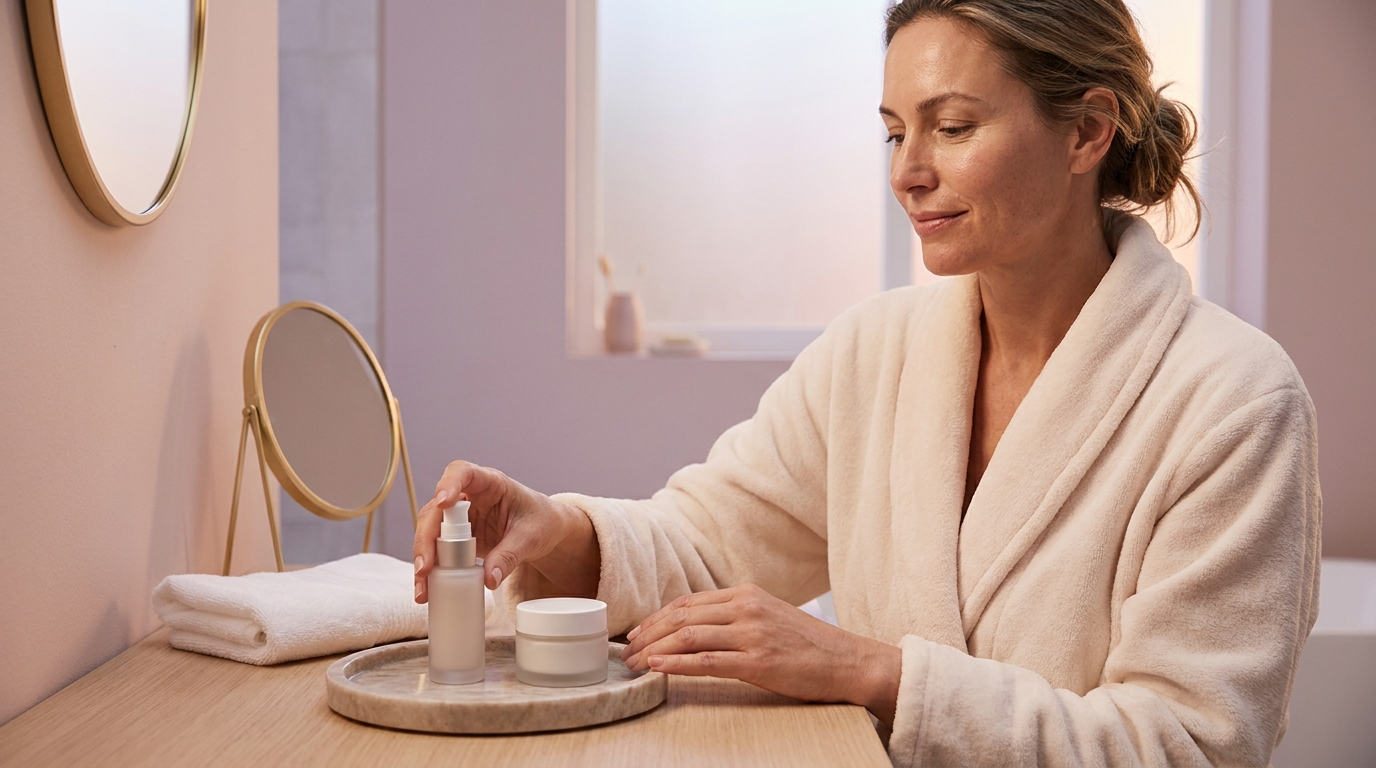
Retinol can help with uneven texture, mild dark spots, and fine lines, but the fastest way to dislike it is to start too strong. A beginner does not need nightly use, a high percentage, or a shelf full of matching actives. You need one suitable product, a plain moisturizer, daily sunscreen, and enough patience to let your skin adjust.
What retinol is
Retinol is a cosmetic form of vitamin A and part of the retinoid family. Prescription retinoids, such as tretinoin, act more directly and are not the same as an over-the-counter retinol serum. Your skin must convert retinol through several steps before it reaches retinoic acid, the form that interacts with skin cells. That is one reason retinol is often milder than prescription options. It can still irritate, especially when it is new to your routine.
The American Academy of Dermatology says retinol may be useful for mild uneven tone, mild pigmentation, and fine lines. It also advises people with allergies, dryness, redness, or inflammation to get professional guidance. That balance matters. Retinol is useful, but it is not a required step for healthy skin and it is not right for every person.
What strength should a beginner use?
There is no universal percentage that works for every formula. A 0.2% product from one brand may feel different from a 0.2% product from another because the base, delivery system, supporting ingredients, and stability differ. Some brands do not disclose the percentage at all. The AAD notes that over-the-counter retinol percentages are not standardized on labels.
A practical rule is to choose the lowest retinol option in a brand's line. Products marketed around 0.1% to 0.3% are often positioned as beginner strengths, but the label and your skin response matter more than the number. Encapsulated retinol may release more gradually. A cream base may feel supportive on dry skin. A lightweight serum may feel better on oily skin. None of these features guarantees zero irritation.
| Starting point | Who it may suit | Watch for |
|---|---|---|
| Low-strength cream | Normal or dry skin | Rich bases may feel heavy on some acne-prone skin |
| Low-strength serum | Normal, combination, or oily skin | Alcohol or fragrance can add irritation |
| Encapsulated formula | Beginners wanting gradual delivery | “Encapsulated” does not reveal the full strength |
| Retinol in squalane | Dry skin that likes facial oils | Oil texture may not suit everyone |
How to start retinol step by step
- Patch test first. Follow the brand's test directions. A patch test cannot predict every reaction, but it may reveal an immediate problem.
- Choose a calm week. Do not start after a peel, sunburn, waxing session, or a period of heavy exfoliation.
- Cleanse gently at night. Use lukewarm water and a cleanser that does not leave your face tight.
- Let skin dry. Damp skin can increase penetration and make some people more irritated.
- Use a pea-size amount. That amount is for the whole face, not each cheek. Avoid eyelids, lip corners, and the folds beside your nose unless the label says otherwise.
- Moisturize. Apply a plain moisturizer after retinol. Very dry or sensitive skin can apply moisturizer before and after it.
- Use sunscreen every morning. Retinoid routines and unprotected sun exposure do not work well together.
A four-week beginner schedule
Week one and two: use retinol on one night each week. Keep every other evening simple. Week three and four: if there is no meaningful burning, cracking, or lasting redness, move to two non-consecutive nights. After that, stay at twice weekly until your skin feels fully settled. Some people never need more than two or three nights a week.
Do not increase strength and frequency at the same time. Change one thing, then watch your skin for at least a few weeks. Consistency at a comfortable level is more useful than pushing through a cycle of irritation, stopping, and restarting.
The moisturizer sandwich method
The “sandwich” method means moisturizer, retinol, then another light layer of moisturizer. It can buffer the product around sensitive areas and reduce dryness. It may also reduce how much retinol reaches the skin, but that tradeoff is reasonable when the goal is better tolerance. Use a basic fragrance-free moisturizer rather than a cream packed with acids or other treatments.
If you are rebuilding from irritation, read our guide on how to repair the skin barrier before trying retinol again.
What not to combine on the same beginner night
At first, keep exfoliating acids, scrubs, strong benzoyl peroxide products, and other retinoids out of the same routine. The issue is not that every combination is chemically forbidden. The issue is the total irritation load. Once your retinol routine is stable, a dermatologist can help you arrange acne treatments or stronger actives.
Vitamin C is often used in the morning and retinol at night. Azelaic acid can sometimes share a routine, but beginners may find alternate routines easier. Our azelaic acid layering guide explains cautious options.
Normal adjustment versus a bad reaction
Mild temporary dryness or light flaking can occur when starting. It should be manageable and improve when you reduce frequency. Significant burning, swelling, hives, blistering, crusting, eye irritation, or a spreading rash is not a sign to “push through.” Rinse the product off, stop using it, and seek medical advice when symptoms are strong or do not settle.
Online discussions often call every breakout “purging.” Retinoids can change cell turnover, but new acne can also come from irritation, a heavy product base, hormones, or the natural course of acne. Painful nodules, scarring, or acne linked with menstrual or hormonal changes deserves professional care.
How long before retinol results appear?
Skin comfort comes first. Visible change is slow. Texture may begin to look smoother after several weeks, while fine lines and uneven pigmentation can take months. Photos taken in the same light every four weeks are more useful than checking the mirror every morning. More product does not create faster healthy results.
Who should pause or avoid retinol?
- People who are pregnant or trying to become pregnant should avoid retinoids, including cosmetic retinol, under current AAD and ACOG guidance.
- People with active eczema, rosacea flares, sunburn, open skin, or strong inflammation should seek guidance before starting.
- Anyone using prescription acne or skin treatments should ask the prescriber how retinol fits the plan.
- People planning facial waxing, peels, or procedures should tell the professional about retinoid use.
Retinol for beginners: simple routine
| Morning | Retinol night | Recovery night |
|---|---|---|
| Gentle cleanse or rinse | Gentle cleanse | Gentle cleanse |
| Moisturizer | Retinol on dry skin | Hydrating serum if desired |
| Broad-spectrum sunscreen | Plain moisturizer | Plain moisturizer |
How to decide whether to increase strength
Do not move up because the bottle is empty or because a creator says beginners “graduate” after one month. First ask whether you can use the current product two or three times a week without burning, lasting redness, or repeated peeling. Next ask whether you have used it long enough to judge results. A comfortable low strength used for three months may be more useful than a strong formula used twice and abandoned.
If your skin is calm but progress is limited after several months, change either frequency or strength, not both. You might add one extra night per week and hold that schedule. If you choose a stronger product, return to once weekly. Keep notes with the product name, strength, nights used, and reactions. This simple record prevents accidental overuse.
Retinol through different seasons
Cold wind and indoor heating can make the same formula feel stronger in winter. Reduce frequency and use a richer moisturizer. Hot, humid weather may make an oily retinol base uncomfortable, but it does not remove the need for moisturizer and sunscreen. Travel, swimming, high-altitude sun, and long outdoor days are also reasonable times to pause rather than force a schedule.
After a sunburn, waxing, chemical peel, laser treatment, or other procedure, follow the provider's instructions before restarting. Retinol should be one part of a stable routine, not a rule you obey regardless of what your skin is experiencing.
Frequently asked questions
What strength of retinol should a beginner use?
Choose the lowest over-the-counter option from a reputable brand. Percentages are not standardized, so compare the complete formula and directions rather than the number alone.
How often should a beginner use retinol?
Begin with one or two nights a week. Increase only after several comfortable weeks. Nightly use is not required.
Can beginners use retinol every night?
Not at first. Starting nightly raises the risk of dryness and irritation without guaranteeing faster results.
Should retinol be avoided during pregnancy?
Yes. Current dermatology and obstetric guidance recommends avoiding retinoids during pregnancy. Ask your clinician about alternatives such as azelaic acid.
Sources
Editorial note: This guide is general skincare education, not medical diagnosis or treatment. Product directions and professional advice take priority.