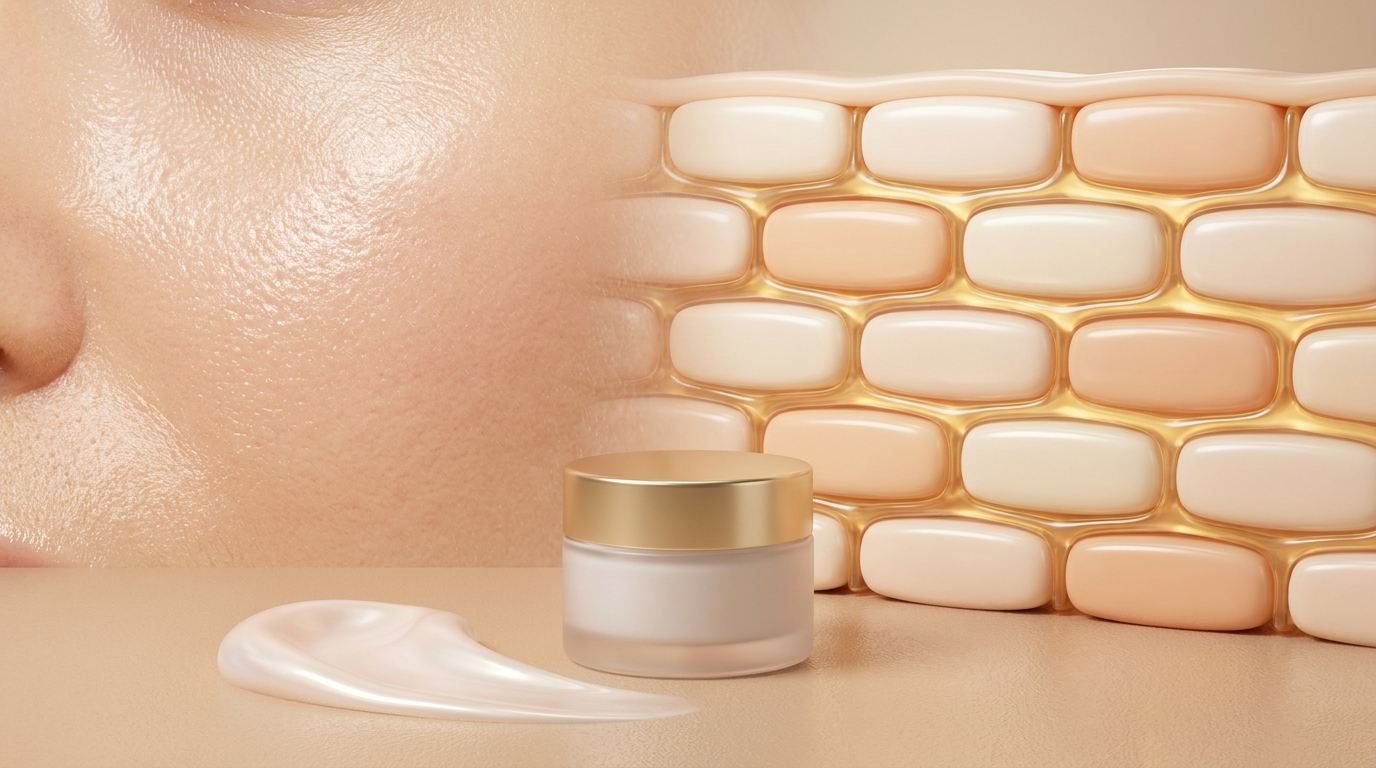
Ceramides are not a beauty trend invented for moisturizer labels. They are lipids naturally found in the outer layer of your skin. Together with cholesterol and fatty acids, they help form the organized barrier that keeps water in and many outside irritants out. A ceramide product cannot solve every cause of dry or sensitive skin, but it can support a routine built around barrier care.
What are ceramides?
The outer skin layer is called the stratum corneum. It is often explained with a “bricks and mortar” model. The corneocytes are the bricks. A lipid mixture around them forms the mortar. Ceramides make up an important part of that mixture, along with cholesterol and free fatty acids.
This structure limits transepidermal water loss, often shortened to TEWL. Water is always moving from deeper layers toward the surface and the air. A well-functioning barrier slows that loss. When the barrier is disrupted, skin can feel tight, rough, flaky, itchy, or more reactive.
What do ceramides do for skin?
- Support barrier structure: Ceramides help organize lipids around surface cells.
- Reduce moisture loss: A better lipid barrier can slow water escaping from the skin.
- Improve the feel of dry skin: Ceramide creams often combine barrier lipids with humectants and emollients.
- Support irritated routines: Plain ceramide moisturizers can be useful when retinol, acne products, or weather increase dryness.
A clinical study published in the Journal of Clinical and Aesthetic Dermatology found that a ceramide cream improved hydration and reduced TEWL over 24 hours. Another study of a ceramide-containing cream in older adults with dry skin reported improved hydration, barrier measures, and skin pH with continued use. Product-sponsored research should be read with its conflicts in mind, but the findings fit the basic role of barrier lipids.
Types of ceramides on ingredient labels
You may see names such as Ceramide NP, Ceramide AP, Ceramide EOP, Ceramide NS, or older numerical labels like ceramide 1 and ceramide 3. These names describe different ceramide structures. A longer list does not automatically make a moisturizer better. The amount, ratio, delivery system, and other ingredients affect performance.
Some products use synthetic or lab-made ceramides designed to resemble those found in skin. “Plant ceramides” or phytoceramides are often marketed in topical products and supplements, but they are not automatically identical to human skin ceramides. For everyday skincare, the evidence and full moisturizer formula matter more than a natural-versus-synthetic slogan.
Ceramides, cholesterol, and fatty acids
Skin barrier lipids work as a system. That is why many barrier creams combine ceramides with cholesterol and fatty acids. A formula may also include glycerin, hyaluronic acid, urea, petrolatum, dimethicone, or squalane. These ingredients perform different jobs:
| Ingredient group | Main role in a moisturizer | Examples |
|---|---|---|
| Barrier lipids | Support the lipid structure | Ceramides, cholesterol, fatty acids |
| Humectants | Bind water in the outer skin | Glycerin, hyaluronic acid, urea |
| Emollients | Smooth rough spaces and improve feel | Squalane, triglycerides, fatty alcohols |
| Occlusives | Slow water loss from the surface | Petrolatum, dimethicone, waxes |
Are ceramides good for dry skin?
Dry skin is an obvious match for a ceramide moisturizer, but texture matters. A cream or balm with ceramides, glycerin, and an occlusive ingredient may feel more protective in cold or dry weather. Apply it after washing while skin is still slightly damp. This helps trap water before it evaporates.
Severe scaling, painful cracks, or persistent itch may be eczema, psoriasis, contact dermatitis, or another condition. A moisturizer can support care, but it may not replace treatment.
Are ceramides good for oily skin?
Oily skin still has a barrier and can still become dehydrated or irritated. Strong cleansers, frequent acids, and acne treatments can increase water loss even when sebum remains high. A light ceramide lotion or gel-cream can support comfort without the feel of a heavy balm.
Ceramides themselves do not automatically clog pores. Breakouts depend on the complete formula and personal response. Choose a texture you can apply in a thin, even layer. Our ceramide moisturizer guide by skin type gives a practical checklist.
Ceramides for sensitive skin
Ceramide products are often useful for sensitive skin because they can be formulated without strong active ingredients. Still, the word “ceramide” does not make the whole bottle gentle. Fragrance, essential oils, exfoliating acids, and botanical extracts may cause problems for some users. Look for a fragrance-free formula with clear directions and patch test if your skin reacts easily.
Ceramides with retinol, vitamin C, or acids
A plain ceramide moisturizer can usually share a routine with many active ingredients. It does not neutralize retinol. It can be applied after retinol or used before and after it as a buffer. It can also follow vitamin C, azelaic acid, or an exfoliant when those products are already tolerated.
The important word is “plain.” A moisturizer containing its own retinol or acids changes the irritation load. Read the complete label rather than assuming every barrier cream is inactive.
How to use ceramides in a routine
Morning
- Gently cleanse or rinse.
- Apply any tolerated treatment serum.
- Apply ceramide moisturizer.
- Finish with broad-spectrum sunscreen.
Night
- Remove makeup and sunscreen without harsh scrubbing.
- Use a gentle cleanser.
- Apply treatment only if your skin is calm.
- Apply ceramide moisturizer.
You do not need separate ceramide toner, serum, lotion, cream, and mask. One well-tolerated moisturizer is enough for most routines.
Ceramide serum versus moisturizer
A serum can deliver ceramides in a light base, but it may not contain enough occlusive material for very dry skin. A moisturizer is designed to reduce water loss and soften the surface. If you use a serum, you may still need cream or lotion on top. Buying both is optional, not a requirement.
Topical versus oral ceramides
Oral phytoceramide supplements are a separate category from topical moisturizers. Supplement quality, evidence, dose, allergies, and medication interactions need different evaluation. Do not assume a capsule is a faster way to repair the skin barrier. Ask a healthcare professional before using supplements, especially during pregnancy, breastfeeding, or medical treatment.
Common ceramide mistakes
- Using a ceramide cream while continuing the scrub or acid that causes daily burning.
- Assuming more ceramide names mean a stronger product.
- Choosing a rich balm for oily skin, then using too little because the texture feels unpleasant.
- Expecting one application to treat eczema or another chronic skin condition.
- Ignoring sunscreen while trying to calm an irritated barrier.
How to judge whether a ceramide product helps
Use the same moisturizer consistently for two to four weeks. Track how skin feels after washing, at midday, and the next morning. Useful improvement may look like less tightness, fewer flakes, less need to reapply, and better tolerance of prescribed treatment. A same-day glow can come from emollients and does not prove the barrier has fully recovered.
Keep cleanser, active products, and weather exposure as stable as possible. If you switch several items, no single result can be assigned to ceramides. For recurring eczema or dermatitis, symptom tracking should support medical care rather than replace it.
Do ceramide ratios matter?
Research and dermatology discussions often mention mixtures of ceramides, cholesterol, and free fatty acids in skin-like ratios. This is more complex than counting the three ingredients on a label. Manufacturing method, delivery, concentration, and the condition being treated all matter. Most cosmetic labels do not disclose ratios, so shoppers cannot reliably rank products by this feature.
Choose a well-tolerated complete moisturizer from a transparent brand. Do not reject a helpful formula because it lacks a marketing claim about an exact ratio.
Ceramides across age and climate
Children, adults, and older skin can all use ceramide moisturizers, but medical conditions and product directions differ. Older skin often becomes drier and may prefer a cream. Teen acne routines may need a light lotion. In a humid climate, a heavy occlusive can feel sticky, while dry winter air may require a richer layer.
Apply to body areas as well as the face when the product is designed for both. Hands exposed to frequent washing often benefit from cream after each wash and ointment at night. Use a separate product around eyes if the facial cream stings there.
Frequently asked questions
What do ceramides do for skin?
They are lipids that support the outer barrier and help limit water loss between surface skin cells.
Are ceramides good for dry skin?
Yes. Ceramide moisturizers can support hydration and barrier function, especially in formulas that also contain humectants and occlusives.
Can oily skin use ceramides?
Yes. Choose a lightweight lotion or gel-cream if rich products feel greasy.
Can ceramides clog pores?
Ceramides are not automatically pore-clogging. Acne compatibility depends on the complete formula and your skin.
Sources
Editorial note: This article is general skincare information. Persistent rash, eczema, infection, or painful cracking needs professional assessment.