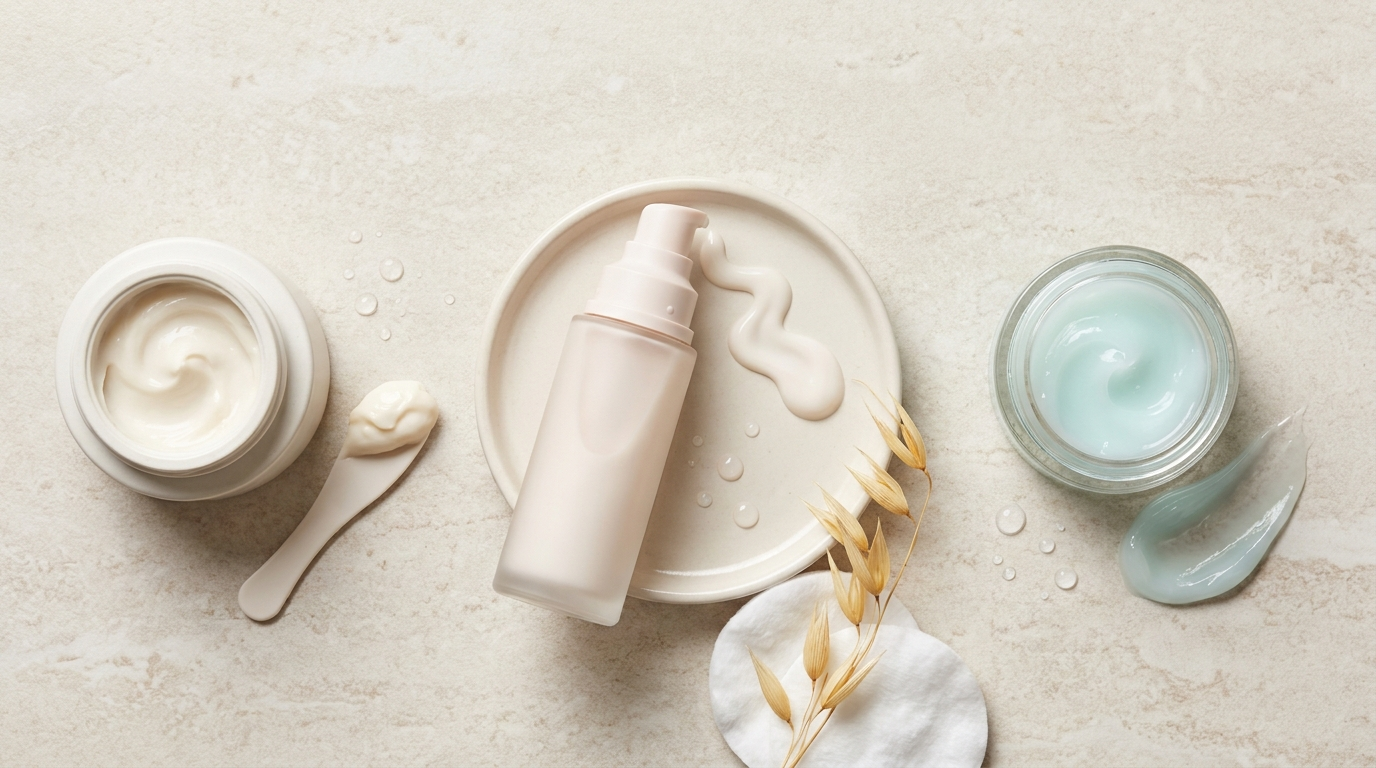
A ceramide moisturizer should match more than a keyword on the label. Dry skin may need a rich cream that slows water loss. Oily skin may use the same barrier lipids in a light lotion. Sensitive skin may care more about fragrance and formula simplicity. The best choice is the product you can apply in the right amount without stinging, clogging, or feeling miserable.
First, choose the right texture
Texture changes how a moisturizer feels and how much occlusion it provides. It does not tell you whether the product contains good or bad ingredients.
| Texture | Often suits | Typical feel |
|---|---|---|
| Gel-cream | Oily, humid-climate, or combination skin | Light and quick-drying |
| Lotion | Normal, combination, mildly dry skin | Balanced and spreadable |
| Cream | Dry, mature, or treatment-dried skin | Richer and more protective |
| Balm or ointment | Very dry patches and cold weather | Highly occlusive |
A person can use different textures by season or facial area. Combination skin may need lotion across the face and a richer cream only on dry cheeks.
Best ceramide moisturizer features for dry skin
Dry skin benefits from a complete formula. Ceramides support barrier lipids, but they work best in a moisturizer that also attracts and holds water. Look for humectants such as glycerin, hyaluronic acid, or urea. Emollients such as squalane and fatty alcohols smooth rough texture. Occlusives such as petrolatum or dimethicone reduce water loss.
Apply after cleansing while skin is slightly damp. If the cream disappears immediately and skin feels tight again within an hour, you may need a richer product or an extra occlusive layer on the driest areas.
Best ceramide moisturizer features for oily skin
Oily skin should not be stripped until it squeaks. Sebum and water are different. A face can produce oil while the barrier is dehydrated from strong cleanser, benzoyl peroxide, salicylic acid, or retinoids.
Choose a gel-cream, fluid, or light lotion. Glycerin, niacinamide, and ceramides can fit well. Avoid buying solely by the words “oil-free”; some oil-containing products are comfortable, while some oil-free gels still sting. Use a small, even layer and judge the full formula over several weeks.
Ceramide moisturizer for acne-prone skin
Acne-prone skin often needs moisturizer because treatment can cause dryness. Look for a texture that does not feel greasy and a brand that has tested the product as non-comedogenic. That label reduces guesswork but does not guarantee zero breakouts for every person.
Introduce the moisturizer before starting a new acne active. If you start both on the same day and break out, you will not know which change mattered. For a full routine, see our acne-prone skincare guide.
Ceramide moisturizer for sensitive skin
Sensitive skin needs fewer possible triggers. Fragrance-free is usually more useful than “unscented,” which can contain masking fragrance. Essential oils and aromatic plant extracts can also cause reactions. A short formula is not always better, but every extra botanical creates another variable.
Patch test first. If even water stings, pause active products and consider whether you are dealing with a damaged skin barrier or a medical condition.
Ceramide moisturizer for combination skin
A medium-weight lotion is a safe starting point. Apply a thinner layer through the oily center of the face and a fuller layer on the cheeks. You can also use two products, but that is not required. Climate often changes the answer: gel-cream in summer and lotion or cream in winter.
What ceramide names look like on a label
Common names include Ceramide NP, AP, EOP, NS, or NG. You may also see sphingosine or phytosphingosine, which relate to ceramide biology. Cholesterol and fatty acids may appear in the same formula. Do not worry about memorizing every code. Confirm that the product really lists ceramides, then focus on texture, irritants, and use directions.
Helpful supporting ingredients
- Glycerin: a reliable humectant that draws water into the outer skin.
- Hyaluronic acid: another humectant; it still needs a moisturizer layer in dry air.
- Niacinamide: can support barrier function and uneven tone, though high levels may irritate some users.
- Colloidal oatmeal: useful in some soothing formulas.
- Petrolatum: highly effective at reducing water loss and useful for very dry areas.
- Dimethicone: provides slip and a protective feel without the heaviness of some oils.
Ingredients that may require caution
Fragrance is a common concern for reactive skin. Exfoliating acids, retinol, and strong botanical blends make a moisturizer less neutral. Coconut oil and heavy butters may feel too rich for some acne-prone faces. None of these ingredients is universally harmful. The point is to match the formula to your history.
Can you use ceramide moisturizer with active ingredients?
Yes. A plain ceramide moisturizer often fits after vitamin C, azelaic acid, retinol, or acne treatment. It can also buffer retinol when applied before and after. If the moisturizer itself contains an active, count that toward the total routine.
Our retinol beginner guide shows a simple moisturizer sandwich schedule.
Morning and evening use
Morning
Apply moisturizer after any treatment serum and before sunscreen. If your sunscreen is moisturizing enough, a separate morning cream may be optional. Do not reduce sunscreen quantity because the layers feel heavy; instead choose lighter products.
Evening
Apply after cleansing and treatment. For very dry skin, use a thin ointment over flaky patches. Avoid coating active acne lesions with a heavy ointment unless a clinician recommends it.
How much moisturizer should you use?
There is no fixed amount for every texture and face. Start with enough to cover the face in a thin, comfortable layer. Add more to dry areas. If the product pills, use less, allow earlier layers to settle, or simplify the routine. If skin stays tight, the formula may be too light.
How to test a new moisturizer
- Check the seal, expiration information, and current ingredient list.
- Patch test if you are sensitive or allergy-prone.
- Use it once daily for several days with an otherwise stable routine.
- Move to twice daily if needed and comfortable.
- Track itching, burning, clogged bumps, or rash rather than judging one isolated pimple.
When moisturizer is not enough
Seek medical care for widespread rash, oozing, yellow crust, swelling, bleeding cracks, severe itching, or symptoms that keep returning. Eczema, contact allergy, psoriasis, fungal conditions, and medication reactions need different care. A ceramide cream can support a treatment plan but cannot diagnose the cause.
Shopping examples without brand hype
At the store, compare one gel-cream, one lotion, and one cream. Put fragrance-free options first if you are reactive. Check whether the product is for face, body, or both. Read the Drug Facts panel separately when a U.S. product contains an active medication or sunscreen; that is different from the cosmetic ingredient list.
Do not buy three textures at once. Start with the middle option. If a lotion leaves dry skin tight, move richer. If it leaves oily skin shiny for hours, move lighter. This controlled approach saves money and produces clearer feedback than a large haul.
Using moisturizer around the eyes and mouth
These areas are more likely to sting. Apply a small amount and avoid getting the product into the eyes. If the eyelids are itchy, swollen, or scaling, do not keep testing random creams; eyelid dermatitis often needs professional assessment. Lip corners can be protected with a bland ointment when retinol or cold weather causes cracking.
Day versus night moisturizer
You do not need products labeled “day” and “night.” In the morning, the moisturizer must sit well under sunscreen. At night, you may prefer a richer layer. A plain ceramide cream can serve both times. If the daytime cream includes SPF, treat it as sunscreen and use the full labeled amount rather than a small moisturizer dab.
Seasonal changes are normal. Recheck texture when humidity, indoor heating, acne treatment, or travel changes how your skin feels.
How to store and handle it
Keep the lid closed and do not dip wet fingers into a jar. A pump or tube reduces contamination, but jar packaging is not automatically unsafe when preservatives and handling are appropriate. Do not add water, oil, or serum directly to the container. Follow the after-opening symbol and discard a product that changes smell, texture, or color unexpectedly.
Frequently asked questions
Which ceramide moisturizer texture is best for dry skin?
A cream with humectants and an occlusive ingredient often suits dry skin. Very dry patches may need a balm or ointment.
Should oily skin avoid ceramide moisturizers?
No. Use a light lotion or gel-cream that feels comfortable in a thin layer.
What should sensitive skin avoid in a moisturizer?
Many sensitive-skin users do better with fragrance-free formulas and fewer strong actives, but individual triggers differ.
Can a ceramide moisturizer be used with retinol?
Yes. It can follow retinol or be used before and after it to reduce dryness.
Sources
Note: This guide helps with cosmetic product selection. It does not replace diagnosis or treatment for dermatitis or another skin condition.