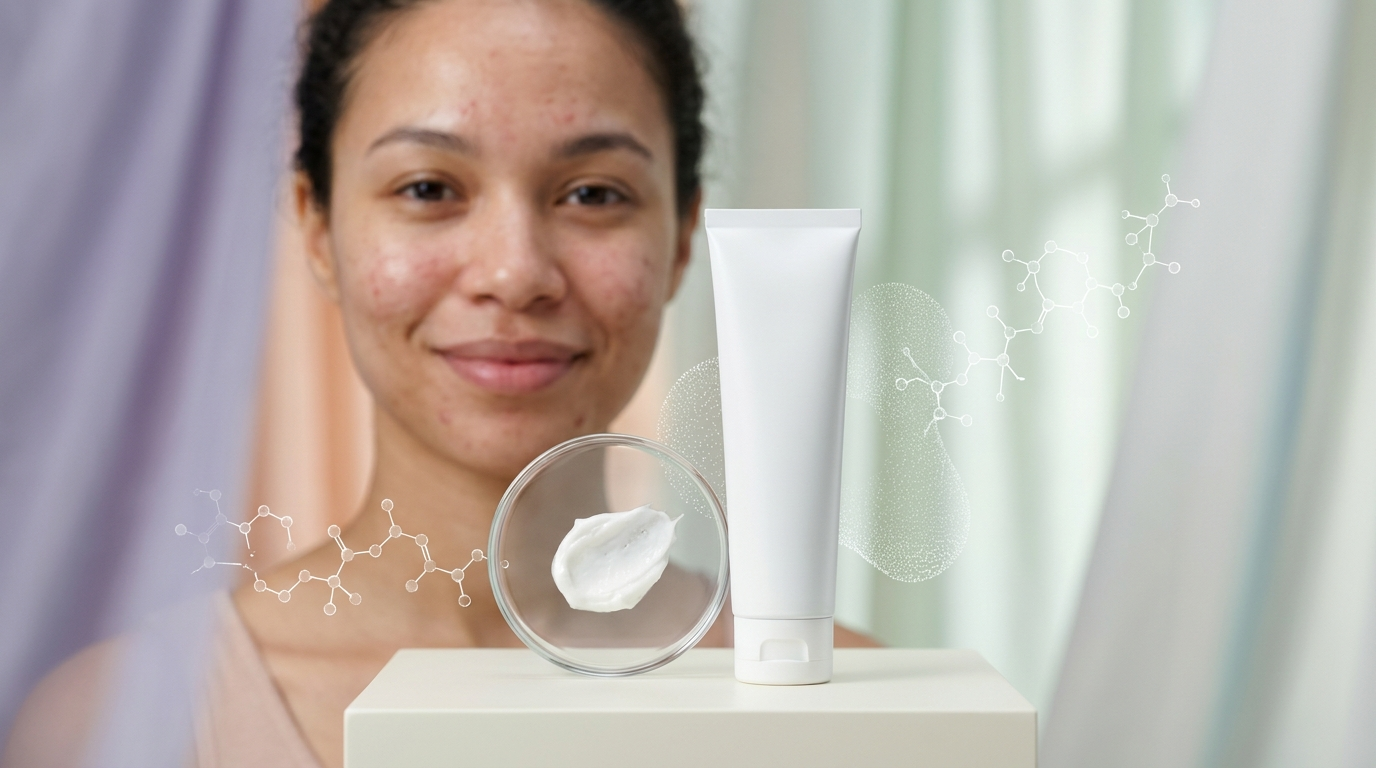
Azelaic acid is one of the rare skincare ingredients used across acne, rosacea, redness, and post-acne discoloration. It is available in cosmetic strengths and stronger prescription products. That range makes it useful, but it also creates confusion: a 10% cosmetic suspension is not the same experience as a 15% prescription gel or a 20% cream.
What is azelaic acid?
Azelaic acid is a dicarboxylic acid. It occurs naturally in some grains and can also be made for skincare and medicine. Unlike a classic alpha-hydroxy acid peel, its main role is not rapid surface exfoliation. It affects several processes involved in acne, inflammation, and pigment production.
Main azelaic acid benefits
It can help mild to moderate acne
Clinical trials have studied 15% azelaic acid gel and 20% cream for acne. Research reports reductions in inflammatory and non-inflammatory lesions, though results and tolerability vary. Azelaic acid does not create antibiotic resistance, which can make it useful in longer acne plans.
A trial comparing 15% azelaic acid gel with benzoyl peroxide or topical clindamycin found meaningful reductions in inflammatory lesions. Modern acne treatment should still consider acne severity, scarring risk, pregnancy, other medicines, and skin type.
It may improve post-acne dark marks
Azelaic acid can influence tyrosinase, an enzyme involved in melanin production. A randomized study of 15% gel found improvement in post-acne erythema and post-inflammatory hyperpigmentation measures over 12 weeks. This does not mean every mark disappears or that a lower cosmetic formula produces identical results.
It is used for papulopustular rosacea
Prescription azelaic acid is an established option for inflammatory bumps and redness linked with papulopustular rosacea. It does not remove visible blood vessels and can sting reactive skin. Rosacea should be diagnosed because acne, perioral dermatitis, and contact dermatitis can look similar.
It may support a more even tone
By reducing inflammation and affecting pigment production, azelaic acid may help uneven tone after acne or irritation. Sunscreen remains necessary because new sun exposure can keep pigment active.
Azelaic acid strengths explained
| Strength | Where found | Practical note |
|---|---|---|
| About 5%–10% | Cosmetic serums and suspensions | Often easier to buy; direct clinical evidence varies by formula |
| 15% | Often prescription gel or foam in the U.S. | Studied for acne and rosacea |
| 20% | Prescription cream in some markets | Studied for acne and pigmentation concerns |
Higher percentage is not always harsher in a predictable way. Vehicle matters. A gel, cream, foam, and silicone suspension deliver and feel different.
Azelaic acid for acne
It can be useful when acne includes inflamed bumps and leftover marks. It may be selected when benzoyl peroxide or retinoids are poorly tolerated, but a clinician should decide prescription treatment. Severe nodules, cysts, scarring, or sudden adult acne need more than a cosmetic serum.
Do not pick spots while using azelaic acid. Mechanical injury creates more inflammation and more post-acne marks. Keep cleanser and moisturizer gentle.
Azelaic acid for dark spots
Post-inflammatory hyperpigmentation often improves slowly. Azelaic acid may help by addressing both acne activity and pigment pathways. Use it across the affected area according to directions rather than as an aggressive spot burn. Daily broad-spectrum sunscreen reduces new darkening.
Azelaic acid for redness
Redness has many causes. Azelaic acid can help inflammatory lesions in rosacea, but it may sting at first. It will not treat an allergy, broken capillaries, or a severe flare by itself. If redness burns, spreads, affects the eyes, or comes with swelling, seek care.
Common side effects
- Temporary tingling or stinging.
- Dryness or flaking.
- Itching or mild redness.
- Pilling with silicone-heavy formulas.
Strong burning, swelling, hives, blistering, or a spreading rash is not normal adjustment. Stop and contact a healthcare professional.
Does azelaic acid cause purging?
Many online users describe early breakouts as purging, but the term is often overused. Acne can fluctuate naturally, and a new product can irritate or feel too occlusive. If breakouts occur with burning, widespread redness, or rash, treat the reaction as possible irritation rather than a required phase.
Can sensitive skin use azelaic acid?
Many people find it gentler than strong retinoids or acids, but sensitive skin can still react. Start with a cosmetic lower strength or use a prescription exactly as directed. Apply after moisturizer if the label allows buffering. Do not start during an active eczema or rosacea flare without guidance.
Azelaic acid during pregnancy
The American College of Obstetricians and Gynecologists lists topical azelaic acid among over-the-counter ingredients that can be used during pregnancy. That does not mean every product is automatically suitable; the complete formula and your personal medical history matter. Ask your obstetric clinician before changing acne care.
Topical retinoids should generally be avoided during pregnancy, which is one reason azelaic acid may be discussed as an alternative.
How long does azelaic acid take to work?
Some acne improvement may appear after four to eight weeks. Post-acne marks and redness can require 12 weeks or longer. Prescription trials often measure outcomes across several months. Take photos in consistent light and do not increase the amount because results feel slow.
What azelaic acid cannot do
- It cannot erase pitted or raised acne scars.
- It cannot remove visible blood vessels.
- It cannot diagnose rosacea or fungal acne.
- It cannot replace sunscreen in a pigmentation routine.
- It cannot guarantee that every dark spot will disappear.
How it compares with other ingredients
Azelaic acid versus salicylic acid
Salicylic acid is oil-soluble and useful for clogged pores. Azelaic acid has broader anti-inflammatory and pigment-related uses. Some routines use both, but beginners should alternate to reduce irritation.
Azelaic acid versus niacinamide
Niacinamide supports barrier function and uneven tone. Azelaic acid has stronger clinical treatment roles for acne and rosacea. They can be combined if the complete formulas are tolerated.
Azelaic acid versus retinol
Retinol is used for texture, fine lines, and mild acne-related concerns. Azelaic acid may be easier for redness and post-inflammatory marks. Retinoids have pregnancy restrictions.
Simple routine
Morning: gentle cleanse, azelaic acid if directed, moisturizer, broad-spectrum sunscreen. Evening: cleanse, azelaic acid, moisturizer. Start once daily or a few times weekly according to the label. Do not automatically use it twice daily because prescription trials did.
For application order and pairings, read how to use azelaic acid.
How to choose between gel, cream, foam, and suspension
Gel and foam vehicles often feel light and may suit oily skin or rosacea treatment, but prescription directions decide use. Cream can feel more comfortable on dry skin. Silicone suspensions can reduce a powdery active's gritty feel but may pill under other products. A serum may be elegant but does not prove the same delivery as a studied medicine.
Choose by strength, evidence, tolerance, and directions rather than texture alone. If a prescription vehicle feels impossible to use, ask the prescriber about options instead of replacing it with a lower cosmetic product without discussion.
How to track acne and pigmentation separately
Count active inflamed spots once weekly and photograph marks once monthly. Acne may improve before dark spots fade. If new acne continues, fresh marks can hide progress. Track tenderness, new scarring, and menstrual patterns because those details help a clinician choose treatment.
Why patch testing still matters
Azelaic acid can sting without causing allergy, yet the full formula may contain another trigger. Test according to the brand directions. Prescription products should be used as prescribed; call the clinic if a reaction is stronger than the expected label warning.
When to move from cosmetic to professional care
Seek help for painful nodules, scars, eye symptoms, widespread rosacea, sudden adult acne, or pigmentation that does not match a past breakout. A dermatologist can confirm diagnosis, prescribe an effective strength, and combine treatment safely. This is often more efficient than buying several 10% products.
How to choose a cosmetic azelaic acid product
Look for a disclosed percentage, clear use directions, fragrance information, and packaging that keeps the formula clean. Choose serum for light layering, cream for dry skin, or suspension when you accept possible pilling. Avoid products that promise a prescription-level cure without medical evidence.
Read the full formula for niacinamide, exfoliating acids, or fragrance. Those additions can change both benefits and tolerance.
Frequently asked questions
What does azelaic acid do for skin?
It has anti-inflammatory, antibacterial, keratinization-related, and pigment-pathway effects. It is used for acne and rosacea and may improve post-acne marks.
Does azelaic acid help with acne?
Clinical studies support prescription-strength topical azelaic acid for mild to moderate acne.
Can azelaic acid help dark spots?
It may improve post-inflammatory pigmentation over time, especially when new inflammation and sun exposure are controlled.
Does it cause purging?
Early breakouts are not always purging. Burning, rash, or widespread redness may mean irritation.
Sources
Medical note: This article does not diagnose acne, rosacea, or pigmentation disorders. Prescription strengths require professional direction.