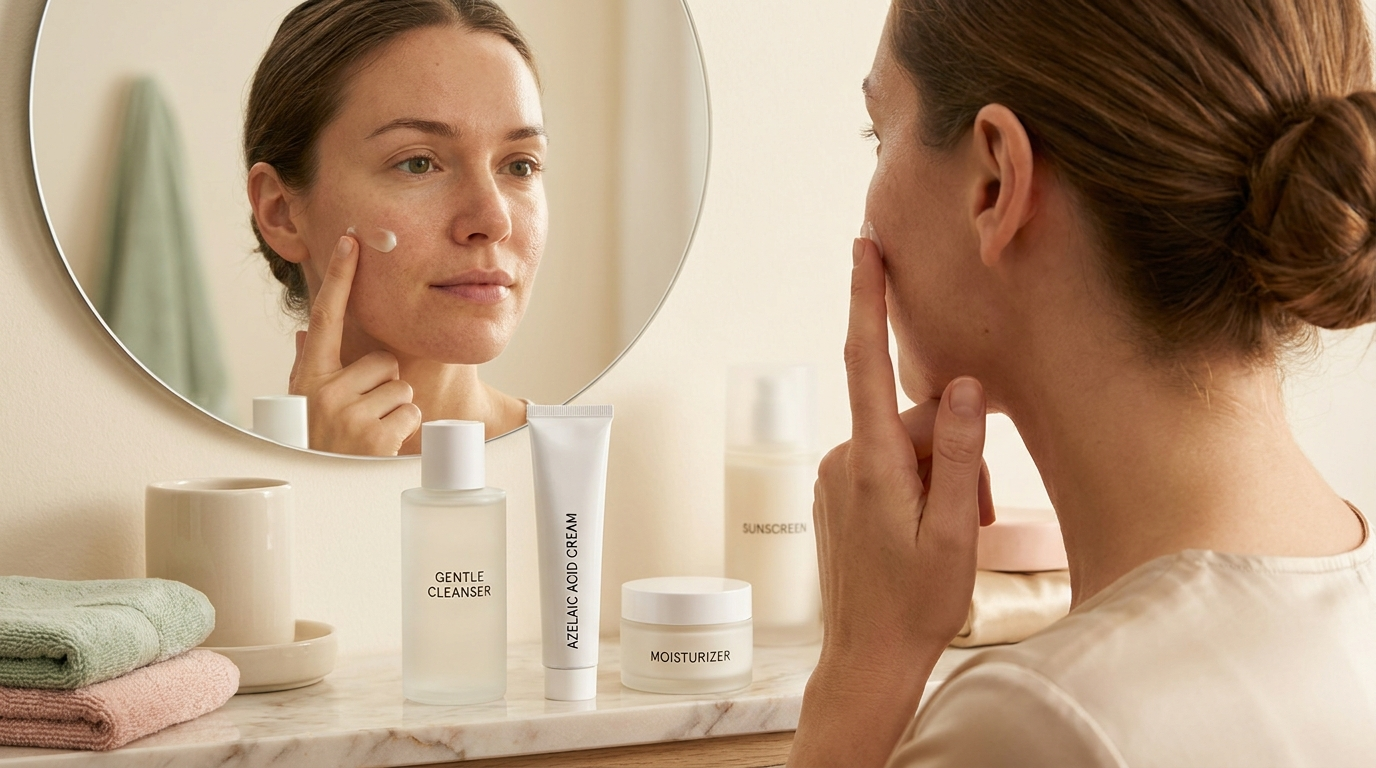
Azelaic acid is flexible enough for morning or night, but that does not mean every beginner should apply it twice daily with retinol, vitamin C, and exfoliating acids. A simple schedule is easier to tolerate and easier to judge. Start with the label, use a small amount, moisturize, and increase only if your skin remains calm.
For evidence, strengths, and realistic uses, see our separate guide to azelaic acid benefits for skin.
How much azelaic acid should you use?
Use the amount stated on the product or prescription. For many facial products, a pea-size amount can cover the face in a thin layer, but pump sizes and vehicles differ. More product increases waste and irritation; it does not force faster improvement.
Wash your hands after applying. Avoid eyes, lips, inside the nose, and broken skin. If your prescription is for a specific area, follow the prescriber's map.
Should azelaic acid go before or after moisturizer?
Most lightweight serums, gels, or prescription products are applied before moisturizer on clean, dry skin. A silicone suspension may sit later in the routine to reduce pilling. Sensitive skin can sometimes buffer by applying moisturizer first, but this may alter delivery. Check the label or ask the prescriber.
| Formula | Usual place | Watch for |
|---|---|---|
| Water serum | Before moisturizer | Stinging on damp skin |
| Gel or foam | Before moisturizer | Dryness or prescription directions |
| Cream | Treatment step before or as directed | Richness and pilling |
| Silicone suspension | After water serums, before or after moisturizer by label | Pilling under sunscreen or makeup |
How often should beginners use azelaic acid?
Start two or three times a week or once daily, depending on strength and instructions. If your skin stays comfortable for two weeks, increase gradually. Prescription products may be directed once or twice daily, but do not copy a clinical schedule for an unrelated cosmetic formula.
When stinging or dryness builds, reduce frequency rather than adding several soothing products.
Morning azelaic acid routine
- Cleanse gently or rinse.
- Apply azelaic acid to dry skin.
- Apply moisturizer.
- Finish with broad-spectrum sunscreen.
Morning use can work well for post-acne marks, but sunscreen is essential. If the product pills under sunscreen, move azelaic acid to night or reduce the number of layers.
Night azelaic acid routine
- Remove makeup and sunscreen gently.
- Cleanse and pat dry.
- Apply a thin layer of azelaic acid.
- Use a plain moisturizer.
Do not add an exfoliating toner by habit. Azelaic acid is already the treatment step.
Can you use azelaic acid with retinol?
Yes, some people use both, but the combination can increase dryness and irritation. A beginner should not start both at once. Use azelaic acid in the morning and retinol at night, or alternate nights. Keep one full recovery night between treatments when skin is sensitive.
Retinoids should be avoided during pregnancy under current AAD and ACOG guidance. Azelaic acid is often discussed as an alternative, but ask your obstetric clinician about the complete product.
Can you use azelaic acid with vitamin C?
The ingredients are not automatically incompatible. The concern is irritation, especially with acidic L-ascorbic acid. Use vitamin C in the morning and azelaic acid at night, or alternate mornings. If both are already tolerated, they may share a routine according to product directions.
Can you use azelaic acid with niacinamide?
Yes. Niacinamide and azelaic acid are often paired for redness, barrier support, oil control, and uneven tone. Use the thinner formula first. If layering pills, use them at different times instead of adding more product.
Can you use azelaic acid with salicylic or glycolic acid?
Some experienced users can, but multiple exfoliating or acne actives raise irritation risk. Alternate days at first. If your main issue is clogged pores, salicylic acid may be used on selected nights while azelaic acid is used on others. Daily burning is not a productive routine.
Azelaic acid with tretinoin
Tretinoin is prescription medication. Combinations should follow the prescriber's plan. A common approach is separation by morning and night or alternate nights, but personal strength, acne severity, and irritation history matter. Do not add cosmetic retinol on top.
How to reduce stinging
- Apply to fully dry skin.
- Start less often.
- Use a pea-size amount or the prescribed dose.
- Apply a plain moisturizer before or after, if directions allow.
- Keep acids, scrubs, and retinoids out of the same routine.
- Do not apply immediately after shaving, waxing, or a peel.
Does azelaic acid make skin sun-sensitive?
Azelaic acid is not known for the same photosensitivity profile as retinoids, but sunscreen is still vital. Acne marks and redness can worsen with sun exposure, and every skincare routine benefits from UV protection.
How long to leave it on
Most azelaic acid gels, creams, and serums are leave-on products. Do not wash them off unless the label says to. If strong burning starts, rinse and stop. A short-contact method should only be used with professional or brand guidance because it changes exposure.
What results to expect
Acne may begin to improve after several weeks. Redness and post-inflammatory marks often need two to three months or longer. Prescription trials commonly assess outcomes at 12 weeks. Apply consistently and avoid changing strength every few days.
What to do if it pills
Silicone-rich suspensions can roll into small flakes when layered. Use less product, allow water serums to dry, pat rather than rub, and reduce the number of layers. Move it to night if it conflicts with sunscreen or makeup.
What to do if it burns
Brief mild tingling can occur, especially at first. Persistent burning, strong redness, swelling, hives, or blistering means stop. Rinse with cool or lukewarm water and use a plain moisturizer. Seek medical care for significant or spreading symptoms.
Simple weekly schedules
Beginner with no other active
Monday, Wednesday, and Friday: azelaic acid at night. Other nights: moisturizer only. Increase after two comfortable weeks.
Azelaic acid plus retinol
Monday and Thursday: retinol. Tuesday, Friday, and Sunday: azelaic acid. Wednesday and Saturday: recovery. This is an example, not a prescription.
Sensitive skin
Use once or twice weekly over moisturizer. Keep the rest of the routine limited to gentle cleanser, moisturizer, and sunscreen.
Using azelaic acid on different skin types
Oily skin may prefer gel, foam, or light serum. Dry skin may need a cream vehicle and moisturizer. Sensitive skin should start less often and avoid fragrance or several acids. Deeper skin tones should treat irritation early because inflammation can leave dark marks.
Azelaic acid around shaving and hair removal
Shaving can create micro-irritation. Use azelaic acid at a different time if freshly shaved skin stings. Pause before and after waxing according to professional directions. Do not apply to cuts or immediately after a peel.
How to change strength safely
Do not move from 10% cosmetic azelaic acid to a prescription strength without medical guidance. If a clinician changes your product, ask whether the vehicle and frequency also change. Return to a simpler routine during the first week and record irritation.
How to know whether it is helping
Take weekly acne counts and monthly photos of redness or marks. Look for fewer inflamed lesions, less tenderness, and gradual fading. Do not compare photos with different makeup or light. If there is no progress after the timeframe given by the label or clinician, review the diagnosis and plan.
Travel and storage
Keep azelaic acid in its original container, close the cap, and follow temperature guidance. Carry the prescription label during travel. Do not transfer it to a small unmarked jar, which removes dosing and safety information.
What to ask a prescriber
Ask which area to cover, how much to use, whether to apply once or twice daily, and which current products to pause. Confirm what level of tingling is expected and when to call. If you are pregnant, breastfeeding, or planning a procedure, mention it.
Do not chase every combination
An azelaic acid routine does not need vitamin C, niacinamide, retinol, and salicylic acid on the same day. Choose one partner only after azelaic acid is stable. Fewer variables make it easier to protect the barrier and judge results.
Our application checklist
Use the labeled amount on clean skin, avoid delicate areas, moisturize, and protect from sun. Record frequency. If comfort declines, reduce use instead of adding more layers. Consistent gentle treatment usually beats an aggressive schedule.
Frequently asked questions
Do you apply azelaic acid before or after moisturizer?
Most formulas go before moisturizer, but sensitive skin may buffer if the directions allow.
Can azelaic acid be used with retinol?
Yes, but separation by routine or alternate nights is easier for beginners.
Can azelaic acid be used in the morning?
Yes. Finish with broad-spectrum sunscreen.
How often should a beginner use azelaic acid?
Start a few times weekly or once daily according to the label, then increase only if comfortable.
Sources
Important: Follow prescription directions over any general routine. Contact your clinician for severe acne, rosacea, pregnancy questions, or a significant reaction.