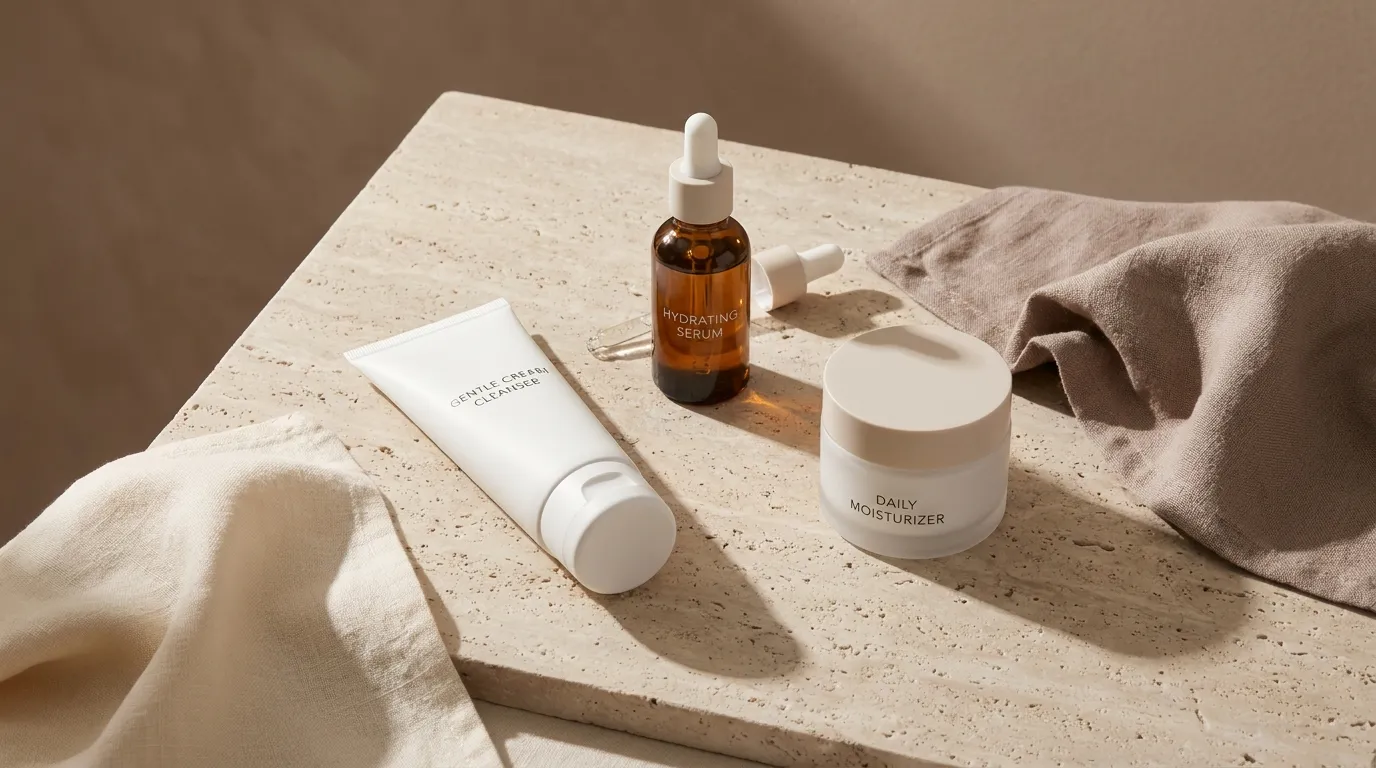
Starting skincare should not feel like studying for an exam. If you are new to cleansers, moisturizers, sunscreen, serums, toner, exfoliation, and all the little bottles people keep recommending online, breathe. Alpha Glow Girl is here to make your first routine feel simple, soft, and realistic.
A good skincare routine for beginners does not need ten steps. It needs the right few steps done consistently. For most beginners, that means cleansing, moisturizing, and using sunscreen in the morning. Once your skin feels comfortable with the basics, you can slowly add helpful ingredients like hyaluronic acid, niacinamide, vitamin C, salicylic acid, or retinol based on what your skin actually needs.
If you want the bigger routine-building framework after this guide, we also created a separate guide on how to build a skincare routine. But for now, this page will keep things beginner-friendly and focused on what to do first.
Your First Routine Should Protect Your Skin Barrier
The goal is not to use every trending product. The goal is to keep your skin clean, hydrated, protected, and calm enough to improve over time.
What Is a Beginner Skincare Routine?
A beginner skincare routine is a simple daily plan that helps you care for your skin without overwhelming it. Think of it as your skin’s basic support system. It removes dirt, balances hydration, protects against sun damage, and keeps your skin barrier stronger.
The skin barrier is the outer layer that helps hold moisture in and keeps irritants out. When beginners use too many active ingredients too quickly, the skin barrier can become stressed. That may lead to burning, redness, breakouts, peeling, or that tight “my face feels uncomfortable” feeling.
That is why we always suggest starting with a basic skincare routine before adding advanced treatments. Your starter routine should feel easy enough to repeat every day.
The Simple 3-Step Skincare Routine for Beginners
If you are starting from zero, this is the cleanest place to begin:
Cleanser
Removes oil, sweat, sunscreen, makeup, and daily buildupUse a gentle face wash that cleans your skin without making it feel dry or stripped. If your skin feels tight after washing, your cleanser may be too harsh. Beginners usually do best with a simple hydrating cleanser, cream cleanser, gel cleanser, or fragrance-free face wash.
Moisturizer
Supports hydration and helps protect the skin barrierMoisturizer is not only for dry skin. Oily skin, acne-prone skin, and combination skin also need hydration. The right moisturizer helps your skin feel balanced instead of greasy, flaky, or irritated.
Sunscreen
The most important daytime step for long-term skin healthSPF protects your skin from UV damage, which can contribute to dark spots, dullness, fine lines, wrinkles, redness, and uneven tone. In the morning, sunscreen should be your final skincare step before makeup.
Morning Skincare Routine for Beginners
Your morning routine is about protection. You are preparing your skin for sunlight, pollution, makeup, sweat, and daily life. Keep it simple.
Step 1: Cleanse Gently
Wash your face with a gentle cleanser. If your skin is very dry or sensitive, you may only need to rinse with water in the morning and use cleanser at night. Listen to your skin. Clean skin should feel fresh, not squeaky or tight.
Step 2: Add a Hydrating or Brightening Serum if Needed
This step is optional for true beginners. If your skin feels dehydrated, a hyaluronic acid serum can help attract water to the skin. If your skin looks dull, vitamin C may help support a brighter-looking complexion. If your skin gets oily or has enlarged pores, niacinamide can be a beginner-friendly option.
If you are confused about serums, read our guide on what serum is in skincare before adding one to your routine.
Step 3: Moisturize
Apply a lightweight moisturizer for oily skin or a richer cream for dry skin. Your moisturizer helps seal in hydration and keeps your skin barrier comfortable throughout the day.
Step 4: Apply Sunscreen
Finish with broad-spectrum SPF. Use enough to cover your face and neck. Sunscreen is especially important if you are using exfoliating acids, retinol, vitamin C, or products for dark spots and hyperpigmentation.
Cleanser → Serum → Moisturizer → Sunscreen
If you want the simplest version, cleanse, moisturize, and use SPF. Add serum only when your skin is ready.
Night Skincare Routine for Beginners
Your nighttime routine is about cleansing and repair. At night, you want to remove the day from your skin and give it a calm environment to recover.
Step 1: Remove Makeup or Sunscreen
If you wear makeup or heavy sunscreen, use micellar water, cleansing balm, or cleansing oil before your regular face wash. This helps remove buildup without aggressive scrubbing.
Step 2: Cleanse
Use your gentle cleanser to wash away sweat, oil, sunscreen, makeup residue, and pollution. Do not rub your face with a towel. Pat it dry softly.
Step 3: Use a Simple Treatment Only if Needed
Beginners do not need treatment products every night. If you have acne-prone skin, a salicylic acid product may help. If you are focused on early fine lines, retinol or a retinoid may be useful later. If your skin is irritated or dry, skip actives and focus on moisturizer.
Step 4: Moisturize
Apply moisturizer as the final step. At night, your moisturizer can be slightly richer if your skin feels dry or dehydrated. If your skin is oily, use a lightweight gel-cream or lotion.
Remove Makeup or SPF → Cleanser → Treatment → Moisturizer
The treatment step is optional. If your skin is sensitive, start with cleanser and moisturizer only.
What Order Should Beginners Apply Skincare?
The easiest rule is to apply products from thinnest to thickest texture. Lightweight products usually go before heavier creams and oils. Sunscreen goes last in the morning.
For a full explanation, see our guide on what order to apply skincare. But here is the simple beginner version:
Beginner Morning Order
- Cleanser or water rinse
- Toner, if you use one
- Serum, if you use one
- Moisturizer
- Sunscreen
Beginner Night Order
- Makeup remover or cleansing balm, if needed
- Cleanser
- Toner, if you use one
- Serum or treatment, if needed
- Moisturizer
- Facial oil, only if your skin likes it
Do Beginners Need Toner?
No, toner is not mandatory. A toner can be helpful, but it is not the heart of a beginner routine. If your cleanser, moisturizer, and sunscreen are working well, you do not need to rush into toner.
A hydrating toner may help dry or dehydrated skin feel more comfortable. An exfoliating toner with glycolic acid, lactic acid, or salicylic acid may help dullness, texture, or clogged pores, but beginners should use exfoliating products carefully.
If you are unsure, choose a gentle hydrating toner first. Avoid strong exfoliating toners until your skin is used to a consistent routine.
Do Beginners Need Serum?
A serum is optional, but it can be helpful once you know your skin goal. Serums are usually lightweight products with more targeted ingredients.
Choose One Serum Based on Your Main Skin Goal
- For dehydration: hyaluronic acid
- For oily skin or enlarged pores: niacinamide
- For dullness: vitamin C
- For acne-prone skin: salicylic acid
- For early fine lines: retinol, once your skin is ready
Do not start five serums at once. Add one product, use it for a few weeks, and notice how your skin responds.
Beginner Skincare Routine by Skin Type
Your skin type matters because the same product can feel amazing on one person and uncomfortable on another. Here is how to adjust your beginner routine.
Oily Skin
Choose a gel cleanser, lightweight moisturizer, and non-greasy sunscreen. Niacinamide may help balance the look of shine. If breakouts are common, salicylic acid can be introduced slowly.
Dry Skin
Choose a creamy cleanser, hydrating serum, and richer moisturizer. Look for ingredients like hyaluronic acid, glycerin, ceramides, and panthenol. Avoid over-cleansing and harsh exfoliation.
Sensitive Skin
Keep your routine very simple. Use fragrance-free cleanser, moisturizer, and sunscreen. Avoid strong acids, retinoids, scrubs, and too many new products at once.
Combination Skin
Use lightweight layers. You may need a lighter moisturizer on your T-zone and a richer layer on dry areas. Combination skin often does best with balance, not aggressive oil control.
Acne-Prone Skin
Focus on gentle cleansing, non-comedogenic moisturizer, and SPF. Do not skip moisturizer just because you have acne. If you need a dedicated routine, our guide on acne-prone skincare routine will help you build one without overdoing it.
How Often Should Beginners Do Skincare?
Do your basic skincare routine twice a day if your skin tolerates it: once in the morning and once at night. If your skin is dry or sensitive, your morning routine can be lighter. For example, rinse with water, moisturize, and apply sunscreen.
Exfoliation should not be daily for most beginners. Start with once a week if needed. If your skin becomes red, tight, shiny, stinging, or flaky, reduce exfoliation and focus on barrier repair.
What Products Do Beginners Really Need?
You only need three core products at first:
- A gentle cleanser
- A moisturizer that fits your skin type
- A broad-spectrum sunscreen
After that, choose one optional product based on your skin goal. This may be a toner, serum, chemical exfoliant, retinol, facial oil, or eye cream. But optional means optional. You do not need every product to have good skin.
If you want help choosing your first products, read our guide on what skincare products beginners need.
Beginner Skincare Ingredients: What to Know Before You Buy
Ingredients can feel confusing at first, so let’s make them simple.
Hyaluronic Acid
Hyaluronic acid helps support hydration. It is often a good beginner ingredient for dry, dehydrated, or dull-looking skin.
Niacinamide
Niacinamide is a form of vitamin B3. It can support the look of a more balanced skin tone, calmer redness, and less oily-looking skin.
Vitamin C
Vitamin C is often used in morning routines for glow and brightness. Beginners should start with a gentle formula because some vitamin C products can feel strong.
Salicylic Acid
Salicylic acid is a BHA that can be useful for oily and acne-prone skin. Start slowly because overuse can dry out the skin.
Glycolic Acid
Glycolic acid is an AHA used for dullness and texture. It can be helpful, but beginners should not combine it with too many other strong actives.
Retinol or Retinoid
Retinol and retinoids are often used for fine lines, texture, and aging skin concerns. They can be powerful, so they are not always the best first product for beginners. Add them only after your basic routine feels stable.
Skincare Mistakes Beginners Should Avoid
Most beginner skincare problems happen because people do too much too quickly. Here are the mistakes we want you to skip.
- Using too many actives at once: Do not start vitamin C, retinol, glycolic acid, and salicylic acid in the same week.
- Skipping sunscreen: SPF is essential, especially if you use brightening or exfoliating products.
- Changing products too fast: Give products time unless they are clearly irritating your skin.
- Over-exfoliating: More exfoliation does not mean more glow. It can damage your skin barrier.
- Copying someone else’s routine exactly: Your skin type, climate, age, and concerns matter.
- Ignoring irritation: Burning, peeling, and strong stinging are signs to slow down.
Simple Weekly Skincare Plan for Beginners
Here is a realistic starter plan you can follow without feeling overwhelmed.
Daily Morning
Protect and hydrateCleanser or rinse, moisturizer, sunscreen. Add serum only if your skin is ready.
Daily Night
Cleanse and repairRemove makeup or sunscreen, cleanse, moisturize. Add one treatment product only if needed.
Once a Week
Optional extra careUse a gentle exfoliant or hydrating mask if your skin tolerates it. Skip exfoliation if your skin is irritated, peeling, or sensitive that week.
How Long Does a Beginner Skincare Routine Take to Work?
Hydration can feel better within a few days. A calmer skin barrier may take a few weeks. Acne, dark spots, texture, enlarged pores, wrinkles, and hyperpigmentation usually need more time and consistency.
Do not judge your entire routine after one night. Skincare is not magic; it is a habit. The best routine is the one your skin tolerates and you can actually repeat.
Alpha Glow Girl’s Beginner Routine Example
If we were helping a complete beginner start today, this is the routine we would keep on the bathroom shelf:
Morning
- Gentle cleanser or water rinse
- Lightweight moisturizer
- Broad-spectrum SPF
Night
- Makeup remover or cleansing balm if needed
- Gentle cleanser
- Moisturizer
After 3 to 4 Weeks
- Add hyaluronic acid if the skin feels dehydrated
- Add niacinamide if the skin looks oily or uneven
- Add salicylic acid slowly if clogged pores or breakouts are common
- Add vitamin C if dullness is your main concern
Final Thoughts: Start Soft, Stay Consistent
A facial tool is not a required skincare step
Before buying one, read how to use a facial roller safely. The guide explains light pressure, cleaning, cold-tool cautions, and why the jade-style roller set makes no permanent-lift or genuine-jade claim.
The best skincare routine for beginners is not the most expensive one. It is the one that keeps your skin clean, moisturized, protected, and calm. Start with cleanser, moisturizer, and sunscreen. Then build slowly based on your skin type and goals.
At Alpha Glow Girl, we believe your glow should feel easy to live with. No pressure. No panic buying. No 12-step routine before you even know what your skin likes. Start soft, stay consistent, and let your skin tell you what it needs next.
FAQs About Skincare Routine for Beginners
What is the best skincare routine for beginners?
The best beginner routine is cleanser, moisturizer, and sunscreen in the morning. At night, cleanse and moisturize. Add serums, toner, exfoliation, or retinol only after your skin adjusts to the basics.
How do I start a skincare routine for the first time?
Start with three products: gentle cleanser, moisturizer, and SPF. Use them consistently for a few weeks before adding treatment products like vitamin C, niacinamide, salicylic acid, or retinol.
What are the basic skincare steps for beginners?
The basic steps are cleanse, moisturize, and protect with sunscreen. At night, the basic steps are remove makeup or sunscreen, cleanse, and moisturize.
Do beginners need toner?
No. Toner is optional. A hydrating toner can help some skin types, but beginners should not feel like toner is required for healthy skin.
Do beginners need serum?
Serum is optional. If you use one, choose it based on your main concern. Hyaluronic acid is good for hydration, niacinamide for oily-looking skin, vitamin C for dullness, and salicylic acid for clogged pores.
Should I do skincare in the morning and night?
Yes, most people benefit from a simple AM and PM routine. Morning skincare protects your skin, while nighttime skincare removes buildup and supports repair.
What should I avoid as a skincare beginner?
Avoid using too many active ingredients at once, skipping sunscreen, over-exfoliating, scrubbing harshly, and copying routines that do not match your skin type.
How long should I wait between skincare steps?
You usually only need to wait until each layer feels lightly absorbed. Beginners do not need complicated timing. The main goal is to avoid piling on too much product too quickly.
Can a beginner use retinol?
Yes, but not immediately if your skin is sensitive or your routine is brand new. Build your basic routine first, then introduce retinol slowly at night while using sunscreen every morning.
What skincare routine is best for oily skin beginners?
Oily skin beginners should use a gentle gel cleanser, lightweight moisturizer, and non-greasy sunscreen. Niacinamide or salicylic acid may help later, but they should be added slowly.
What skincare routine is best for dry skin beginners?
Dry skin beginners should use a creamy cleanser, hydrating moisturizer, and sunscreen. Ingredients like hyaluronic acid, glycerin, ceramides, and panthenol can help support hydration.
Can skincare make acne worse at first?
Some active ingredients may cause purging, but irritation, burning, and painful breakouts can also mean the product is not right for you. Beginners should add one new product at a time so it is easier to identify problems.