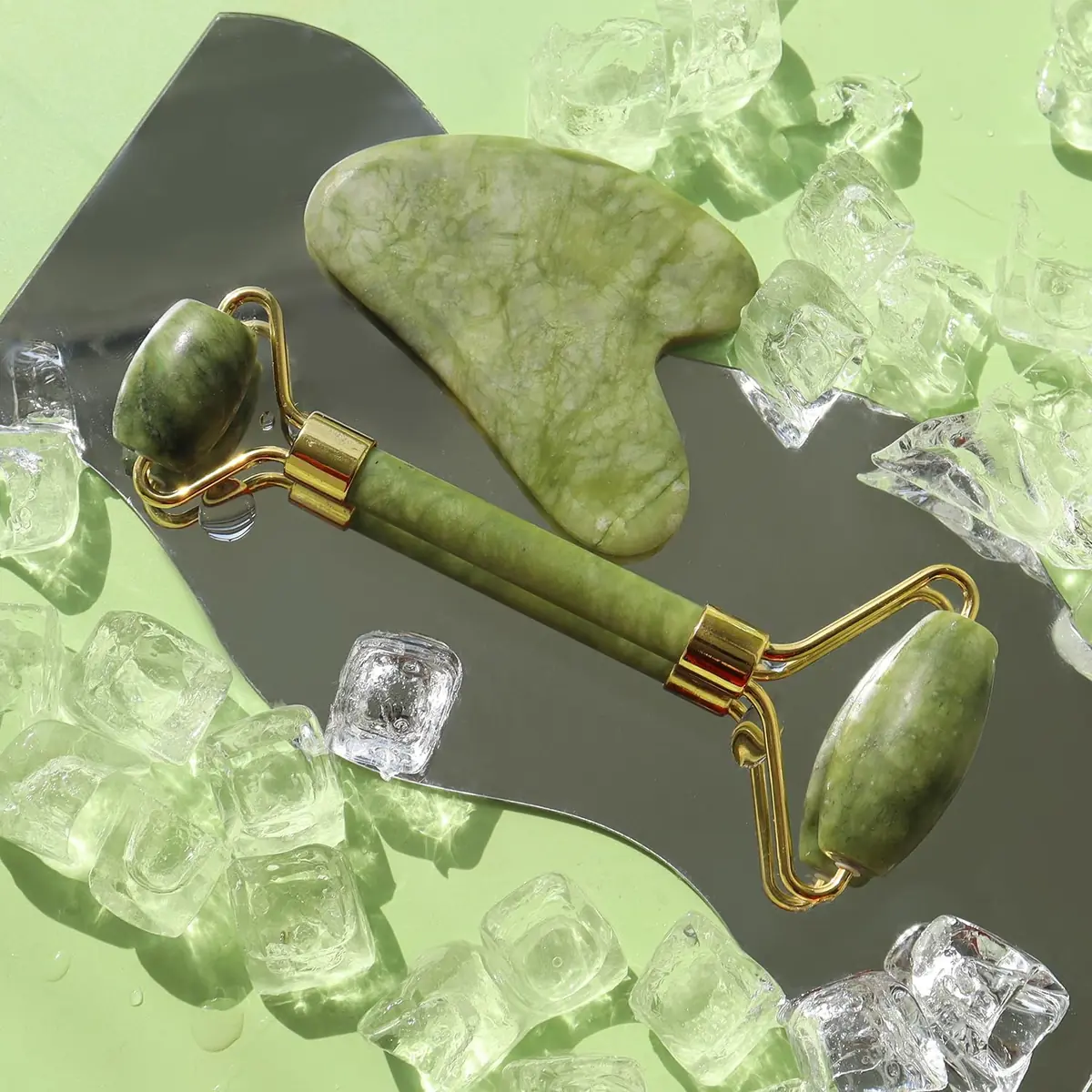
Learning how to use a facial roller safely begins with realistic expectations. A roller can be an optional tool for gentle cosmetic massage and a cool or soothing-feeling routine, but it does not permanently lift the face, dissolve fat, detoxify skin, erase wrinkles, cure puffiness, or replace evidence-based skincare. Most problems happen when marketing encourages harder pressure, longer sessions, or cold exposure that the skin does not need.
This guide covers preparation, pressure, movement, cleaning, jade-style material claims, gua sha-style tools, and silicone ice molds. The goal is not to create a dramatic before-and-after promise. It is to make an optional routine more controlled and less irritating.
Glide lightly; do not scrape or freeze the skin
A facial tool should move comfortably over intact skin. Pain, prolonged numbness, strong redness, bruising, or repeated dragging are signs to stop.
What a facial roller can realistically do
A manual roller can spread a moisturizer or facial oil, provide a short massage, and create a temporary cooling sensation when the tool is cool. Massage may briefly change how the skin looks because of pressure, movement, surface hydration, and normal fluid shifts, but a short-term change is not permanent restructuring.
There is no reason to promise that a generic roller increases collagen, changes bone structure, shrinks pores, removes toxins, or treats a skin condition. Product quality also varies. A smooth, secure roller is more important than a gemstone story that cannot be verified.
Who should pause before using one
Do not roll over broken skin, an open wound, sunburn, active infection, painful acne lesions, a fresh procedure, unexplained swelling, or a rash that is getting worse. People who bruise easily, use medication that affects bleeding, have altered facial sensation, or recently had injections, surgery, lasers, or another procedure should ask the relevant qualified clinician when massage is appropriate.
A tool should not be used to diagnose or treat persistent swelling. Sudden, one-sided, painful, or otherwise concerning swelling deserves medical assessment rather than repeated massage.
Step 1: inspect and clean the tool
Check the roller for chips, cracks, rough edges, a loose handle, bent metal, or a wheel that catches. A damaged surface can scratch skin. Clean the tool according to the verified material and dry it. If the product is described as stone but the supplier does not document genuine jade, treat it as stone-effect material and avoid cleaning advice that assumes a specific mineral.
The draft jade-style facial roller and gua sha tool set is named carefully because genuine jade is not verified. The product page will not change that wording unless material documentation is available.
Step 2: prepare clean, intact skin
Wash your hands and begin with clean skin. Apply a small amount of a compatible moisturizer or facial oil if your routine tolerates it. The purpose is slip: the roller should glide instead of tugging. More product is not necessarily better, and a facial tool is not a reason to add an oil that breaks you out or irritates you.
If you use a leave-on active such as a retinoid, exfoliating acid, or acne treatment, consider rolling at another time rather than increasing friction over recently treated skin. Follow the product directions and your clinician’s advice. Our guide to building a skincare routine keeps cleanser, moisturizer, treatment, and sunscreen as the core decisions; tools remain optional.
Step 3: use light pressure
Hold the handle without squeezing tightly. Start with the lightest pressure that keeps the roller in contact with the skin. More force does not prove the tool is working. Repeated heavy pressure can create tenderness, visible marks, or bruising.
Move slowly and keep each pass controlled. If the roller skips, the skin may need more slip, the tool may be damaged, or the angle may be wrong. Do not compensate by pressing harder.
Step 4: choose a simple direction
There is no need for a complex face map. Work in small sections and move outward with comfortable strokes: from the centre of the chin toward the jaw, from the side of the nose across the cheek, and from the centre of the forehead toward the temple. Keep the roller away from the moving eyelid and do not press directly on the eye.
A smaller roller end may fit around the jaw and outer under-eye area, but delicate skin still requires light pressure. Never roll repeatedly over a painful spot to force a result. A few passes are enough for a short routine.
How long should a facial roller session last?
There is no evidence-based requirement for a long session. A few minutes is sufficient for an optional massage. Stop sooner if the skin becomes uncomfortable. Daily use is not necessary; frequency should be based on comfort, skin condition, tool cleanliness, and whether the routine is actually helpful.
Longer is not better. Excessive repetition adds friction and pressure without guaranteeing any extra benefit. A calm routine that you can stop easily is safer than chasing a dramatic contour change.
How to use a gua sha-style tool
A gua sha-style facial tool has a broad curved edge rather than a wheel. Hold it at a low angle so a larger smooth surface contacts the skin. Add enough slip, use very light pressure, and glide slowly. Do not scrape with the edge held upright.
Traditional practices and modern social-media routines are not the same as a verified medical treatment. On the face, aggressive scraping can create bruising and irritation. Avoid the front of the throat, broken skin, and any area with pain or a recent procedure.
Can the roller be refrigerated?
A cool—not painfully cold—tool may feel refreshing. Follow the material instructions because sudden temperature changes can damage some products. Refrigeration is different from freezing. A hard frozen tool or ice placed directly on the skin can cause a cold injury, especially when contact is prolonged or sensation is reduced.
The U.K. National Health Service overview of frostbite explains that freezing exposure can damage skin and tissue. A beauty routine should never create numb, pale, hard, blistered, or intensely painful skin.
How a silicone ice facial mold differs
A silicone ice mold is not a stone roller. It is filled with water and frozen to create a rounded cold surface. The draft reusable silicone ice facial roller mold is described as a cooling accessory only. Supplier images claiming that it repairs sunburn, fever, redness, or pore size were deliberately excluded from the optimized gallery.
Use plain clean water unless a qualified professional advises otherwise. Do not freeze lemon juice, essential oils, fragrance, exfoliating acids, or concentrated plant mixtures and rub them on the face. Cold does not make an irritating ingredient safe. Keep the frozen surface moving, limit contact, and use a clean thin cloth as a barrier if the skin is sensitive.
Cleaning after every use
Wipe off skincare residue promptly. Clean the roller, handle, and curved tool according to the confirmed material. Avoid soaking metal joints for long periods and avoid cleaners that corrode the hardware or damage adhesive. Dry fully before storage.
Do not share a facial roller without appropriate cleaning. Store it in a clean dry place where it cannot fall onto tile. A cracked tool should be discarded even if the damaged area does not seem to touch the skin, because the crack can grow or harbour residue.
What facial rollers do not replace
- A gentle cleanser appropriate for your skin.
- A moisturizer that supports comfort and reduces dryness.
- Broad-spectrum sunscreen used as directed.
- Evidence-based acne, pigment, or dermatitis treatment.
- Medical assessment for persistent pain, swelling, infection, or a changing lesion.
If your routine is new, read our beginner skincare routine before buying tools. It is usually better to establish a tolerable basic routine first, then decide whether a massage tool adds enjoyment without irritation.
How to evaluate a facial roller listing
Look for clear photographs, material documentation, dimensions, weight, surface finish, joint construction, care instructions, color policy, and accurate claims. Be cautious with product pages that promise detoxification, lymphatic treatment, permanent lifting, collagen rebuilding, pore shrinking, or guaranteed anti-aging effects.
“Natural stone” is not enough detail to prove jade or rose quartz. Natural-looking pattern variation can also be created in composite or synthetic material. Alpha Glow Girl uses “jade-style” until the supplier provides credible material information.
Common facial roller mistakes
- Rolling dry skin: this increases dragging and friction.
- Pressing hard: more pressure can lead to tenderness or bruising.
- Using a damaged tool: chips and rough edges can scratch.
- Freezing the skin: prolonged direct ice contact can cause injury.
- Rolling over active irritation: let the skin recover and seek advice when needed.
- Believing permanent contour claims: a temporary appearance change is not structural remodelling.
- Storing the tool dirty: residue dries on the surface and joints.
A simple five-minute optional routine
- Clean your hands, face, and roller.
- Apply a compatible moisturizer or enough slip to prevent tugging.
- Use several light outward passes across one cheek, then the other.
- Use light passes along the jaw and forehead, avoiding irritated areas.
- Stop, wash the tool, dry it, and continue the rest of your routine as needed.
The routine is intentionally short. If you enjoy it and the skin remains comfortable, that is enough. A beauty tool does not need a dramatic claim to have a place in a relaxing routine.
Frequently asked questions
Do facial rollers permanently slim or lift the face?
No permanent reshaping is established for a basic cosmetic roller. Massage and cooling may create a temporary change in sensation or appearance, but that is not the same as changing facial structure.
Should I use a facial roller before or after moisturizer?
Use it when there is enough slip to prevent dragging, which is usually after applying a compatible moisturizer or facial oil. Follow the directions for your skincare products.
Can I use a facial roller every day?
Daily use is not required. Use it only as often as the skin remains comfortable and the tool can be kept clean. Stop during irritation, infection, or after procedures until a qualified professional says it is appropriate.
Is a jade-style roller the same as genuine jade?
No. “Jade-style” describes the appearance, not verified mineral composition. Genuine material should only be claimed when documentation supports it.
Can an ice roller shrink pores?
Cooling may temporarily change how skin looks or feels, but it does not permanently shrink the anatomical size of pores. Avoid pages that promise a permanent result.
Sources and further reading
- NHS: Frostbite
- U.S. FDA: Eye Cosmetic Safety — useful general hygiene principles for tools used near the eye area.