As a cosmetic formulation analyst, I constantly observe consumers overwhelming their epidermal barrier with complex, conflicting chemical formulas. The beauty industry generates thousands of new SKUs annually, aggressively marketing the idea that you require a vast arsenal of treatments to achieve a healthy complexion. In reality, dermal physiology is highly efficient and demands surprisingly little intervention. When patients ask me what skincare products they actually need, my clinical response is always to strip away the excess and return to the biological baseline.
Your skin requires structural support, cellular protection, and safe purification. Anything beyond that core triad is a targeted treatment, not a biological necessity. By understanding the chemistry of the stratum corneum, you can filter out marketing noise and invest only in the essential formulations that stabilize your unique skin matrix.
The Minimum Viable Protocol (MVP)
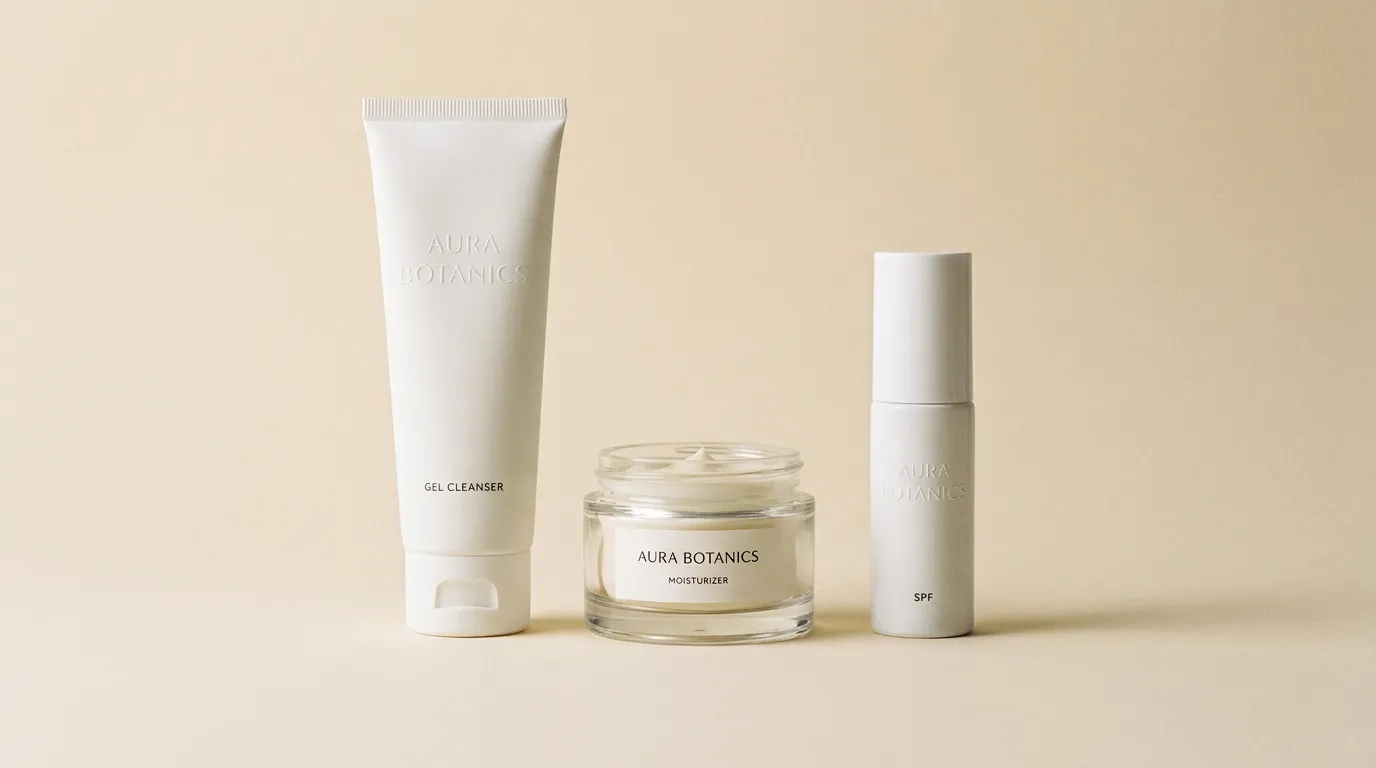
From a strict dermatological perspective, the only skincare products you absolutely need are a water-soluble cleanser to remove environmental pollutants, an emollient moisturizer to prevent trans-epidermal water loss (TEWL), and a broad-spectrum SPF to block ultraviolet radiation. Every other product—serums, toners, and masks—is optional.
The Foundation: What Skincare Products Do I Really Need?
If you are establishing a skincare routine for beginners, your primary objective is to maintain an intact, slightly acidic lipid barrier. Do not introduce active chemical exfoliants or complex peptides until these three foundational pillars are successfully integrated into your daily regimen.
1. Cleanser: The Purifying Phase
Sebum, dead skin cells, and microscopic environmental debris accumulate on your face daily. A proper face wash utilizes surfactants to break the surface tension of these impurities, allowing them to bind with water and rinse away. You need a gentle, non-stripping formula that cleanses without alkaline disruption. Squeaky-clean skin indicates that your cleanser has destroyed your protective lipid matrix.
2. Moisturizer: Lipid Barrier Support
Even the healthiest skin experiences ambient water evaporation. Moisturizers function as synthetic barrier replacements. They utilize humectants (to draw water into the cells), emollients (to smooth the cellular gaps), and occlusives (to trap the hydration inside). Regardless of your skin classification, a moisturizer is a mandatory step to keep the epidermal enzymes functioning correctly.
3. Sunscreen (SPF): The Non-Negotiable Shield
If you only ever purchase one cosmetic product, it must be sunscreen. Ultraviolet (UVA and UVB) radiation is responsible for 80% of visible structural degradation, including collagen depletion, cellular mutation, and hyperpigmentation. A daily broad-spectrum SPF of 30 or higher is the most critical anti-aging and preventative health product in existence.
Minimalist Skincare Routine Products
- Preserved Barrier Function: Fewer surfactants and preservatives limit the risk of contact dermatitis.
- High Efficacy: Simplifies identifying which specific chemical compound is benefiting the skin.
- Cost Effective: Allows you to invest your budget into a high-quality, clinically tested SPF.
Maximalist (10-Step) Product Routines
- Polymer Conflict: Layering multiple formulas frequently causes product pilling and formula deactivation.
- Chemical Overload: Increases the likelihood of compromising the acid mantle through excessive exfoliation.
- Low Compliance: Time-consuming regimens are rarely maintained consistently by the average user.
How Do I Know What Skincare Products I Need for My Skin Type?
Once you secure the basics, you must analyze your sebaceous gland activity. Understanding how to choose skincare products for your skin type prevents you from applying heavy, occlusive lipids to oil-rich skin, or astringent gels to severely depleted tissue.
What Skincare Products Do I Need for Oily Skin and Acne?
Oily skin produces excess sebum, which can oxidize and obstruct follicular pathways. The essential products for oily skin include a foaming gel cleanser and a lightweight, dimethicone-based or water-cream moisturizer. If you have acne-prone skin, your targeted active should be Salicylic Acid (a BHA). Because it is lipophilic (oil-soluble), it penetrates directly into the pore to dissolve sebum clogs.
What Skincare Products Do I Need for Dry Skin?
Dry skin inherently lacks the lipids required to trap moisture. Your starter skincare products should feature milky, non-foaming cleansers and rich, ceramide-heavy creams. To increase intracellular water volume, you must understand what is hyaluronic acid in skincare; integrating this powerful humectant serum before your moisturizer will drastically improve tissue density.
Products for Combination and Sensitive Skin
Combination skin requires equilibrium—typically a gentle gel cleanser paired with a medium-weight lotion. For sensitive skin, the rule is extreme caution. You need fragrance-free skincare devoid of essential oils, utilizing soothing agents like colloidal oatmeal, panthenol, and cica (Centella Asiatica) to suppress inflammation.
Targeted Actives: What Serums and Treatments Do I Actually Need?
After establishing your baseline defense, you can assess how to build a skincare routine that addresses specific structural concerns. These are the secondary products you introduce strictly based on targeted goals.
Antioxidants: Vitamin C Serum
A Vitamin C (L-ascorbic acid) serum is the ideal addition to your morning skincare products. It functions as an electron donor, neutralizing free radicals generated by UV rays and pollution before they can damage your cellular DNA. It also suppresses melanin synthesis, brightening overall pigmentation.
Cellular Communicators: Retinol
If you are asking what skincare products do I need in my 30s or for mature skin, the clinical answer is a retinoid. Vitamin A derivatives accelerate epidermal turnover and stimulate the fibroblasts responsible for collagen production. It is the most heavily researched anti-aging compound available and is strictly a night skincare product.
Chemical Exfoliants: AHAs and Toners
Physical scrubs create micro-tears in the tissue. Instead, modern skincare relies on Alpha Hydroxy Acids (like Glycolic or Lactic acid) to dissolve the desmosome bonds holding dead cells together. Incorporating a liquid exfoliant or acid toner two to three times a week smooths surface topography and improves light reflection.
The Clinical Baseline Kit
Best Skincare Products for BeginnersThis minimalist trio contains a pH-balanced sulfate-free cleanser, a biomimetic ceramide repair cream, and a broad-spectrum zinc oxide SPF 50. Designed specifically to rebuild a compromised lipid barrier, these formulas exclude all volatile fragrances and synthetic dyes, making them safe for sensitive, reactive, and post-procedure skin.
Frequently Asked Questions
What are the 3 most important skincare products?
The three most critical skincare products are a gentle cleanser to remove daily debris, an emollient moisturizer to maintain the lipid barrier and prevent water loss, and a broad-spectrum sunscreen to protect the cells from ultraviolet degradation.
How do I know what skincare products I need?
Determine your needs by analyzing your skin type (dry, oily, combination, or sensitive) and your specific clinical goals (like clearing acne or reducing hyperpigmentation). Start strictly with a cleanser, moisturizer, and SPF. Only add a targeted serum if you have a specific condition those three base products cannot resolve.
Do I really need a toner?
No, a toner is not biologically necessary. Historically, toners were required to rebalance the skin's pH after using highly alkaline bar soaps. Because modern cleansers are already pH-balanced, standard astringent toners are redundant unless they contain specific active acids for chemical exfoliation.
What skincare products do I need for a beginner routine?
A beginner skincare kit should only contain three items: a basic water-soluble face wash, a moisturizer suited to your sebum production levels, and a reliable daily sunscreen. Avoid purchasing complex active serums until your skin demonstrates stability with the basics.
What skincare products do I need in my 30s?
As you enter your 30s, natural cellular turnover slows down, and collagen production begins to decrease. Alongside your cleanser, moisturizer, and SPF, you should introduce a Vitamin C serum in the morning for antioxidant defense, and a Retinol in the evening to stimulate collagen synthesis.
Do I actually need an eye cream?
From a formulation standpoint, eye creams are not strictly mandatory. The skin around the orbital bone is thinner and lacks sebaceous glands, but a standard, fragrance-free facial moisturizer is usually sufficient to hydrate the area. You only need a dedicated eye cream if you require a lower concentration of active ingredients (like a mild retinol) formulated specifically for sensitive tissue.
What products do I need for a nighttime skincare routine?
Your PM skincare products should focus on cleansing and repair. You need a cleanser to remove makeup and daily SPF, a treatment product (like an exfoliating acid or retinoid) to correct cellular damage, and a slightly richer moisturizer to lock in hydration while you sleep.
Are expensive skincare products necessary?
No. The efficacy of a skincare product depends entirely on its chemical formulation, the stability of its active ingredients, and its pH level, not its price tag. Many affordable, pharmacy-tier brands utilize highly effective, dermatologist-tested formulas that outperform luxury creams heavily diluted with artificial fragrances.