Learning how to organize makeup and skincare is less about creating a perfect vanity and more about making your routine easier to follow. The best system lets you find daily products quickly, protects formulas from unnecessary heat and light, keeps tools clean, and helps you notice duplicates before buying more. A beautiful organizer cannot fix an overfilled collection, so the first step is deciding what deserves the most accessible space.
This guide uses four zones: daily, weekly, backup, and travel. The zones can fit a single drawer, a bathroom shelf, a dressing table, or several small containers. You do not need matching acrylic furniture or a separate beauty room. You need visibility, clean storage, sensible product conditions, and a short maintenance routine.
Give prime space to the routine you actually use
Daily storage should contain daily products. Backups, occasional makeup, and unopened items should not compete for the same easy-access space.
Step 1: collect everything before buying storage
Gather makeup, skincare, tools, samples, and unopened backups from every drawer and bag. Place them on a clean surface and group similar items together: cleansers, moisturizers, sunscreen, treatments, complexion makeup, eye makeup, lip products, brushes, applicators, nail tools, and travel containers.
This complete view is important because clutter often comes from split storage. You may think you have one moisturizer while three half-used bottles are in different rooms. Do not buy an organizer until you know the number, height, and shape of the products you intend to store. Measure the available shelf or counter and note any lid clearance.
Step 2: remove products that should not return
Discard packaging that is empty, leaking, badly damaged, contaminated, or no longer identifiable. Check the label, period-after-opening symbol, printed expiry when present, changes in smell, separation, texture, and color. The U.S. Food and Drug Administration explains that cosmetic shelf life depends on the product, storage, contamination, and consumer use; manufacturers are responsible for product safety even though U.S. cosmetic labels generally do not require expiry dates in the same way as medicines. Read the FDA overview of cosmetic shelf life and expiration dating.
Do not test an old eye product to see whether it is still safe. If it has changed, was used during an eye infection, or cannot be cleaned appropriately, replacement may be the safer choice. Never transfer a product into an unlabelled container without recording what it is and when it was opened.
Step 3: create a daily zone
The daily zone should contain the smallest set required for your normal morning and evening routines. A basic skincare zone may include cleanser, moisturizer, sunscreen, and one treatment used according to instructions. Daily makeup might include a complexion product, brow tool, mascara, blush, lip product, and the few brushes required for those steps.
Place items in the order or grouping that feels easiest. Some people prefer skincare on the left and makeup on the right. Others group by morning and night. The exact layout matters less than consistency. If a product is rarely used, move it out of the daily zone rather than letting it block the items you reach for every day.
Step 4: create a weekly and occasional zone
This zone is for products used less often: a wash-off mask, special-event makeup, strong pigments, extra brush shapes, or a nail kit. Keep it accessible enough that you remember it exists, but not in the centre of the daily setup. A labelled drawer or shallow box usually works better than an opaque deep bin where products disappear.
Keep frequency and safety separate. A strong exfoliating treatment may be used weekly, but that does not mean it belongs next to every-day moisturizer if the packaging looks similar and mistakes are possible. Clear labels and different sections reduce mix-ups.
Step 5: create a backup zone
Unopened backups should stay in a cool, dry area according to label instructions. Keep them together and use the oldest suitable item first. Write the purchase month on a removable label if that helps. Before buying another backup, check this zone. Bulk buying only saves money when the products remain stable and you can use them before their quality changes.
Avoid storing unopened cosmetics in a hot car, direct sunlight, or a humid area simply because a drawer is available there. Stability depends on the formula and packaging. Follow the manufacturer’s storage directions rather than assuming every product needs the same environment.
Step 6: separate tools from formulas
Brushes, foam applicators, tweezers, scissors, nail tools, and facial tools need their own cleaning and drying routine. Do not return damp tools to a covered organizer. A divided holder can stop brushes from collapsing into a pile, but it does not sanitize them.
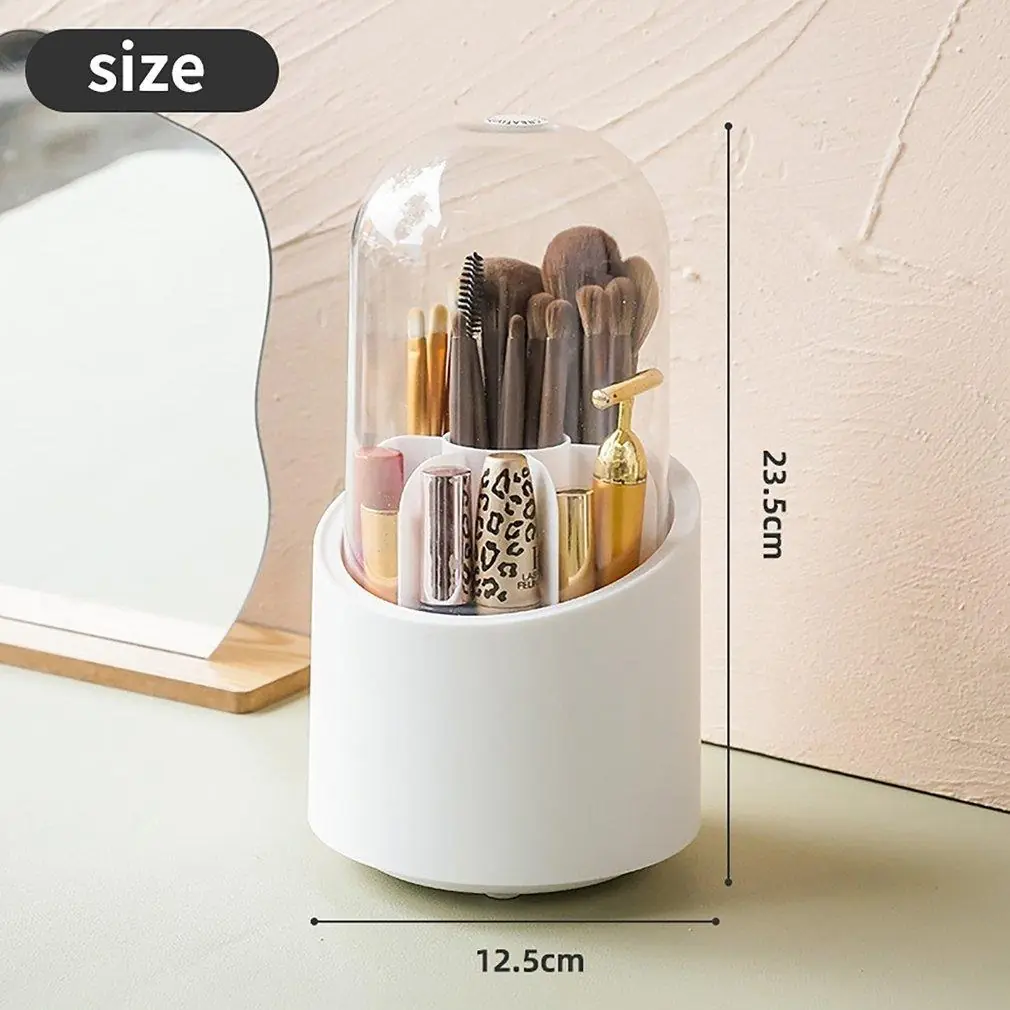
The draft 360-degree rotating makeup organizer has a clear cover and several compartments for frequently used upright items. It is intended for a compact daily zone, not an entire collection. The smaller six-slot clear organizer keeps fewer items visible and works when you only need a small group of brushes, lip products, or pencils.
Covered versus open organizers
Covered storage can reduce everyday dust, but it may also hide moisture if tools are put away damp. Open storage makes products visible and easy to reach but requires more frequent dusting. Choose based on the room, ventilation, product height, and how consistently you clean.
Clear storage is useful for visibility, while opaque drawers can protect from light and visual clutter. Neither is universally superior. Some light-sensitive products require their original protective packaging, so do not decant them into clear decorative bottles.
Where skincare should be stored
A bathroom can be convenient, but frequent heat and humidity changes may not suit every formula. Read the label. Keep lids tightly closed and avoid leaving jars open while shower steam fills the room. Sunscreen, vitamin C products, retinoids, and other formulas may have specific packaging and storage needs. Do not refrigerate a product unless the manufacturer recommends it; cold can change the texture or performance of some emulsions.
Store active treatments so they cannot be confused with basic moisturizer, especially in a shared household. Keep medicines and prescription products according to their instructions and away from children. Alpha Glow Girl’s skincare order guide can help you decide which products belong in the morning and night zones.
Where makeup should be stored
Keep makeup closed, dry, and away from excessive heat. Store pencils with caps on, compacts closed, and cream products wiped clean around the rim. Do not pump a mascara wand repeatedly because that can push air into the container. Eye products deserve particular attention because sharing and contamination can create avoidable risk. The FDA’s eye cosmetic safety guidance recommends keeping containers clean and not sharing eye cosmetics.
Arrange products by actual use. If you wear the same neutral shadow most days, keep it in the daily zone and move large palettes to weekly storage. A visible product is not necessarily a useful product; the goal is not to display everything.
How to organize brushes and applicators
Separate clean from used brushes. A simple system is one holder for clean daily tools and a washable cup or tray for brushes waiting to be cleaned. Do not return a used brush to the clean group simply because it looks dry. Follow the cleaning and drying method in our makeup brush guide for beginners.
Foam eye applicators are small and easy to lose, so a ventilated case or dedicated compartment helps. The draft dual-ended eyeshadow applicator set comes in a clear case. It was accurately renamed because the supplier photographs showed foam tips, not blending brushes.
How to organize nail and sharp grooming tools
Keep sharp tools closed or secured in a case, away from children, and separate from loose cosmetics. Clean and dry them before storage. A compact case can reduce accidental contact with exposed edges. The draft 16-piece manicure and pedicure kit and five-piece compact set both use cases, but their tool quality and exact contents remain under verification.
Do not store damp metal tools in an airtight container. Replace rusted, bent, loose, or damaged pieces. Follow our at-home manicure guide for hygiene and conservative use.
Build a travel zone before the night you pack
Keep a small list of the products you genuinely use on a short trip. Travel sizes should be labelled clearly. Place liquids at higher spill risk in sealed inner bags and follow airline restrictions. Do not assume a transparent toiletry bag is leakproof simply because it is made from clear plastic.
The draft clear zipper travel makeup bag makes contents visible and has a handle and double zipper in supplier media. Dimensions, trim colour, seam quality, and water resistance still require confirmation. Use it as an organizer, not as guaranteed spill containment.
A weekly ten-minute reset
- Return products to their zones and close every cap.
- Move dirty brushes and tools to the cleaning area.
- Wipe visible spills from containers and organizers.
- Check whether anything changed in smell, color, or texture.
- Remove empty packaging and record products that need replacement.
- Review the backup zone before making a new purchase.
A short reset prevents the large cleanup that happens when products accumulate for months. It also helps you notice what you are using. If a product remains untouched through several resets, ask whether it belongs in the routine.
Common organization mistakes
- Buying storage first: the container may be too small, too tall, or encourage you to keep unnecessary items.
- Decanting everything: some products need original packaging, labels, batch information, or light protection.
- Mixing clean and used tools: separate them until washing is complete.
- Keeping backups in daily storage: this creates visual clutter and duplicate purchasing.
- Ignoring humidity and heat: follow product-specific storage directions.
- Forcing products into compartments: overloaded organizers can crack, tip, or damage packaging.
How to choose an organizer without overspending
Measure the area and the tallest item. Count how many products need daily access. Decide whether you need a lid, drawers, upright slots, or a travel handle. Check whether cosmetics in the photographs are included; usually they are not. Look for dimensions, material, color policy, cleaning instructions, and actual customer photographs when trustworthy reviews exist.
Alpha Glow Girl does not add fake ratings or repeat supplier claims as facts. Every draft organizer stays noindex until product dimensions, material, stock, fulfillment performance, and margin are verified. Storage should solve a practical problem without creating a new purchasing problem.
Frequently asked questions
Should skincare be stored in the bathroom?
It depends on the product and the bathroom conditions. Frequent heat and humidity changes may not suit every formula. Follow the label and manufacturer’s storage instructions.
Is a covered brush holder more hygienic?
A cover may reduce dust, but it does not clean brushes and can trap moisture if tools are stored damp. Only place clean, fully dry brushes inside.
How do I know when makeup has expired?
Check printed dates and period-after-opening information when provided, and watch for changes in smell, color, texture, separation, packaging, or performance. Product stability varies, so one universal date does not fit every cosmetic.
Should I keep backup skincare products?
Only when you use the product consistently and can store it correctly. Too many backups can expire, become forgotten, or encourage duplicate spending.
How often should I clean my makeup organizer?
Wipe visible spills immediately and do a regular reset based on use. Emptying and cleaning the organizer weekly or every few weeks is more manageable than waiting for heavy residue.