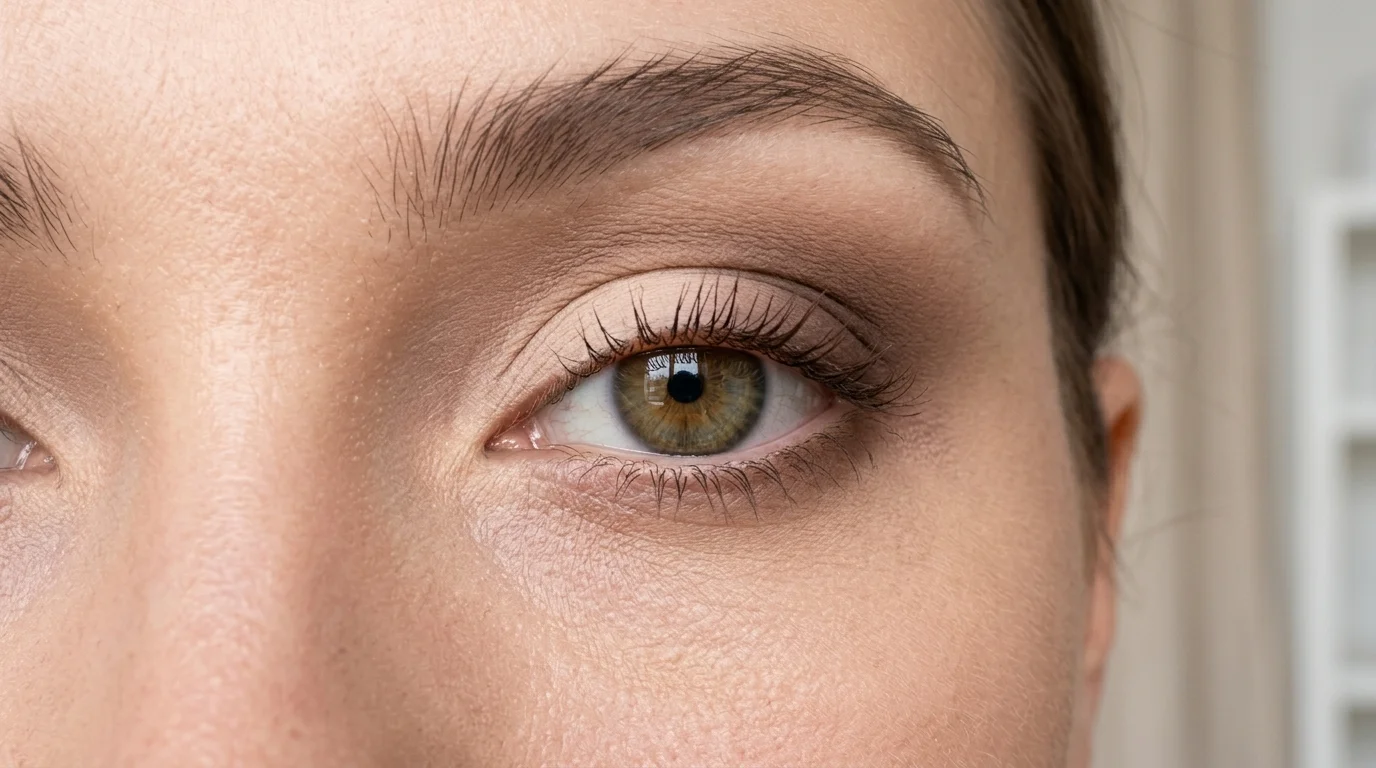
The skin on your eyelids is an active biological surface. Because it contains a high concentration of sebaceous glands and is constantly in motion, it is the most difficult area of the face to stabilize pigment. Most tutorials on how to apply eyeshadow for beginners treat the eyelid like a dry, flat canvas. As a formulation analyst, I approach it differently. We are working with physical chemistry: lipid breakdown, pigment adhesion, and volatile evaporation. Learning how to apply basic eyeshadow for beginners requires understanding how your formulas interact with your skin's natural oils.
The Adhesion Principle
Applying dry powder to a bare eyelid guarantees that natural lipids will break down the cosmetic binding matrix within hours. A high-quality makeup primer is structurally required to create a polymer film that blocks oil and grips pigment.
The Physics of Powder vs. Cream Formulations
Before you learn how to apply eyeshadow perfectly for beginners, you must select the right substrate. Eyeshadows are not just colors; they are specific chemical structures.
Pressed powder eyeshadows are built on a base of talc, mica, and magnesium stearate. These dry ingredients require friction and a tacky base to stick. Cream eyeshadows, on the other hand, use a lipid or silicone base that glides onto the skin and dries down to a fixed film. If you want to know how to apply simple eyeshadow for beginners, starting with a cream formula often yields faster results because it requires fewer tools.
Pressed Powders
- Best for building gradients and transition shades.
- High concentration of silica absorbs excess eyelid oil.
- Requires brushes to properly diffuse the blending boundary.
Liquid and Cream Formulas
- Fastest dry-down time; sets in seconds.
- Excellent for a "one color eyeshadow" wash.
- Can cause capillary migration (creasing) if layered too thick.
The 3-Color Formula Matrix
You do not need a twenty-pan palette. The most effective method for how to apply eyeshadow step by step for beginners relies on a strict three-color ratio: a base, a transition, and a depth shade.
- The Neutral Base: After your primer sets, use a flat shader brush to press a matte shade that matches your skin tone across the entire mobile lid. Pressing, rather than swiping, prevents mechanical fallout.
- The Transition Shade: Select a matte brown or taupe that is two shades darker than your skin. Using a fluffy brush, buff this color into the orbital crease (the hollow above your eyeball) using soft, sweeping motions. This builds structural depth.
- The Depth Shade: To anchor the look, use a small, dense pencil brush to press a dark shade (like black or deep espresso) strictly along your upper lash line and into the outer "V" corner of your eye. This mimics the density of a lash line.
Once you master this matrix, you can swap the neutral base for a metallic tone if you want to learn how to apply shimmer eyeshadow for beginners without changing the core technique.
Neutral Matte Pigment Trio
Best for Building Structural DepthMilled with a high ratio of pure silica to absorb oil and prevent creasing. This tightly pressed powder provides high opacity without the heavy fallout typically seen in beginner palettes.
Anatomical Adjustments: Modifying Your Canvas
Your bone structure alters how pigment reflects light. If you have a deep-set orbital bone, placing dark shadows in the crease will make your eyes look sunken. Focus instead on bright, light-reflecting mica on the center of the lid.
For hooded lids, where the skin folds down over the mobile lid, standard crease placement disappears when you open your eyes. To correct this, you must apply your transition shade slightly higher, directly onto the brow bone. For a complete clinical breakdown, review our protocol on how to do makeup for hooded eyes.
If your goal is a fresh, fast daytime aesthetic, pairing a sheer cream shadow with a light mascara coat is ideal. You can find the exact product ratios in our guide to a natural makeup look for beginners.
Tool Hygiene and Avoiding Contamination
The eyes are highly susceptible to bacterial transfer. Even the highest-quality eyeshadow will look muddy and perform poorly if applied with a saturated brush. Old oils from previous uses bind the bristles together, destroying their ability to diffuse color. Knowing how to clean makeup brushes is a mandatory step in chemical stability and hygiene.
Match the applicator to the job
Read our beginner makeup brush guide before choosing a set. For pressing powder shadow, see the accurately named dual-ended foam eyeshadow applicators; for broader face and eye use, compare the 13-piece brush set with pouch.
Frequently Asked Questions
What is the easiest eyeshadow to apply for beginners?
Cream eyeshadows are the most straightforward. Their lipid or silicone bases glide onto the skin easily and can be blended with a clean finger, requiring zero brushes and drying down to a stable finish.
How do you apply basic eyeshadow for beginners step by step?
Apply a gripping primer, press a skin-toned neutral shade across the lid, sweep a mid-tone brown into the crease to create a shadow, and define the outer corner and lash line with a dark shade.
How to apply eyeshadow for beginners hooded eyes?
Keep your eyes open while applying your mid-tone crease shade. Place the pigment slightly above your natural fold directly onto the brow bone, so the color remains visible when your eyes are open.
Do I need to use an eye primer before eyeshadow?
Yes. Eyelids produce sebum (oil) throughout the day. Primer creates a synthetic polymer barrier that stops this oil from breaking down the chemical binders in your eyeshadow, preventing creasing.
How to apply shimmer eyeshadow for beginners without fallout?
Always press shimmer shadows onto the lid rather than swiping. For maximum pigment adhesion, use a clean fingertip or lightly mist a flat packing brush with water before picking up the powder.
How to apply eyeshadow and eyeliner for beginners together?
Always apply your powder eyeshadow first. Powders will stick to wet eyeliner, causing the lines to blur or drag. Finish your entire shadow blend, then apply liquid or gel liner as the final step before mascara.
Can I use just one color eyeshadow for a complete look?
Absolutely. A "monochromatic wash" using a warm brown or soft peach across the lid and blended slightly up past the crease offers a polished, modern finish with minimal effort.
Why does my eyeshadow crease after a few hours?
Creasing is a chemical failure caused by natural skin lipids dissolving the eyeshadow's binding agents. To stop this, remove excess oil from the lid before application and use a dedicated silicone-based eye primer.
Should I apply eyeshadow with my fingers or a brush?
Use brushes for matte powders to ensure a smooth, diffused edge. Use your fingers for cream shadows and metallic shimmers, as the heat from your skin helps melt the binders for a higher-impact finish.
How to apply black eyeshadow for beginners?
Black pigment is extremely heavy. Use a tiny, dense pencil brush and press it only at the very root of your upper lash line to mimic thicker eyelashes. Do not drag it into the crease unless you are doing a heavy smokey eye.