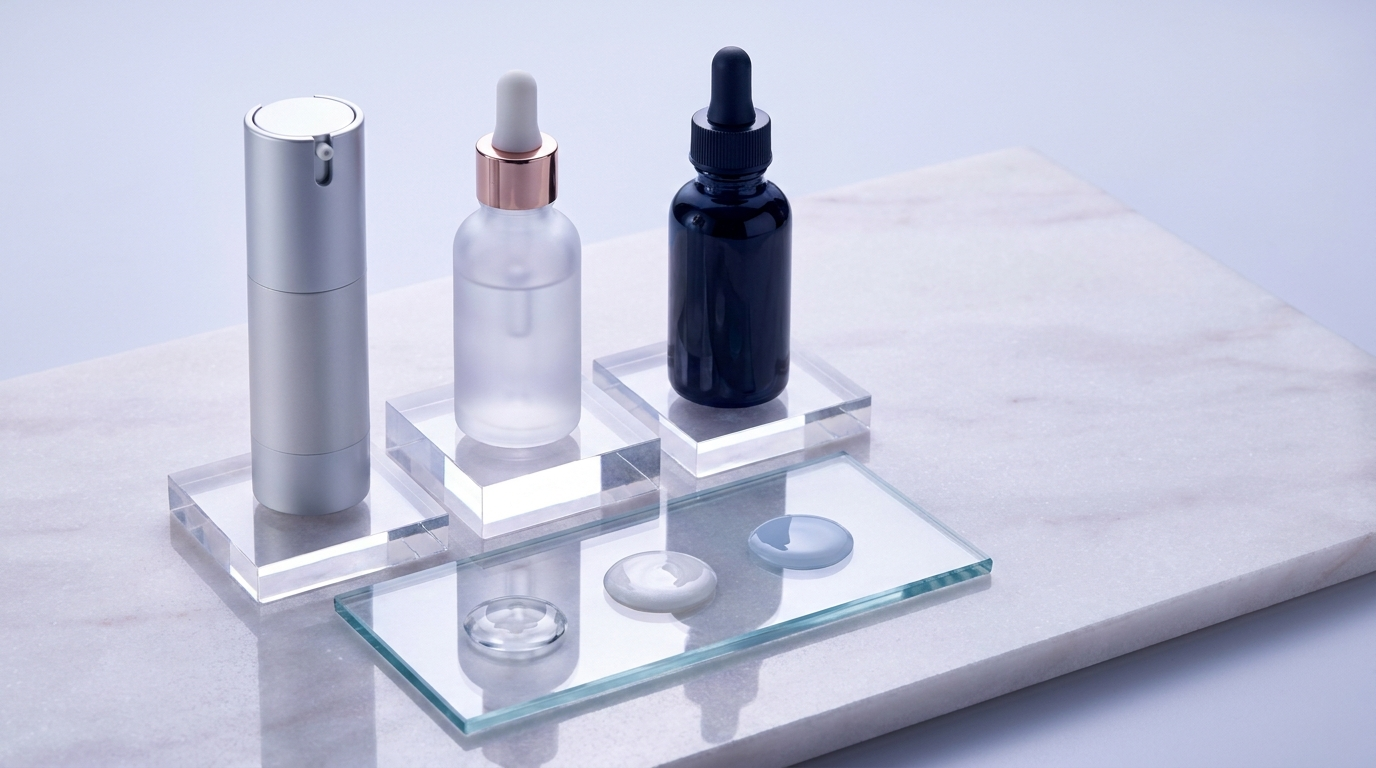
A good peptide serum tells you which peptides it contains, places them in a comfortable base, and makes claims that match the evidence. A poor one hides behind “proprietary complex,” counts peptides as if more is always better, or promises injection-like results from a cosmetic dropper.
If the ingredient category is new to you, begin with our guide to what peptides can and cannot do for skin before comparing products.
Decide what you want the serum to do
Peptide serums are often grouped under anti-aging, but their formulas can focus on hydration, fine lines, firmness appearance, or skin comfort. Define one main goal. A hydrating multi-peptide serum may fit dry skin. A light copper peptide serum may interest an experienced user. A fragrance-free simple serum may suit sensitive skin.
Named peptides to recognize
| Ingredient name | Category | Common claim |
|---|---|---|
| Copper Tripeptide-1 | Carrier peptide | Repair and aging support |
| Palmitoyl Tripeptide-1 | Signal peptide | Fine-line and matrix support |
| Palmitoyl Tetrapeptide-7 | Signal peptide blend component | Appearance of aging and inflammation |
| Palmitoyl Pentapeptide-4 | Signal peptide | Fine-line appearance |
| Acetyl Hexapeptide-8 | Expression-line marketing | Temporary smoothing appearance |
These descriptions explain product positioning, not guaranteed outcomes. Delivery, concentration, stability, and clinical testing matter.
Best multi-peptide serum format
A multi-peptide serum can combine several signal peptides in a glycerin or hyaluronic acid base. This format works well for normal, combination, or dry skin that wants hydration plus long-term fine-line support. It is also easy to layer under moisturizer.
Check: Does the label name the peptides? Is fragrance low or absent? Does the brand explain compatibility? A long list of peptide trade names without INCI details makes comparison difficult.
Best copper peptide serum format
A copper peptide serum should clearly list Copper Tripeptide-1 and explain use. Blue color is common in some copper formulas, but color alone does not prove concentration. Brand compatibility directions are important because some advise separating direct acids, retinoids, or direct vitamin C.
Check: Do you need copper, or are you buying it because it sounds more advanced? A simpler peptide serum may be less expensive and easier to combine.
Best peptide serum for sensitive skin
Choose a fragrance-free serum with a short treatment list and a hydrating base. Avoid combining peptides with exfoliating acids in the same bottle if your skin is reactive. Patch test preservatives and botanical blends. “For all skin types” is not a guarantee.
Best peptide serum for dry or mature skin
Look for glycerin, hyaluronic acid, panthenol, squalane, or ceramides along with peptides. A water serum needs moisturizer on top. Mature skin is not one skin type; it can be oily, dry, sensitive, or acne-prone.
Best peptide serum for oily skin
A light gel serum without a heavy oil phase is often easier. Use fewer drops and wait before sunscreen. If a serum pills, it may be the polymer base rather than proof that your skin “does not absorb peptides.”
Product examples by formula style
These examples help explain the market and are not permanent rankings. Confirm current labels.
- The Ordinary Multi-Peptide + HA Serum: a budget multi-peptide and humectant approach for users who want several named technologies without copper.
- The Ordinary Multi-Peptide + Copper Peptides 1% Serum: a copper-focused version with specific compatibility rules; better for someone willing to simplify other actives.
- Paula's Choice Pro-Collagen Multi-Peptide Booster: a lightweight booster-style formula with several peptides and hydrating ingredients.
- NIOD Copper Amino Isolate Serum: a premium copper-peptide direction with more complex use and a higher price.
- A fragrance-free peptide moisturizer: a sensible alternative when you do not want another serum layer.
Do not compare by peptide count alone
A product advertising 12 peptides may include several at tiny levels or count related ingredients separately. One well-studied peptide in a tested formula may be more useful. Brands rarely disclose exact concentrations because many peptides work at low amounts and formulas are proprietary.
Packaging and stability
An airless pump or small-opening bottle protects the formula from repeated contamination and air. A dropper can work if you close it quickly and avoid touching the pipette to skin. Store away from heat and direct light. Follow refrigeration instructions only when the brand gives them.
Can peptide serum replace moisturizer?
Usually not for dry skin. A serum may contain humectants but little occlusive material. Apply moisturizer over it. Oily skin may find a hydrating serum plus sunscreen enough in the morning, depending on climate and sunscreen texture.
Can peptides be used with retinol?
Many non-copper peptide serums can share a routine with retinol. Peptides may be used on recovery nights or in the morning. Some brands advise separating copper peptides from retinoids. Follow the exact product guidance rather than a general social-media chart.
Can peptides be used with vitamin C?
Many can. Direct acidic vitamin C may have brand-specific restrictions with copper peptides. Use vitamin C in the morning and copper peptide at night if you want simple separation. Non-copper peptides are often easier to layer.
Peptide serum and exfoliating acids
Strong acids can create an irritating routine and may conflict with some formula directions. Alternate routines. A peptide serum does not need an acid to “open the pores.” Skin is not a door.
How to test a peptide serum
- Read the full ingredient list and compatibility instructions.
- Patch test if you have sensitive skin.
- Use once daily for the first week.
- Apply two or three drops, then moisturize.
- Track comfort, hydration, pilling, and rash.
How long before you judge it?
Give hydration one to two weeks and visible fine-line claims eight to twelve weeks. Keep sunscreen and moisturizer stable. A serum cannot be judged from a same-day selfie with different light.
Red flags in peptide marketing
- “Replaces Botox” or “works like filler.”
- No ingredient list or no named peptide.
- Claims to rebuild all lost collagen in days.
- Before-and-after images without matching light.
- Pressure to buy a full routine for the peptide to work.
How to compare two peptide serums
Place the ingredient lists side by side. Highlight named peptides, humectants, fragrance, oils, and other active ingredients. Compare package size, after-opening period, directions, and price per 30 mL. A lower-priced formula with clear peptide names may offer better value than a prestige “complex” with no detail.
Next compare routine fit. If one copper serum requires separating three products you already use, the simpler non-copper serum may be better for you even if it sounds less advanced.
Serum versus peptide cream
A serum gives a light treatment layer. A peptide cream combines treatment and occlusion, which may suit dry skin and reduce total steps. Oily skin may prefer serum under sunscreen. Choose the format that helps you apply enough moisturizer and sunscreen rather than creating pilling.
How to avoid wasting the product
Use the labeled amount, not a full dropper. Apply to the face rather than the palm, where product is lost. Close the bottle quickly, keep it away from heat, and do not mix it inside another container. If you cannot finish before the after-opening period, buy a smaller size.
What if the serum turns blue or changes color?
Some copper peptide formulas are naturally blue. Use the official product images as a reference. An unexpected smell, separation, or major color change may indicate a storage or stability problem. Contact the manufacturer with the batch number rather than guessing.
A sensible place in an anti-aging routine
Morning can be cleanser, peptide serum, moisturizer, and sunscreen. Night can be cleanser, retinol on scheduled nights, and moisturizer. Use peptides on recovery nights if the product directions allow. This keeps sunscreen and retinoid evidence at the center while peptides play a supportive role.
When not to buy another serum
If your routine pills, stings, or already contains several treatment serums, add nothing. Use what you own until you know which products help. If your main issue is dry skin, a peptide moisturizer may replace a serum. If the concern is deep sagging or sudden skin change, a cosmetic peptide is unlikely to meet the goal.
Our final decision test
Can you name the peptide, explain its role, afford to repurchase the product, and fit it into the routine without breaking brand compatibility directions? If yes, it may be a reasonable trial. If the answer depends only on a dramatic before-and-after image, keep looking.
Frequently asked questions
What should I look for in a peptide serum?
Named peptides, a suitable base, clear directions, good packaging, and realistic claims.
Are copper peptides the best peptides?
They are one option, not automatically the best. They may complicate an active-heavy routine.
Can peptide serum be used every day?
Many can, but the complete formula and label decide frequency.
Can peptides be used with vitamin C or retinol?
Often, yes. Check brand directions, especially for copper peptide formulas, and separate products if irritation occurs.
Sources and product references
Disclosure: Product examples are not paid placements. Formulas, directions, and availability can change.