skincare
How to Repair Your Skin Barrier With a Simple, Gentle Routine
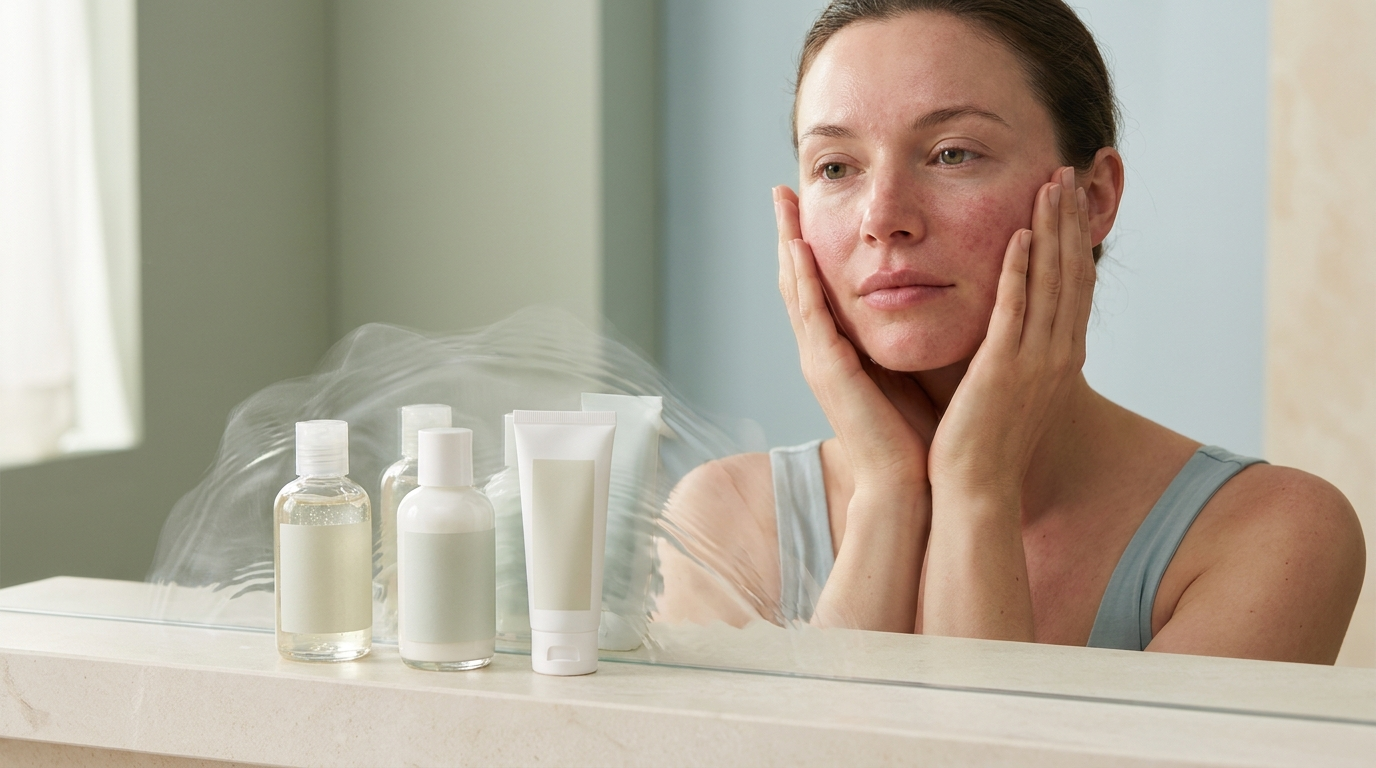
Calm a damaged skin barrier by pausing harsh actives, using gentle cleansing, moisturizing consistently, protecting...
Read Complete Guide →Topical Scar Gel for the Appearance of Scars & Stretch Marks
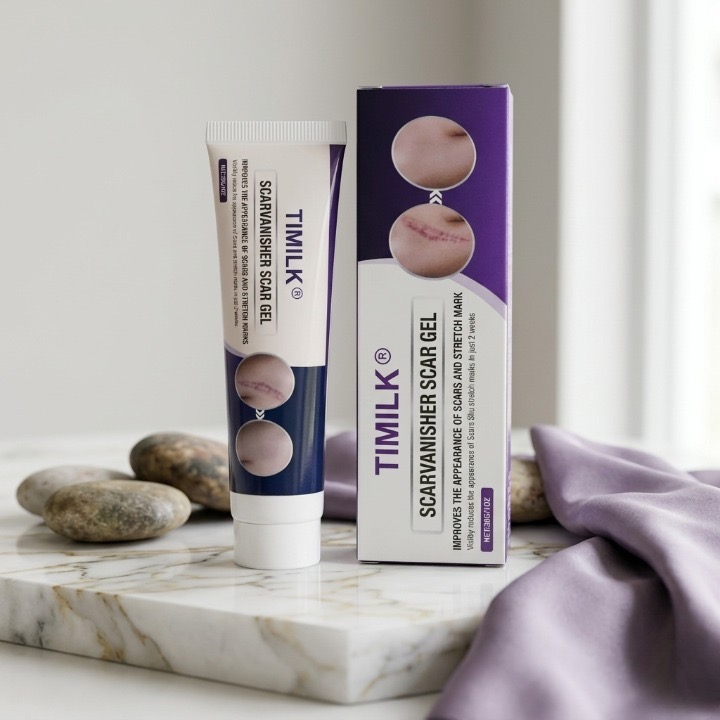
TIMILK Scarvanisher Scar Gel is a topical gel that helps visibly fade the appearance of surgical scars, burn marks, acne scars and stretch marks. It helps smooth texture, reduce the look of discoloration and support skin renewal — with twice-daily use and a patch test first.
No credit card required. Fill your delivery details below to confirm your order directly with our dispatcher.
Surgery, burns, acne or injury can leave marks that stay visible long after the skin heals — rough texture, darker color, or raised appearance that draws attention.
A thin layer of Scarvanisher gel, massaged onto the scar twice daily, helps soften texture, visibly reduce discoloration and support the skin's natural renewal — so scars look smoother and less noticeable over time.
Visible Fading: Helps visibly fade the appearance of scars and stretch marks.
Texture Smoothing: Helps scars look and feel smoother with regular use.
Discoloration: Helps reduce the look of dark or reddish scar discoloration.
Easy Targeted Use: Thin gel, applied exactly where needed, twice a day.
Wash the area and pat completely dry.
Test a small amount on a small area first.
Apply a thin layer over the scar.
Massage gently until absorbed. Repeat twice daily.
Note: All parcels are securely packed with bubble-cushioning and verified before courier dispatch.
A scar is the skin's way of closing a wound: new tissue forms over the injured area, and that tissue often looks and feels different from the skin around it — rougher, darker, redder, or slightly raised. TIMILK Scarvanisher is a topical gel designed to be applied directly to that healed tissue, twice a day, as a thin layer massaged gently into the scar. Its role is to keep the scar area hydrated and supple, help its surface look smoother, and support the skin's natural renewal process so the scar gradually looks less noticeable.
The gel format is deliberate. Unlike a general body lotion, a gel can be placed exactly where it is needed — on the scar line itself — without spreading product over large areas of healthy skin. A thin layer absorbs cleanly, so it works under clothing and under makeup on facial scars, and the gentle massage used to apply it helps the gel spread evenly while giving the scar tissue regular, careful attention. That daily attention is part of the method, not just the application.
It is important to be clear about what a gel can and cannot do. Scarvanisher helps visibly fade the appearance of scars and stretch marks, helps smooth their texture and helps reduce the look of discoloration. It does not remove scars completely, it does not cure skin conditions, and it is not a treatment for keloid or hypertrophic scars — those need a doctor's guidance. Within those honest limits, a targeted gel used consistently is one of the simplest and most practical forms of daily scar care.
Results vary by scar age and type, and understanding your scar helps you set fair expectations. Newer scars — those that have fully healed but are still pink, red or slightly raised — tend to respond more visibly to a gel, because the tissue is still settling. With twice-daily use over several weeks, newer scars often look softer, less red and less sharply defined against the surrounding skin.
Older scars, including pale marks that have been there for years, change more slowly. Regular gel use can still help them look smoother and less noticeable, but the improvement is gradual and subtle, and nobody should promise you that an old scar will disappear. Acne scars on the face follow a similar pattern: shallow, discolored marks tend to look better with consistent care, while deep pitted scars are much harder for any topical product to change, and a dermatologist is the right person to advise on those.
Stretch marks are also within this gel's scope, since they are a form of scar-like tissue, and the same age rule applies — newer marks respond more visibly than older ones. Surgical scars and minor burn marks that have fully healed can be treated the same way, provided the skin is completely closed and calm. Whatever your scar type, judge progress by comparing it with how it looked when you started, after several weeks of steady use, not by expecting a fixed result by a fixed date.
Scarvanisher is a good fit if you have a fully healed scar — from surgery, a minor burn, acne or an old injury — or stretch marks, and you want a simple targeted gel to help it look smoother and less noticeable over time. It suits people who prefer a thin, clean-absorbing gel over a heavy cream, and people who are willing to apply it twice a day for weeks rather than expecting instant change. It can be used on the face for acne scars and on the body for surgical or injury scars alike.
There are firm exclusions. Do not apply it to open wounds, unhealed skin, fresh stitches or broken skin — wait until the area is completely healed and closed. Do not use it on keloid or hypertrophic scars, which are raised, growing scars that behave differently from ordinary scars; check with a doctor first if your scar is raised, spreading or painful. If you have an active skin condition in the area, or you are unsure what kind of scar you have, get medical advice before starting any scar product.
Patch testing is especially important for a scar gel, because scar tissue can be more reactive than surrounding skin. Test a small amount on a small area first and wait twenty-four hours. If redness, itching or irritation appears, stop use. And be realistic about commitment: a gel that sits unused in a drawer cannot help any scar, so only start if you can keep the twice-daily habit going for several weeks.
The routine is deliberately simple so it survives busy days. Twice a day — morning and night — wash the scar area with plain water or your usual cleanser and pat it completely dry. Apply a thin layer of gel directly over the scar, then massage gently until it is absorbed. That is the whole application. Morning application can sit under moisturizer, sunscreen or makeup once absorbed, and night application can be the last step before bed.
Two details make a real difference. First, the skin must be dry before application, because a gel applied over damp or lotion-covered skin will not sit properly on the scar. Second, sun protection matters for scars: healed scar tissue can darken with sun exposure, so covering the area or using sunscreen on exposed scars during the day helps protect whatever visible improvement you are building. This is general skincare sense, and it applies to scars on the face and arms in particular.
If you miss an application, simply resume at the next one — do not double the amount to compensate. Keeping the tube somewhere you will see it, like next to your toothbrush or on your dressing table, helps the habit stick. Over weeks, the twice-daily application becomes automatic, and that automatic consistency is what gives a scar gel its best chance of visibly improving your scar.
The most serious mistake is applying gel to a wound that has not fully healed. A scar gel is for closed, healed skin only. Using it on open or weeping skin, fresh stitches or a scab that is still forming can irritate the area and interfere with healing. If you are unsure whether a scar is fully healed, wait — a few extra weeks of patience costs nothing, while rushing can cost you progress.
The second mistake is using too much product. A thick layer does not work faster than a thin one; it just sits on the surface, feels sticky, and empties the tube sooner. A thin layer massaged in until absorbed is the correct dose. Related mistakes include skipping the patch test, rubbing the scar aggressively instead of massaging gently, and stopping after a week because nothing dramatic happened. Scar tissue changes slowly, and a week is far too early to judge any scar product fairly.
Finally, avoid sun exposure on a healing scar without protection, and avoid covering a freshly gelled scar with tight, non-breathable bandages unless a doctor has advised it. Let the gel absorb, let the skin breathe, and keep the routine gentle and regular. Scar care rewards patience and consistency far more than intensity.
In the first week or two, the change you are most likely to notice is texture: the scar area may feel softer and smoother to the touch, because the gel is keeping the tissue hydrated and supple. Visible change usually takes longer. This early softening is still a meaningful sign that you are applying the gel correctly and that the tissue is responding to regular care.
Over several weeks of twice-daily use, visible improvement typically begins to show: the scar may look less red or less dark, its edges may blend more smoothly into the surrounding skin, and its surface may look flatter and more even. Newer scars often show this kind of change sooner, while older scars improve more gradually. There is no guaranteed timeline for any scar, and results vary by scar age and type, so patience over weeks and months is part of the treatment, not a delay in it.
After sustained use, many people find their scar noticeably less prominent in everyday appearance, even though it is still visible on close inspection. That is the honest goal of a scar gel: a scar that draws less attention, feels smoother, and blends better with the skin around it. It is a visible improvement, not a removal, and keeping that expectation clear is what lets you appreciate the real progress the gel can deliver.
Store the Scarvanisher tube in a cool, dry place away from direct sunlight and heat, with the cap closed tightly between uses. A bathroom cabinet or bedroom drawer is ideal. The tube holds 30g, and how long it lasts depends on the size of the scar you treat — a small facial scar needs only a tiny amount per application, while a larger surgical scar uses more. With a thin layer twice a day, a tube typically covers several weeks of treatment for a single scar.
Safety guidance bears repeating because scar tissue deserves care. Patch test before first full use, especially on facial scars. Do not apply to open wounds, unhealed skin, broken skin or the eye area, and stop use and rinse with water if redness, itching or irritation appears. Keep the tube out of reach of children. If a scar becomes painful, swollen, red, raised or starts spreading, stop using the gel and see a doctor — those are signs that need medical attention, not a cosmetic product.
One practical tip: apply the gel with clean hands, and avoid touching the tube opening to the scar itself, which keeps the remaining gel hygienic for the whole treatment period. Small habits like this keep the product clean and effective from the first application to the last.
Scar care products come in several formats, and the differences are mostly about feel and convenience. Heavy scar creams moisturize well but can feel greasy and sit on the skin's surface, which makes them awkward under makeup or tight clothing. Scar oils offer a pleasant massage slip but share the same greasiness and can stain fabric. Silicone sheets are a well-known option that work by covering the scar, but they must be cut to size, washed, reused and kept in place for hours, which many people find fiddly for everyday life.
A gel like Scarvanisher is the low-friction alternative: a thin layer, massaged in twice a day, absorbed in minutes, invisible under clothing or makeup. That ease is its main strength, because scar care only works when it is done consistently for weeks. A format you actually use every morning and night will outperform a theoretically better format that you abandon after a week.
Price matters here too. At Rs 499, Scarvanisher is an accessible daily-use gel, and since scar care typically lasts months, an affordable tube you can repurchase without hesitation is a genuine advantage over expensive imported scar treatments. The approach is the same — keep the scar hydrated, supple and cared for every day — at a price that makes finishing the course realistic.
Learn clinical dermatologist-aligned techniques, ingredient layering, and common mistakes to avoid.
Calm a damaged skin barrier by pausing harsh actives, using gentle cleansing, moisturizing consistently, protecting...
Read Complete Guide →
Learn how to build a basic skincare routine from scratch. We break down the exact products, layering order, and act...
Read Complete Guide →
Build a gentle acne-prone skincare routine with cleanser, moisturizer, sunscreen, and carefully introduced acne tre...
Read Complete Guide → Cash on Delivery
 Cash on Delivery