skincare
How to Repair Your Skin Barrier With a Simple, Gentle Routine
Calm a damaged skin barrier by pausing harsh actives, using gentle cleansing, moisturizing consistently, protecting...
Read Complete Guide →Coconut-Enriched Hair Oil for a Regular Pre-Wash Oiling Routine
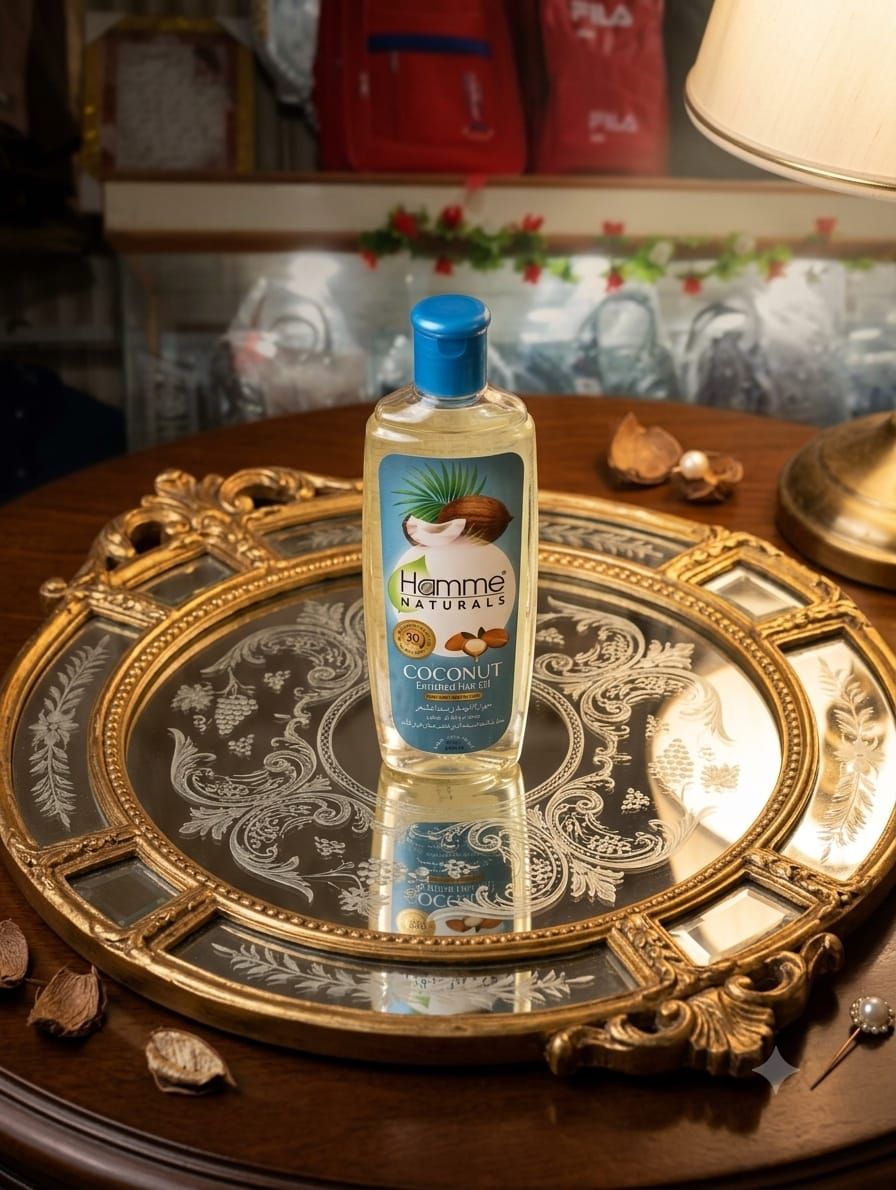
A coconut-enriched hair oil made for a regular pre-wash oiling routine. Warm a small amount between your palms, massage it into your scalp and through your hair, leave it in for a relaxed stretch before washing, and rinse out with your usual shampoo. With regular use, it helps hair look shinier and feel softer.
No credit card required. Fill your delivery details below to confirm your order directly with our dispatcher.
Sun, dust, hard water, frequent washing and heat styling all take the softness out of hair. Over time hair can start to look dry and dull, feel rough when you run your fingers through it, and tangle easily when you comb it. Ends may look frizzy and uneven, and a simple hairstyle can take far more effort than it should.
Hamme Naturals Coconut Enriched Hair Oil brings back the old, simple habit of oiling before a wash. A small amount massaged into the scalp and through the lengths coats the hair, so that when you wash, your hair feels softer, looks shinier and is easier to comb. Used regularly, it turns wash day from a chore into a short ritual that your hair visibly thanks you for.
Coconut-Enriched Formula: A coconut-enriched oil made for regular oiling, giving hair a soft, nourished feel with every use.
Shinier-Looking Hair: With regular use, helps hair look shinier and feel softer, wash after wash.
Easier Combing: Oiled hair detangles more easily, so combing after a wash feels smoother and less of a struggle.
Relaxing Scalp Massage: The oiling step doubles as a slow, relaxing scalp massage that makes the whole routine feel good.
Pour a small amount into your palm and rub your palms together so the oil spreads evenly and feels comfortable.
Using your fingertips, massage the oil into your scalp in slow, small circles for a few minutes.
Smooth what is left on your palms through the lengths and ends, where hair tends to look driest.
Leave the oil in for thirty minutes to a couple of hours, or overnight if you prefer, then wash out with your usual shampoo.
Note: All parcels are securely packed with bubble-cushioning and verified before courier dispatch.
Hair oiling is one of the oldest hair-care habits in Pakistan, and it has lasted because it is simple and it works on the thing people actually notice: how hair looks and feels day to day. Before shampoo, conditioner and styling products became common, oiling was the main way families kept hair soft and manageable. A coconut-enriched oil carries that tradition forward in a bottle that fits a modern wash-day routine, without any complicated steps or extra tools.
What oiling does is straightforward. The oil coats each strand, so the hair feels smoother when you touch it and looks shinier in daylight. It also makes the wash itself gentler: hair that has been oiled is easier to comb through after shampooing, and the ends — the part of the hair that looks driest — feel less rough. None of this needs a salon visit or a long treatment session; it is a ten-minute habit before a normal wash.
The key is regularity. One oiling before a wedding or a party will make hair look better that day, but the real change comes when oiling becomes part of the week, two or three times, every week. Hair is exposed to sun, dust and washing again and again, so the softening step needs repeating too. Treat this oil the way you treat any good habit: small, steady and repeated, and the shinier, softer look builds up over weeks.
This oil suits anyone whose hair looks dry, dull or rough, and anyone who wants an easy routine they can actually keep up. If your hair tangles when you comb it, if your ends look frizzy and uneven, or if your hair simply lacks shine, a pre-wash oiling step is a sensible place to start. It also suits people who already oil occasionally and want a dedicated coconut-enriched bottle for the job, rather than borrowing whatever is in the kitchen.
It suits all hair types, but the amount matters more than the hair type. Short or fine hair needs only a little; long or thick hair needs a bit more, especially through the lengths. If your scalp tends to feel oily soon after washing, oil once a week and keep the amount small, focusing more on the lengths than the roots. If your scalp feels sensitive, try a small patch first and check how it feels before a full application.
Wait if the skin on your scalp is broken or irritated, and hold off if you have a scalp concern that needs a professional opinion. This is a cosmetic hair oil for softness and shine, not a treatment for scalp conditions, and it will not change the underlying causes of any scalp problem. Be honest about that, and the oil will do its real job well: helping hair look shinier and feel softer with regular use.
The easiest routine is tied to your wash days. On an oiling day, set aside a few extra minutes before your shower. Pour a small amount into your palm, warm it between your palms, and massage it into your scalp with your fingertips in slow circles. Take your time with this part: a few minutes of massage is what turns a chore into a ritual, and it helps spread the oil evenly instead of leaving it pooled in one spot.
Next, smooth the rest through the lengths and ends. This is the part people skip, and it is the part that shows most in the mirror, because ends are the oldest and driest part of the hair. If your hair is long, work in sections so every part gets a light coating. Then leave the oil in while you get on with other things — thirty minutes to a couple of hours is plenty, or overnight if you prefer to wash in the morning.
When wash time comes, shampoo as usual. One gentle lather is often enough; if your hair still feels oily, a second light lather will finish the job. Follow with your usual conditioner, and comb through gently while the hair is damp. Over a few weeks of this routine, wash day stops feeling like damage control and starts feeling like the day your hair looks its best.
Using too much oil is the most common mistake, and it causes the exact problem people blame on the oil: heavy, greasy-looking hair that is hard to wash out. A small amount is enough for most heads of hair. Start with less than you think you need; you can always add a little more to the ends, but you cannot easily take oil back once it is on your scalp. If your hair feels oily after washing, the answer is almost always less oil next time, not a stronger shampoo.
The second mistake is oiling once and judging the bottle. Hair does not change its look in a single sitting. The softer, shinier result builds over weeks of regular oiling, because each wash and each day in the sun wears the softness away again. People who oil twice a week for a month see a very different result from people who oil once, decide nothing happened, and leave the bottle on the shelf.
Two more habits quietly waste oil. Rushing the massage and slapping the oil on only at the roots leaves the lengths dry, which is where the roughness shows. And storing the bottle in a hot bathroom or with the cap loose lets dust and moisture in and makes pouring messy. A slow, even application and a closed cap in a cool spot keep every drop doing its job.
After the very first oiling, the change is immediate in one way: hair feels softer to the touch and is easier to comb after washing. That first result is real, but it is also temporary, because the next few days of sun, dust and washing will wear it down again. Think of the first oiling as a preview, not the final result.
Between weeks two and four, with oiling two to three times a week, the improvement starts to hold. Hair looks shinier on non-wash days too, tangles less when you comb it, and the ends look smoother rather than frizzy. This is the window where most people who stick with the routine begin to see why they kept going. The change is gradual, which is exactly how a simple cosmetic routine works.
By weeks six to eight, you have a fair picture of what the oil does for your hair. If your hair looks shinier and feels softer, and the routine fits your week, it is working. Results vary with hair type, washing frequency and how regularly you oil, and stopping the routine lets dryness and dullness creep back over time. Soft, shiny-looking hair is maintenance, not a one-time fix, and a small bottle used steadily beats a large bottle used in bursts.
Store the bottle with the cap closed tightly, away from direct sunlight and heat, at normal room temperature. A bedroom shelf or a drawer is better than a sunny windowsill or a steamy bathroom ledge. Heat and sunlight wear the oil down over time, and a loose cap lets dust in and makes pouring messy, so the simple habit of closing the cap after every use protects the whole bottle.
Coconut-enriched oils can thicken or turn cloudy in cold weather. That is normal and does not mean the oil has gone bad; the oil loosens again at warmer room temperature. If the weather is cold, simply hold the closed bottle in warm hands for a minute or warm a small amount between your palms before applying. Do not heat the bottle directly over a flame or in boiling water.
Keep the oil away from your eyes, and rinse with clean water if contact happens. Do not apply it to broken or irritated scalp skin, and stop use if irritation appears and does not settle. Keep the bottle out of the reach of small children, and avoid pouring oil near open flames or hot styling tools. A little care in storage and use keeps a simple product safe and pleasant to use every week.
Plain kitchen oils are the closest comparison, and many households already use them. The difference with a dedicated hair oil is convenience and consistency: it is bottled for hair use, pours in a controlled amount, and is meant to sit in your bathroom rather than the kitchen. You are not decanting from a cooking bottle or guessing at the amount, and the routine is easier to repeat twice a week when the bottle is made for that job.
Leave-in hair serums are the other common option. Serums are applied after washing, usually to smooth the surface and add shine for the day. This oil works the other way round: it is a pre-wash step, massaged in and then washed out, so the softness comes from the routine itself rather than a coating left on the hair all day. The two can sit in the same routine if you like — oil before the wash, serum after — but they are not replacements for each other.
Salon treatments promise a bigger transformation in a single visit, and they cost far more per session than a bottle of oil. A salon visit can be a pleasant treat, but its effect fades with the next few washes, just like any other hair care. A bottle of coconut-enriched oil at home gives you the steady, repeatable version of the same idea — soft, shiny-looking hair — for a small cost per oiling, week after week.
The value of this oil comes from using a small amount, regularly. A little warmed between the palms covers short hair easily, and even long hair needs only a modest amount if you work it through in sections. Pouring a large puddle each time does not make hair softer; it makes washing harder and empties the bottle faster. The cheapest oiling is the one that uses just enough.
Tie oiling to wash days you already have, rather than adding new wash days. Two to three oilings a week, matched to your normal shampoo routine, is the sweet spot for most people: frequent enough to keep the soft, shiny look, but not so frequent that the bottle disappears in a fortnight. If your hair is short, a bottle will stretch much further than it will for long, thick hair, so judge value by your own hair, not by someone else's.
Resist the urge to stockpile bottles in a warm room. Buy one bottle, use it steadily, store it with the cap closed away from sunlight, and replace it when it is finished. A fresh bottle used every week is worth more than two bottles stored badly and used in bursts. At Rs. 1,099, with a small amount per use, the cost per oiling stays modest — and the real return is hair that looks shinier and feels softer, week after week.
Learn clinical dermatologist-aligned techniques, ingredient layering, and common mistakes to avoid.
Calm a damaged skin barrier by pausing harsh actives, using gentle cleansing, moisturizing consistently, protecting...
Read Complete Guide →
Learn how to build a basic skincare routine from scratch. We break down the exact products, layering order, and act...
Read Complete Guide →
Build a gentle acne-prone skincare routine with cleanser, moisturizer, sunscreen, and carefully introduced acne tre...
Read Complete Guide →